Real Estate Photo Mistakes That Cost DC Metro Agents the Sale
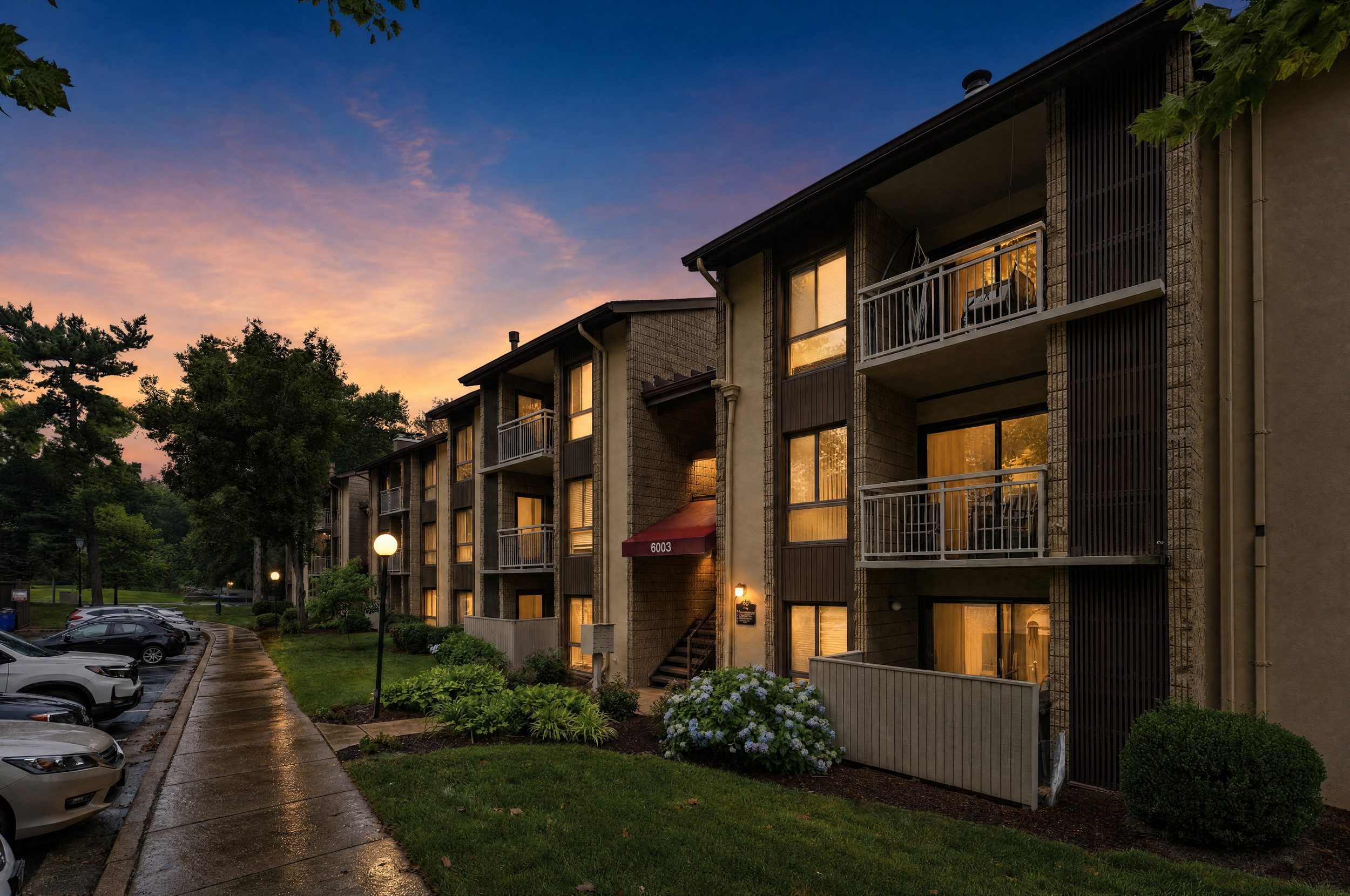
Get the photos right and the listing sells itself. Get them wrong and buyers scroll past before they read a word.
Great real estate photography is what separates a DC metro listing that gets clicked from one that gets scrolled past. In a Northern Virginia and Maryland market where buyers decide in about two seconds, your listing photos aren't part of the marketing — they are the marketing. And a handful of avoidable real estate photo mistakes can quietly cost a home showings on Bright MLS, days on market, and final sale price.
The frustrating part is that most of these mistakes have nothing to do with an expensive camera or rare talent. They show up again and again on agent listings — and each one is easy to avoid once you know what to look for.
The stakes are well documented. Homes with professional photography have sold roughly 32% faster — one VHT Studios analysis put it at 89 days on market versus 123 — and a widely cited Redfin study found professionally photographed homes in the $200K–$1M range sold for about $3,400 to $11,200 more relative to list. Here are the mistakes that leave all of that on the table, and how to avoid each one.
Mistake 1: Blowing Out the Windows
The single most common tell of an amateur photo is a window that reads as a sheet of pure white. A phone or a single exposure can't hold both a bright window and a darker room at once, so it sacrifices one — and buyers register the result even if they can't name it: a dim room, or a view that's vanished. The fix is HDR bracketing, blending several exposures so the backyard shows through the glass and the room stays bright. It's the baseline on every Cove shoot for exactly this reason.
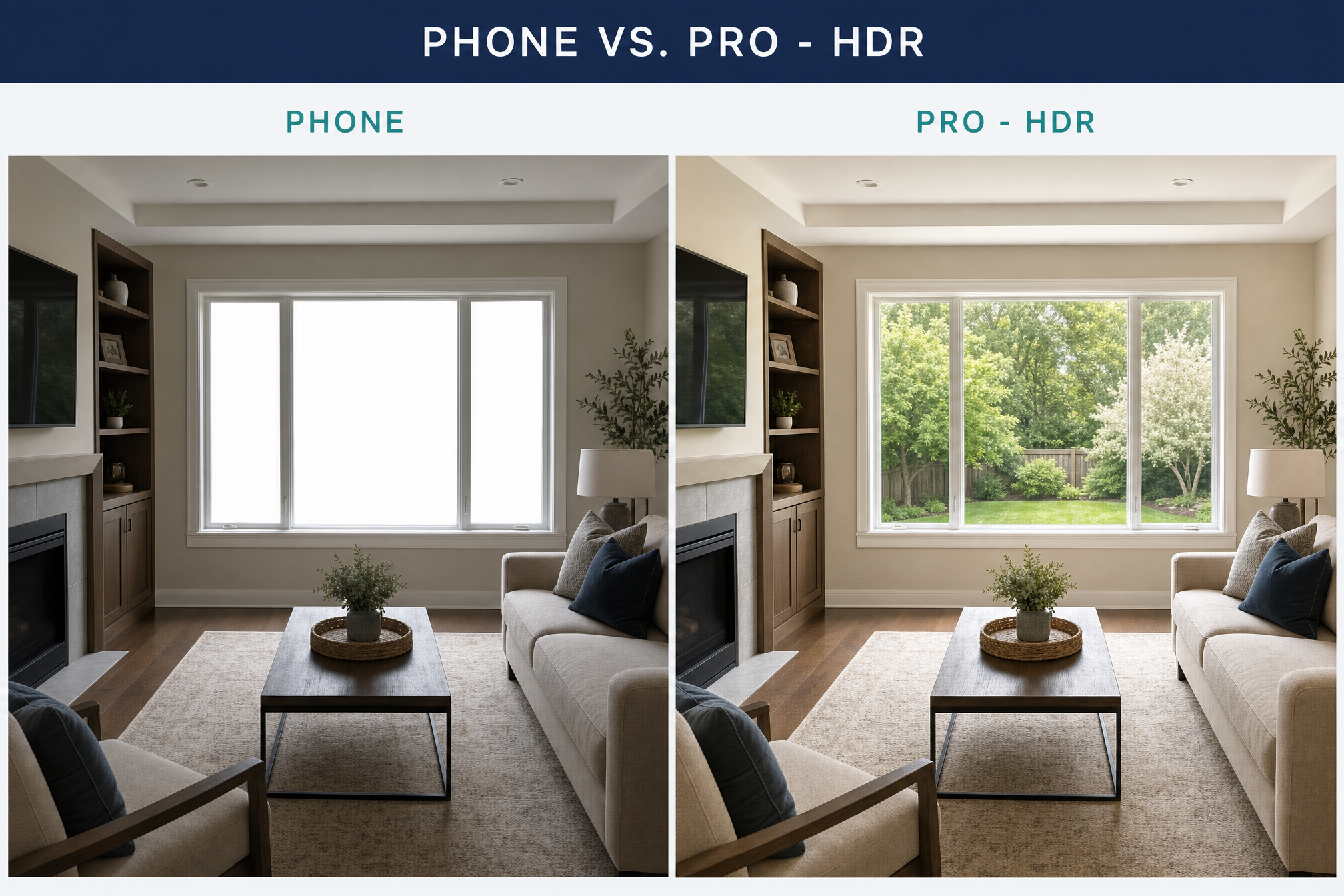
The blown-out window is the most common giveaway of a phone photo — HDR keeps both the room and the view.
Mistake 2: Letting the Walls Lean
Tilt a wide lens up or down and straight walls start to fall inward like a funhouse. Uncorrected verticals make rooms feel cramped and subtly "off," even to buyers who couldn't tell you why. The fix is to shoot level and correct the lines in post, so walls stand vertical and proportions match how the room actually feels. Wide-angle lenses are standard for every real estate shooter — the real difference is whether that distortion gets corrected.
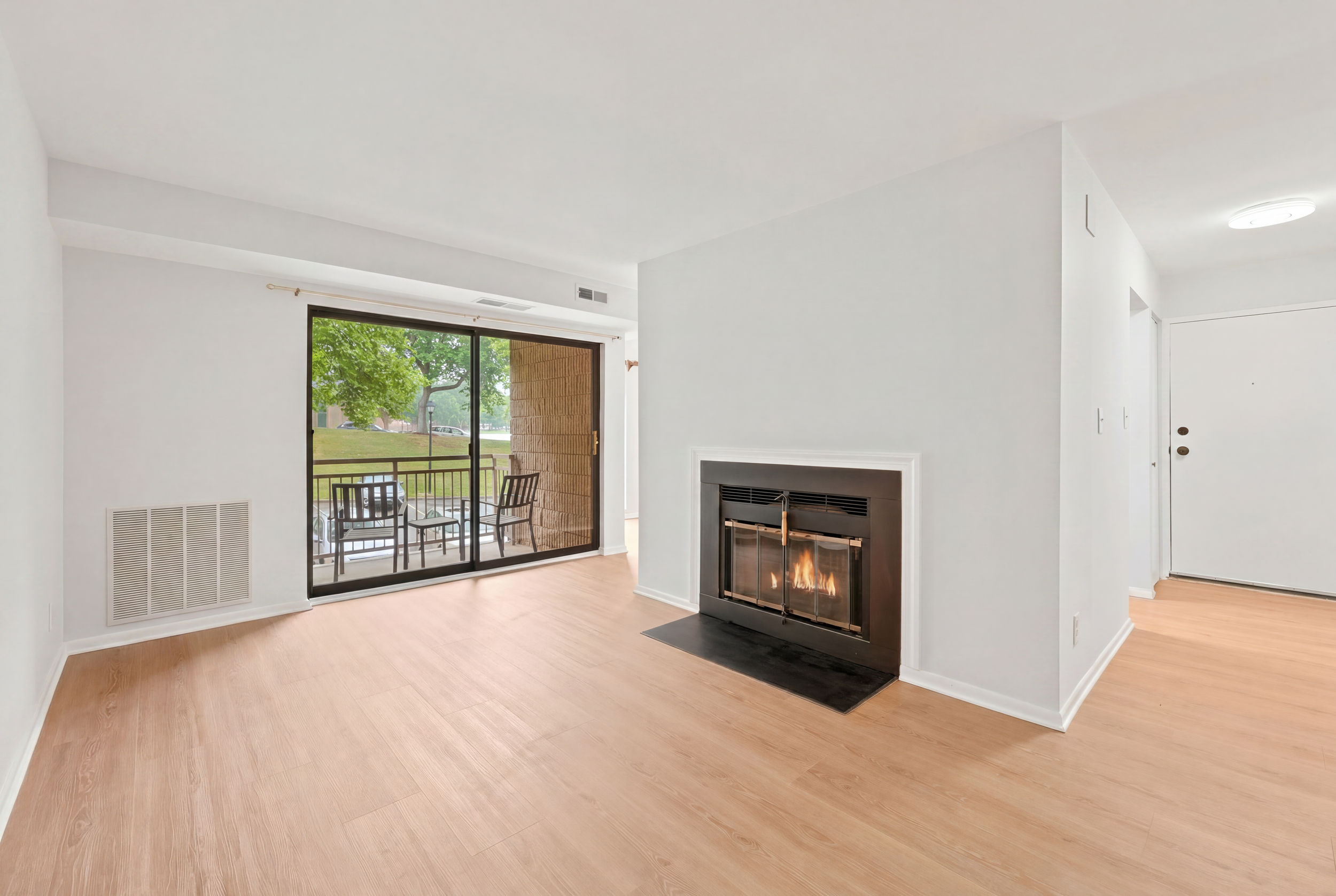
Straight verticals make a room feel calm and true to size; leaning walls make it feel smaller.
Mistake 3: Showing Too Little
A listing with eight photos tells buyers you're hiding something. Skip the primary bath, the basement, the backyard, or the entry, and buyers fill those gaps with worst-case assumptions — and a listing that doesn't answer questions gets fewer showings. A complete gallery walks the buyer through the home in the order they'd actually tour it, with every selling space represented.
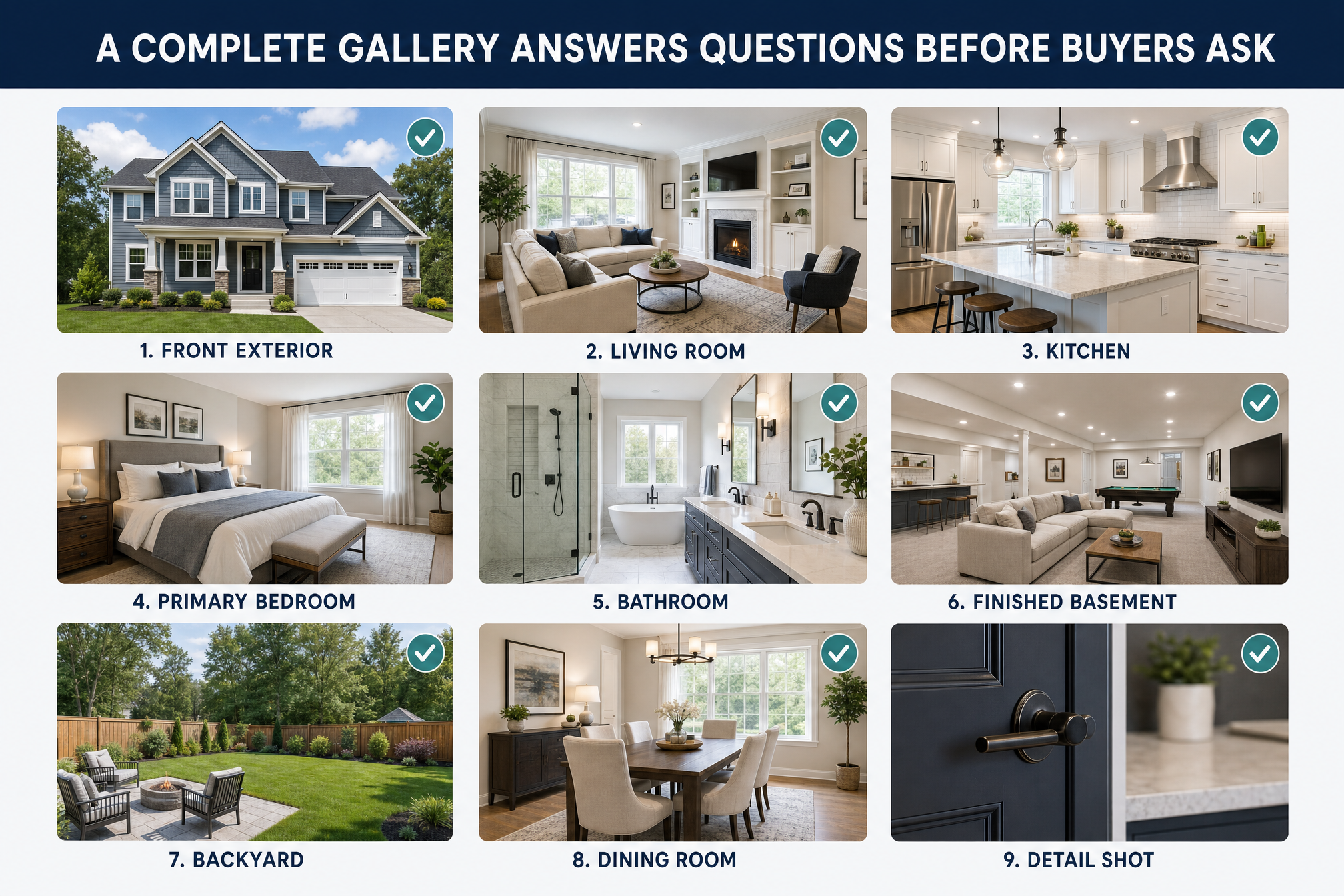
A full gallery — every key room, in tour order — keeps buyers from filling the gaps with doubt.
Mistake 4: Trusting the Light to Sort Itself Out
Natural light alone is unpredictable: harsh midday sun, a dim north-facing room, or mixed daylight and lamplight that turns walls yellow-green. Waiting on “golden hour” isn't the fix either — it's a narrow window that rarely lines up with a listing's timeline. The reliable answer is HDR bracketing: blending several exposures so shadows lift, windows hold their view, and color stays true whatever the weather. Flash can do some of this, but bracketing has made it largely unnecessary for interiors and rarely worth the extra setup time. Overcast days photograph beautifully, which is why a grey forecast is never a reason to reschedule.
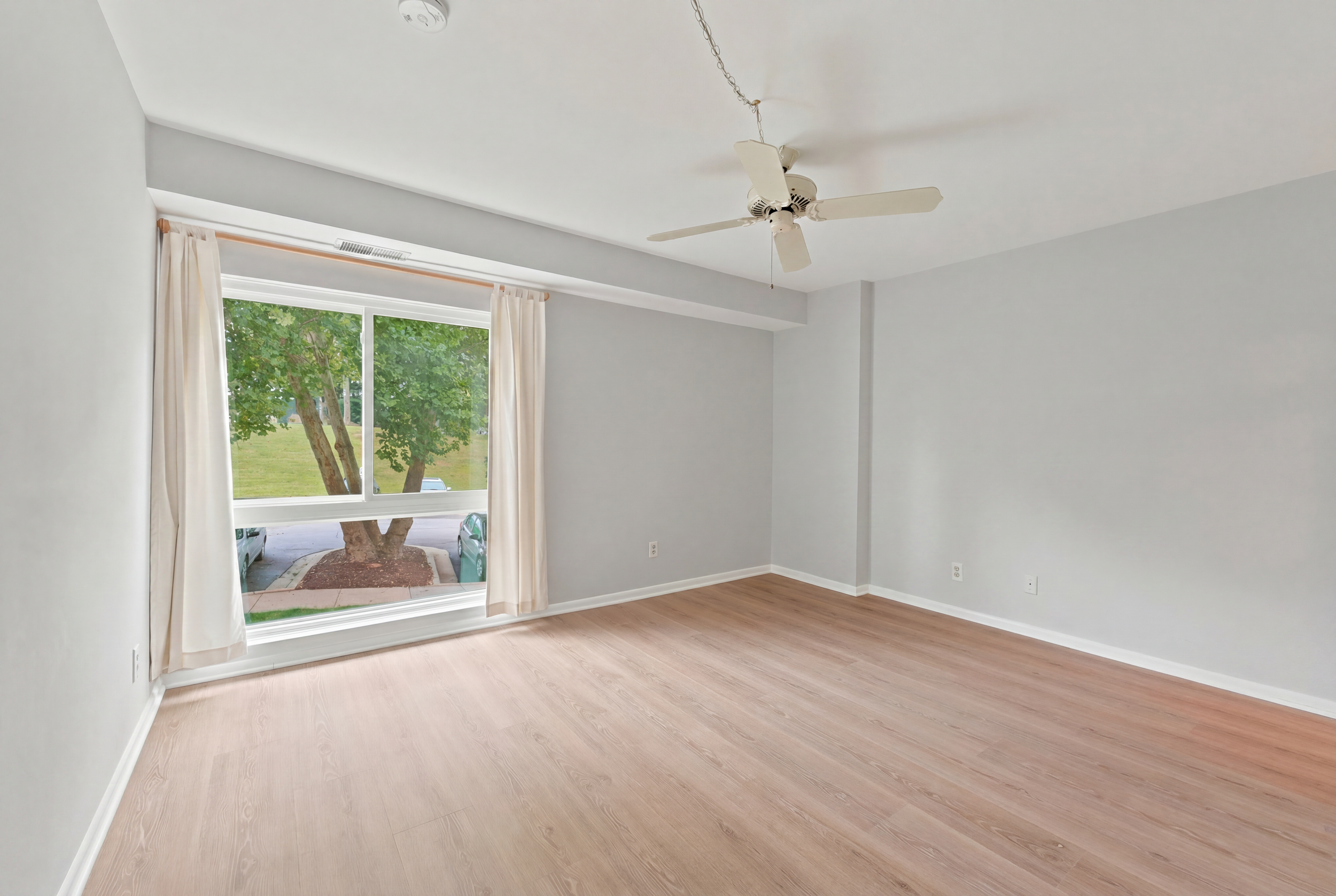
Mistake 5: Leaving the Clutter In
The fastest way to shrink a room in a photo is to fill it — countertop appliances, fridge magnets, shoes at the door, a crowded vanity. The camera flattens depth, so clutter reads as chaos, and here's the honest part: paying for professional photography while skipping prep does very little to lift a sale price. A tidy home is the cheapest upgrade in the gallery. When a home is actively lived in and there's simply nowhere to put everything, editing can bridge the gap — Cove offers room and full-property digital decluttering, plus grass replacement for tired lawns — but treat it as a fallback for occupied listings, not a substitute for clearing the space.
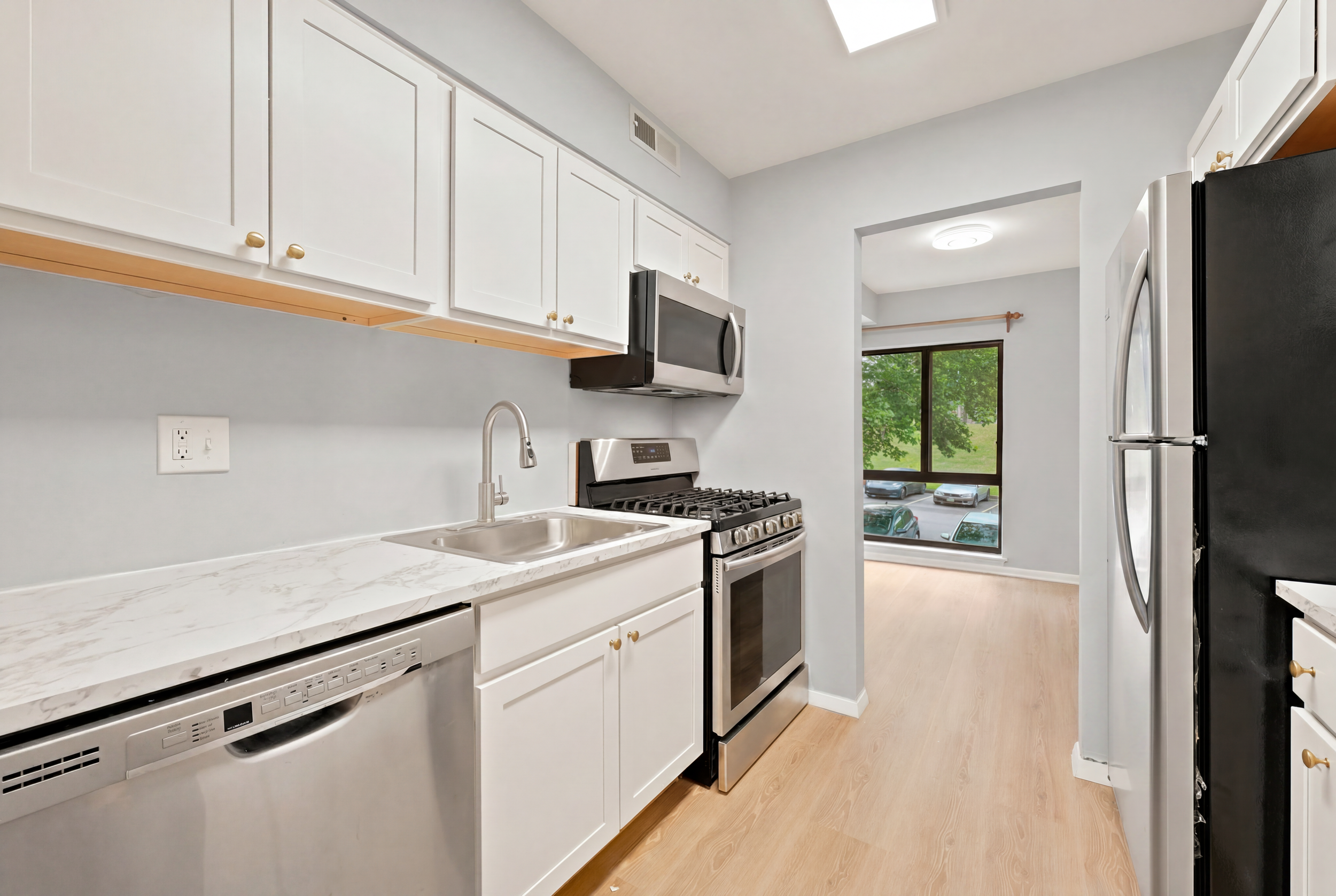
Clear counters and tidy surfaces make rooms read bigger — prep is the cheapest upgrade in the gallery.
Mistake 6: Wasting the First Photo
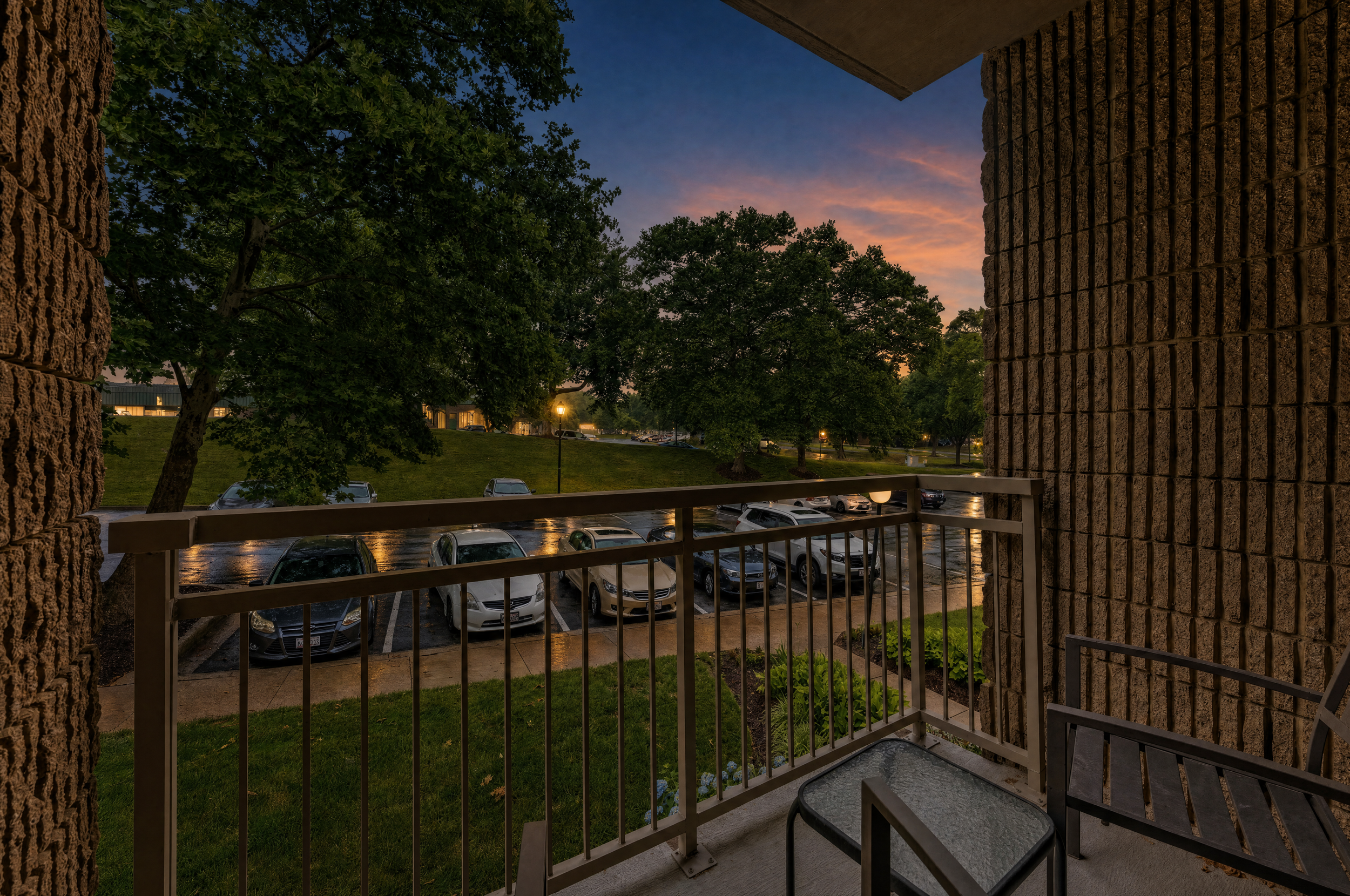
The lead photo does most of the work — it's the frame buyers see in the search grid, and it decides whether they click at all. Bury your best angle behind a dim driveway or a cluttered entry and you've thrown away that one shot at attention. Lead with the strongest exterior or the home's signature space; where the property earns it — a waterfront, a big lot, a rooftop view — an aerial opener can lift interest sharply, with aerial imagery widely cited as helping homes sell up to 68% faster. Virtual-twilight is one of the most dependable ways to win the click — which is why Cove's premium package is built around it: a click-focused set at a low price that bundles virtual twilight in.
The Fix Is Mostly Discipline
None of these mistakes call for a bigger budget. They call for HDR, corrected lines, a complete gallery, controlled light, a tidy home, and a hero shot that earns the click — with 24-hour, Bright MLS-ready delivery so the photos are working for you the day after the shoot.
If your last few galleries tripped any of these, the next one doesn't have to. See the full media options and pricing, or book a shoot at cove.media.