Real Estate Photography for Townhomes in the DC Area: How to Shoot Multi-Level Listings
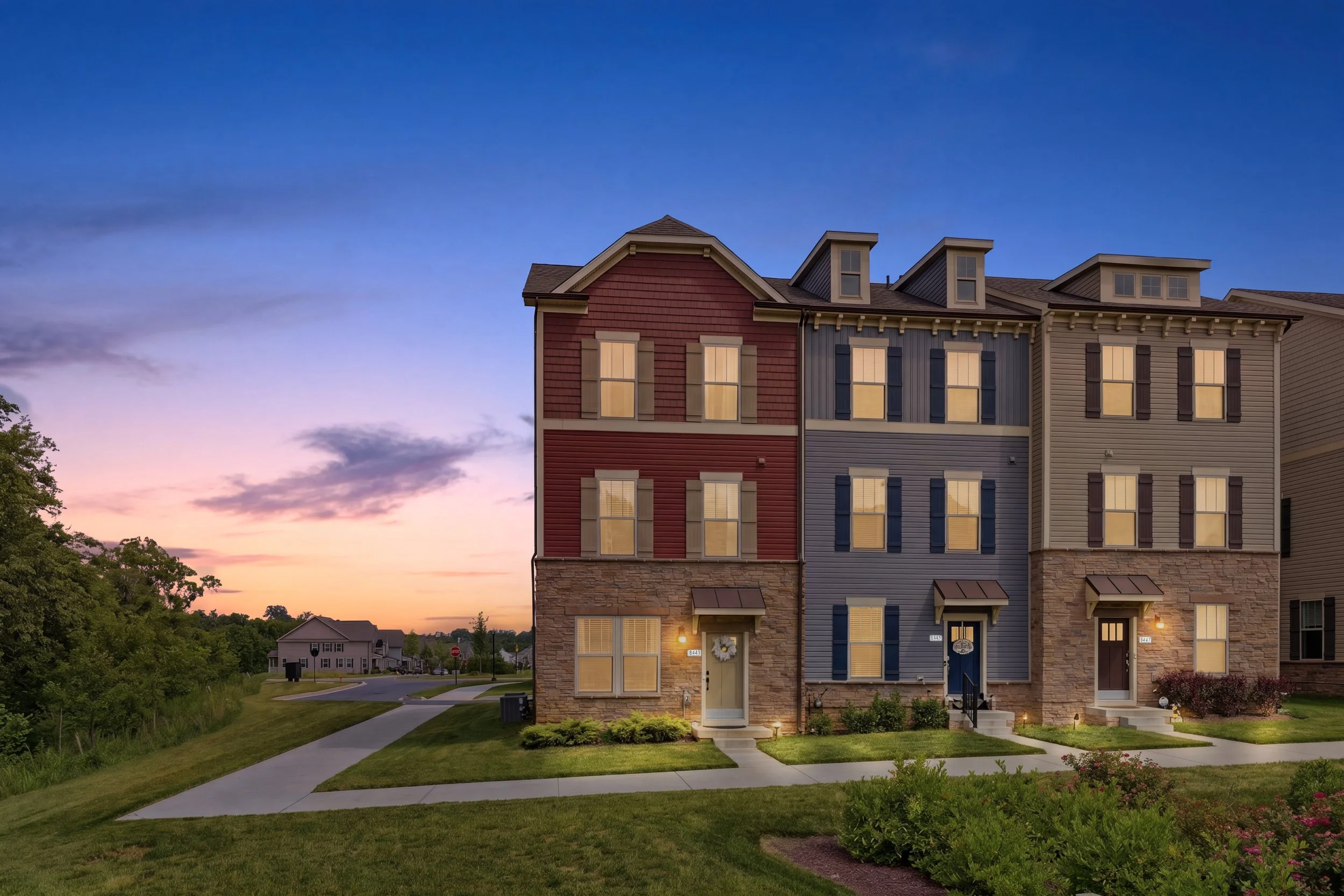
Townhomes are the DC metro's middle ground. They give buyers more space than a condo and a lower price than a detached house, which is a big reason demand has held up through 2026 — townhome closed sales across the metro have been running roughly 10% ahead of last year, with the median price near $625,000 and days on market shrinking. (stat to verify against Bright MLS) For a lot of first-time and move-up buyers in Northern Virginia and the Maryland suburbs, a townhome is the most realistic way into a good location.
But townhomes are deceptively hard to photograph well. A gallery that flatters a one-level rambler falls flat on a three-story end unit. The space moves vertically, the lots are tight, the units share walls, and half the rooms get their light from a single direction. If the photos don't solve those problems, the listing reads as smaller and darker than the home actually is — and buyers keep scrolling. Here's how we shoot townhomes at Cove Media so the home looks like what it is: bright, efficient, and bigger than its footprint suggests.
Why Townhomes Are Harder Than They Look
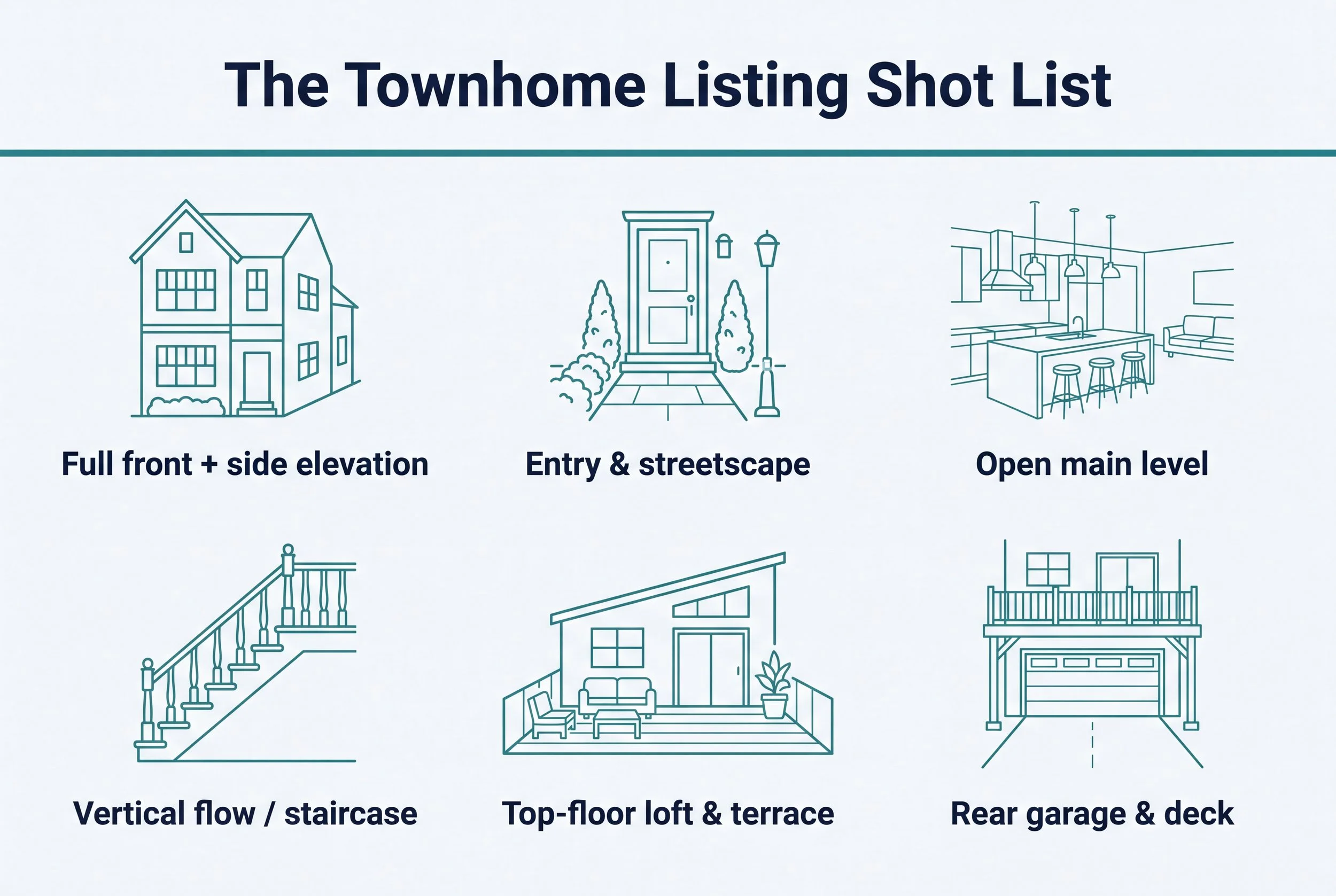
On a detached home you can walk a full circle and shoot from any angle. A townhome takes that away. You're usually working from one open side and a narrow strip of front and back. Inside, the living space is stacked across two or three floors instead of spread out, so no single wide frame captures the whole "flow." And the middle level — typically the main living area — often has windows on just the front and rear, which makes even lighting a challenge. None of that is a problem if you plan for it. It just means a townhome needs a deliberate shot list, not a walk-through.
Exteriors: End Unit vs. Interior Unit
The exterior is where end units and interior units diverge the most. An end unit — like the one in these photos — has a full side elevation, extra windows, and usually better landscaping, so we photograph the side and the corner, not just the front. That angle shows the home's real volume and sets it apart from the row. Interior units need a different plan: a clean, straight-on front elevation that leans on the entry and the streetscape rather than trying to isolate the unit from its neighbors. Done right, the shared facade reads as a well-kept community instead of a cropping problem.
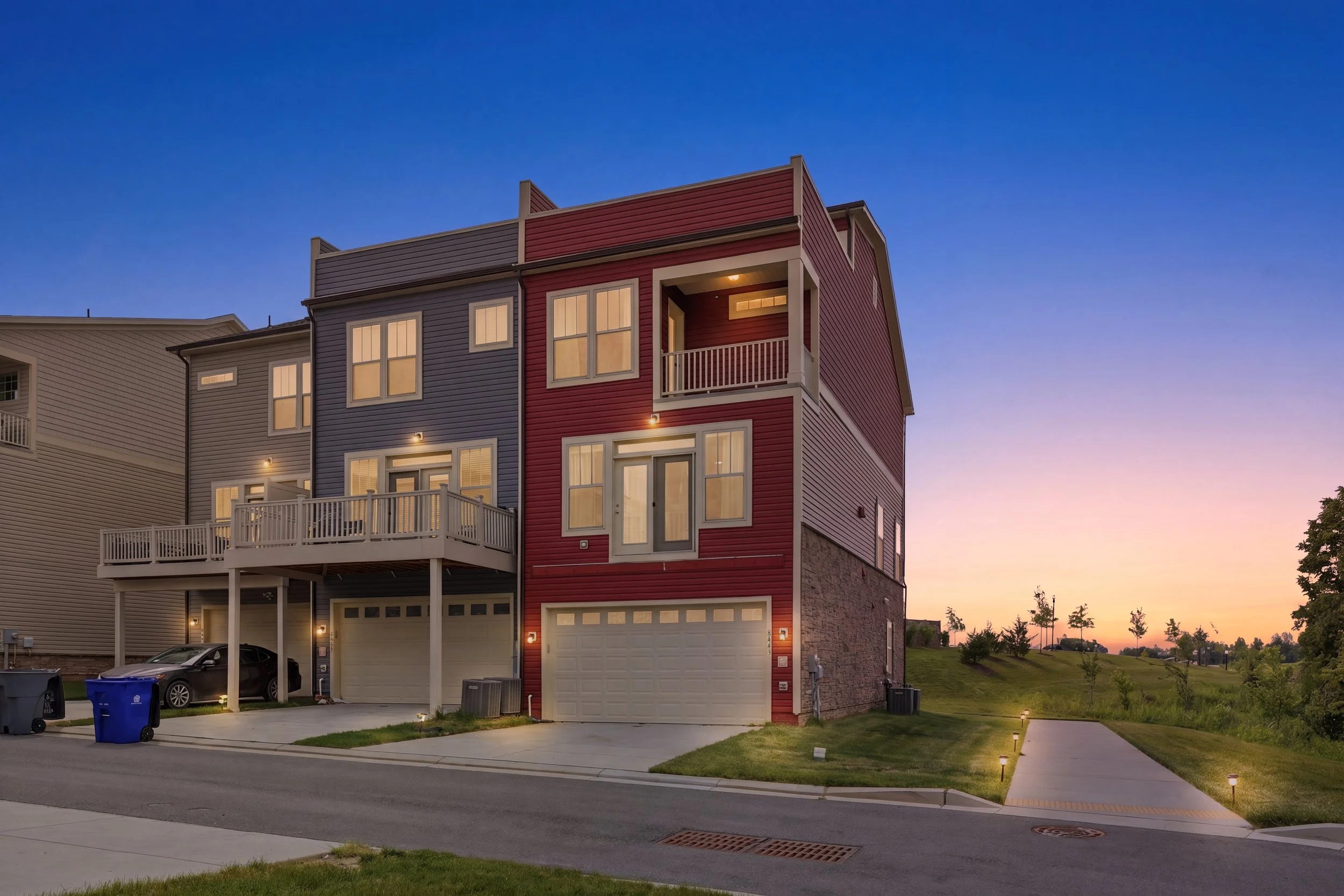
The back of a townhome matters more than people expect. It's where the garage, the deck, and the walkout level live, and for buyers comparing floor plans online, the rear elevation answers practical questions about parking and outdoor space in a single frame.
Inside: Show the Vertical Flow
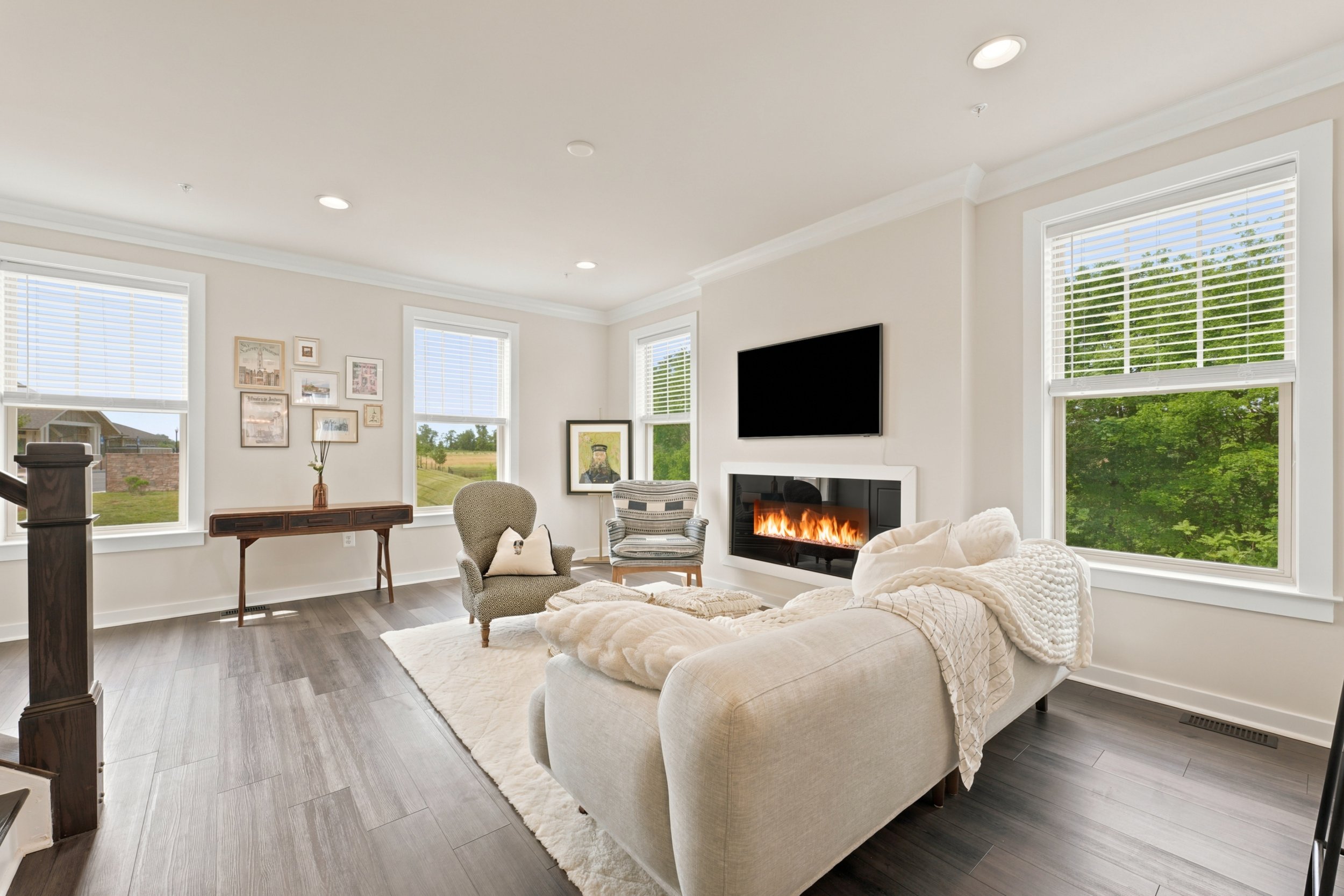
The job inside is to make a stacked floor plan feel open and connected. We shoot the main level wide to capture the sightlines — kitchen to dining to living in one frame — so buyers understand how the floor actually lives.
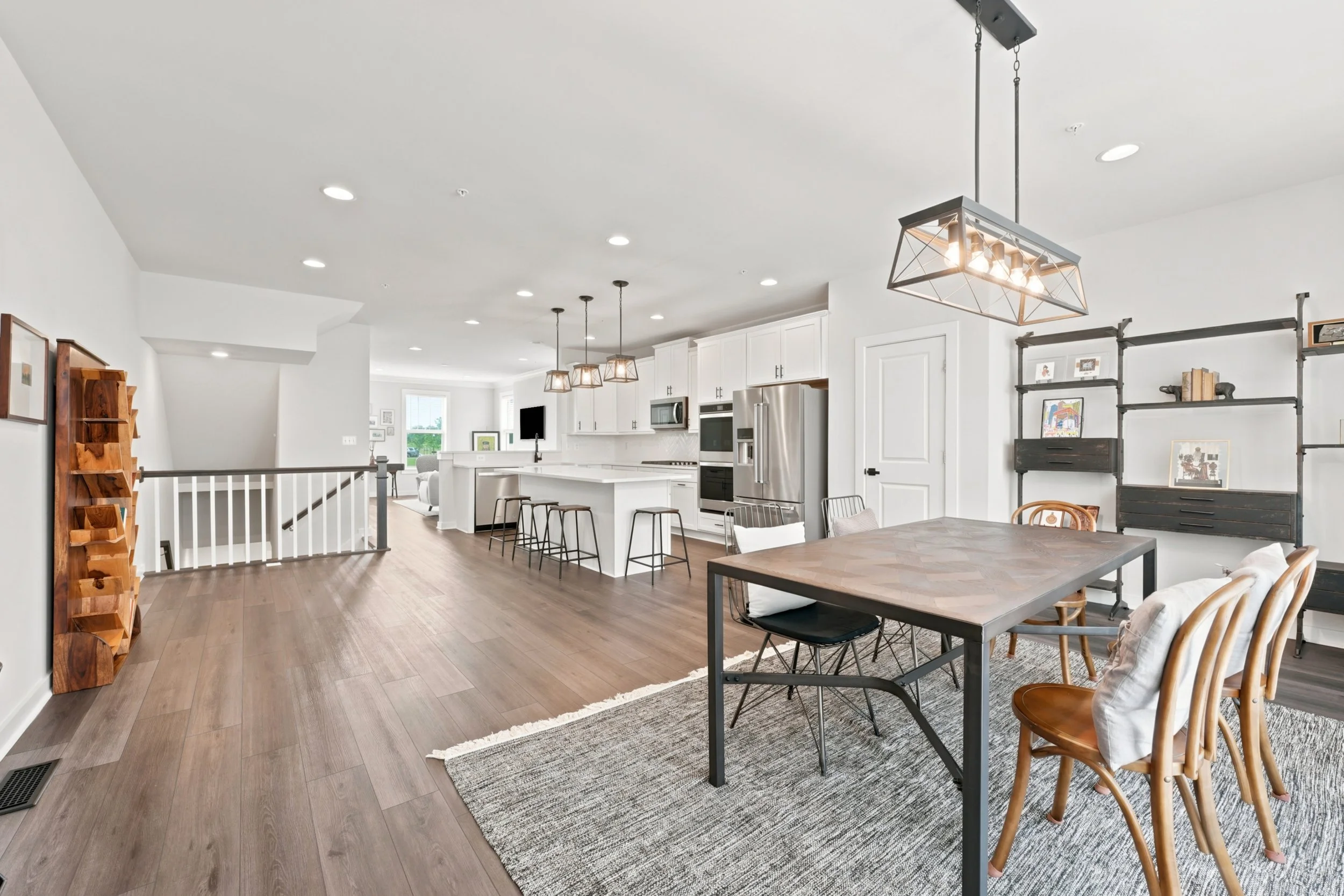
Two technical things matter here more than on a typical listing. First, vertical line correction: three-story walls and tall windows will visibly lean if the camera isn't kept level, and leaning walls make a home look amateurish. Second, HDR bracketing: with light coming from only one or two directions, a single exposure either blows out the windows or buries the room in shadow. Blending exposures keeps the windows, the view, and the interior all properly lit — which is the whole point on a level that doesn't get wraparound light.
Don't Skip the Top Floor
Townhome buyers are paying for the bonus spaces, so we never treat them as afterthoughts. Rooftop terraces, top-floor lofts, and flex rooms are often the feature that wins the sale, and they photograph beautifully when you show the indoor-outdoor connection and the view off the top of the building.
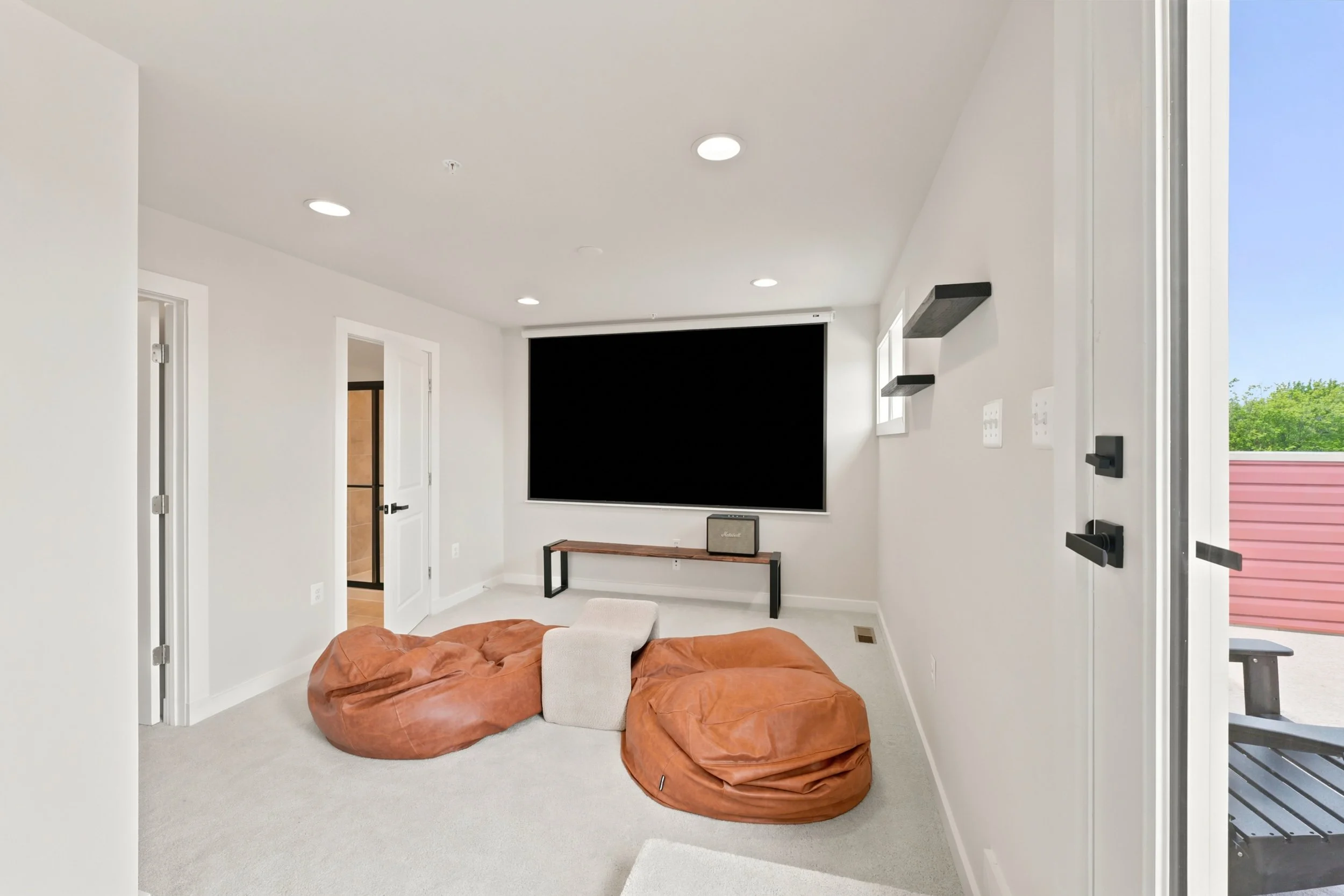
A loft like this one does double duty — it shows usable square footage and lifestyle at the same time. We light it to feel like a place you'd actually hang out, not an empty bonus room, and we make sure the door to the terrace is part of the frame.
Why a 3D Tour Earns Its Keep on a Townhome
The hardest thing for a buyer to grasp about a townhome from stills alone is how the levels connect. Photos show rooms; they don't show that you enter on one floor, the kitchen and living are a flight up, and the bedrooms are up again. An interactive 3D tour fixes that. It lets buyers "walk" the home in the right order, get a feel for the stair count and the room-to-room flow, and self-select before they book a showing — which usually means the people who do tour in person are more serious.
For a multi-level home, that spatial clarity is worth more than it is on a single-story listing, where the layout is obvious at a glance. We offer a 3D tour as its own package — HDR photos, a premium floor plan, and an interactive walk-through with your choice of a Matterport or a Zillow 3D Home tour. That choice matters in the DC metro: a Matterport tour no longer displays directly on Zillow, so when Zillow placement is the priority, the Zillow 3D Home version is the one to pick.
A Few DC-Area Specifics
Townhome developments here come with their own quirks. Streets and visitor parking are tight, so we time exteriors to keep cars and trash bins out of frame. Aerial and elevated angles are great for showing a three-story facade and the surrounding community, but drone rules tighten inside the DC Flight Restricted Zone — in those areas we use a pole-based elevated shot instead. And in a new-construction community, a little coordination on staging and landscaping goes a long way, since model-home polish is exactly what these buyers expect.
Townhomes reward a photographer who plans for verticality, respects the light, and shows buyers how the floors connect. Get those right and a three-level home that's easy to undersell instead looks like the best value on the street. If you've got a townhome coming up in the DC, Northern Virginia, or Maryland market, that's the kind of listing Cove Media is built to shoot.