Do Real Estate Photographers Edit Photos? What DC Metro Area Agents Get After the Shoot
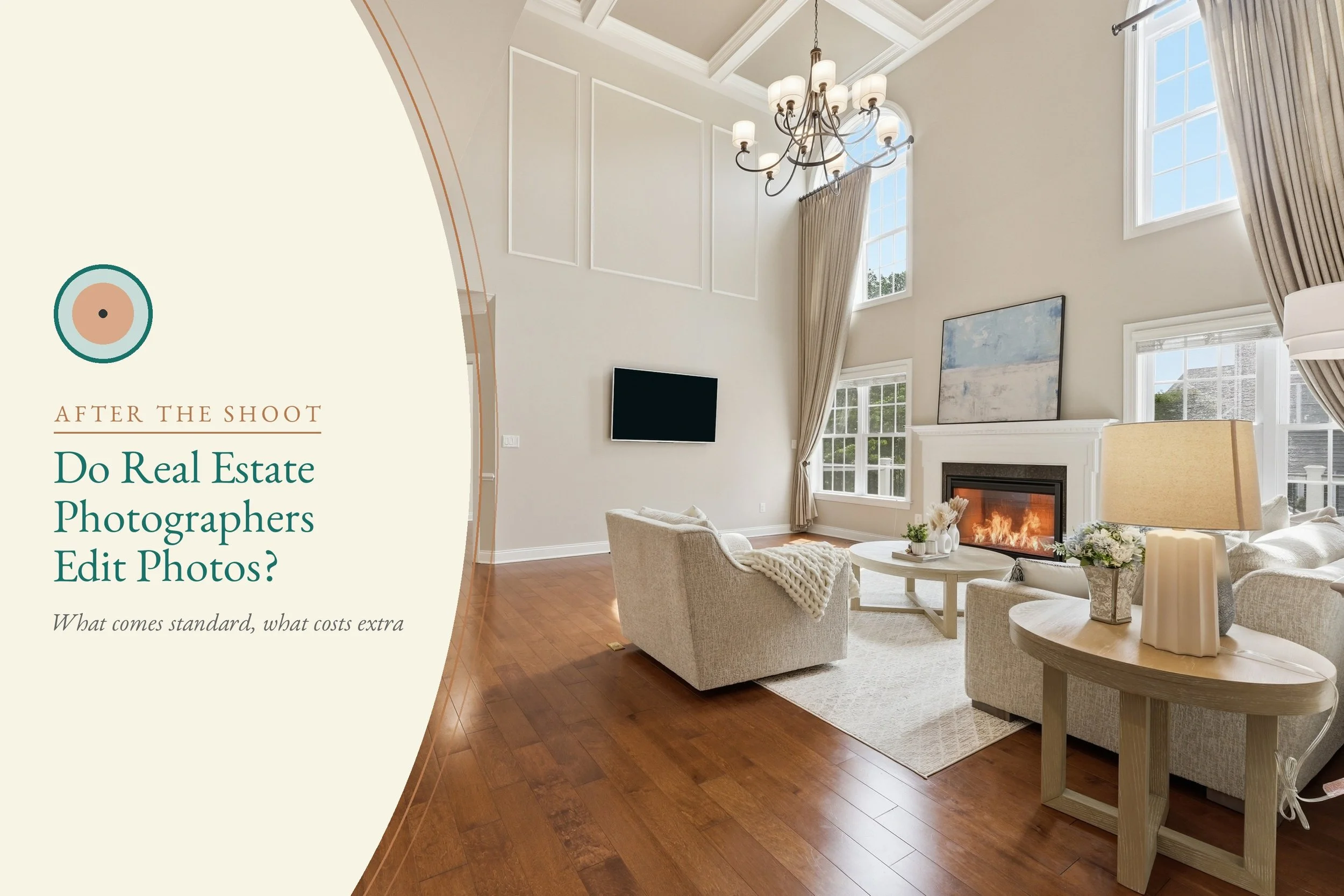
Yes. Every professional listing photo is edited, and much of what separates a professional gallery from a phone gallery happens after the photographer leaves the house. The camera captures the raw material: several exposures of each room, taken from the right height with the right lens. Editing turns those exposures into the single frame a buyer sees on Bright MLS, Zillow and Redfin.
That frame carries a lot of weight. In NAR's 2026 Home Buyers and Sellers Generational Trends report, 81% of buyers who used the internet in their search rated photos "very useful," more than any other feature on a listing site. Yet agents rarely get a straight answer about what the editing behind those photos includes. Some of it comes with every shoot. Some of it is an add-on with its own price. And some problems can't be fixed in editing at all. Here's how each works for a listing in the DMV.
1. What Happens to Every Photo After the Shoot
A professional interior photo usually starts as a set of bracketed exposures: the same frame shot several times, from dark to bright, without moving the camera. One exposure holds the view through the window. Another holds the shadows under the kitchen island. Editing blends them into one image that looks the way the room looks to someone standing in it. That process is HDR, and it's the baseline for listing interiors. The guide to HDR real estate photography covers how it works in more detail.
DMV housing gives that blending plenty to do. A Capitol Hill rowhouse gets daylight at the front and back and very little in the middle. A high-rise condo in Arlington or Bethesda has a wall of glass facing a bright sky. A split-level in Rockville puts a dim lower level a few steps from a sunny kitchen. No single exposure handles any of those rooms.
From there, standard editing covers the corrections nearly every frame needs:
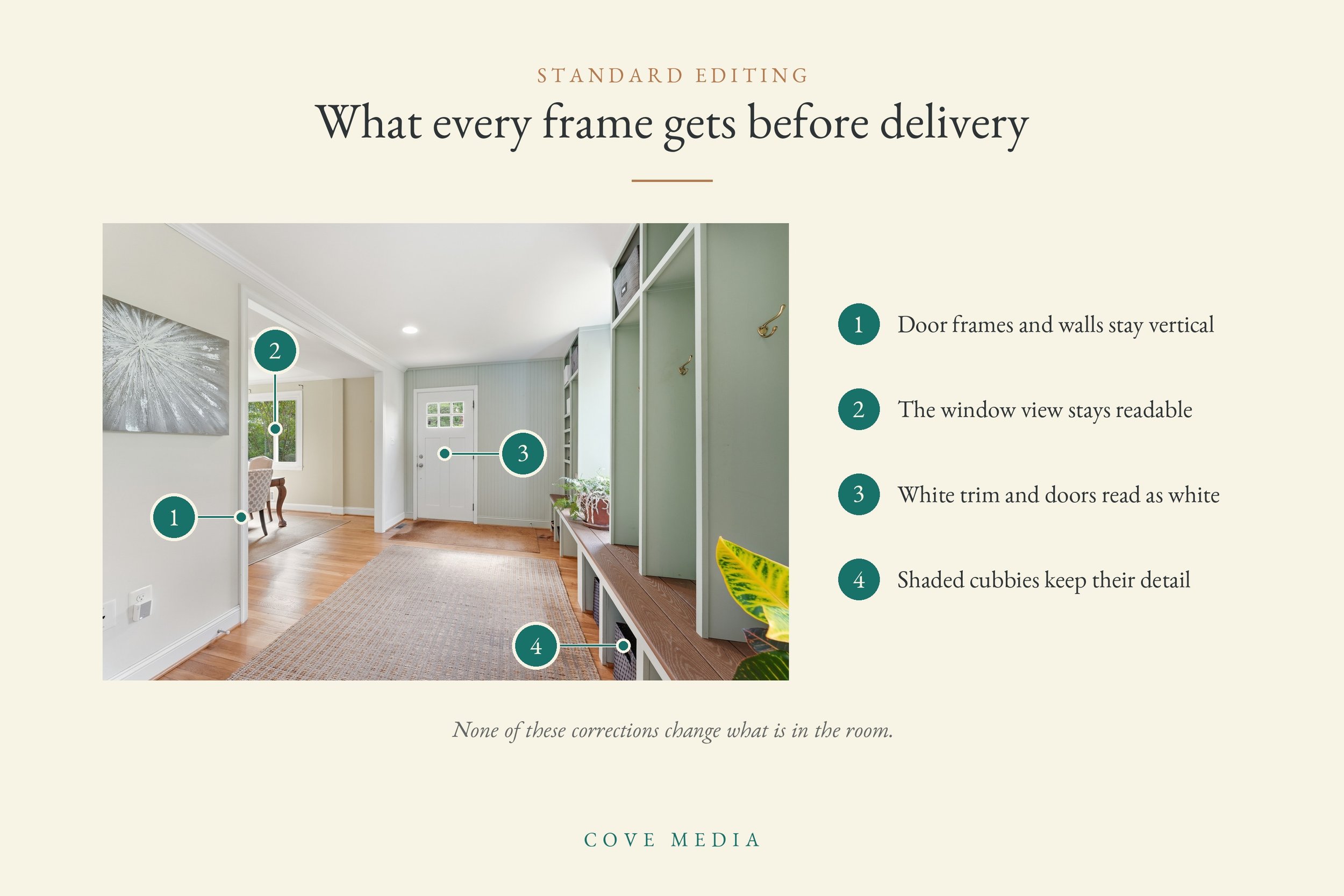
Color and white balance. Most homes mix daylight from the windows with warm ceiling fixtures and the occasional cool LED. Left alone, a white wall goes yellow in one corner and blue in another. Editing evens the color so white reads as white.
Straight verticals. Tilt the camera even slightly and door frames and walls start to lean, and a wide lens exaggerates it. Straightening them is the difference between a room that looks solid and one that looks like it's tipping.
Lens correction and detail. Wide lenses bend straight lines near the edges and soften fine detail. Both get corrected.
Windows and skies. Window views stay readable instead of blowing out to white. On exteriors, Cove Media's standard editing includes bright color, sharp detail and blue skies regardless of the weather on the day of the shoot.
None of these corrections change what's in the room. They make the photo match what the eye sees on site, which a camera doesn't do on its own.
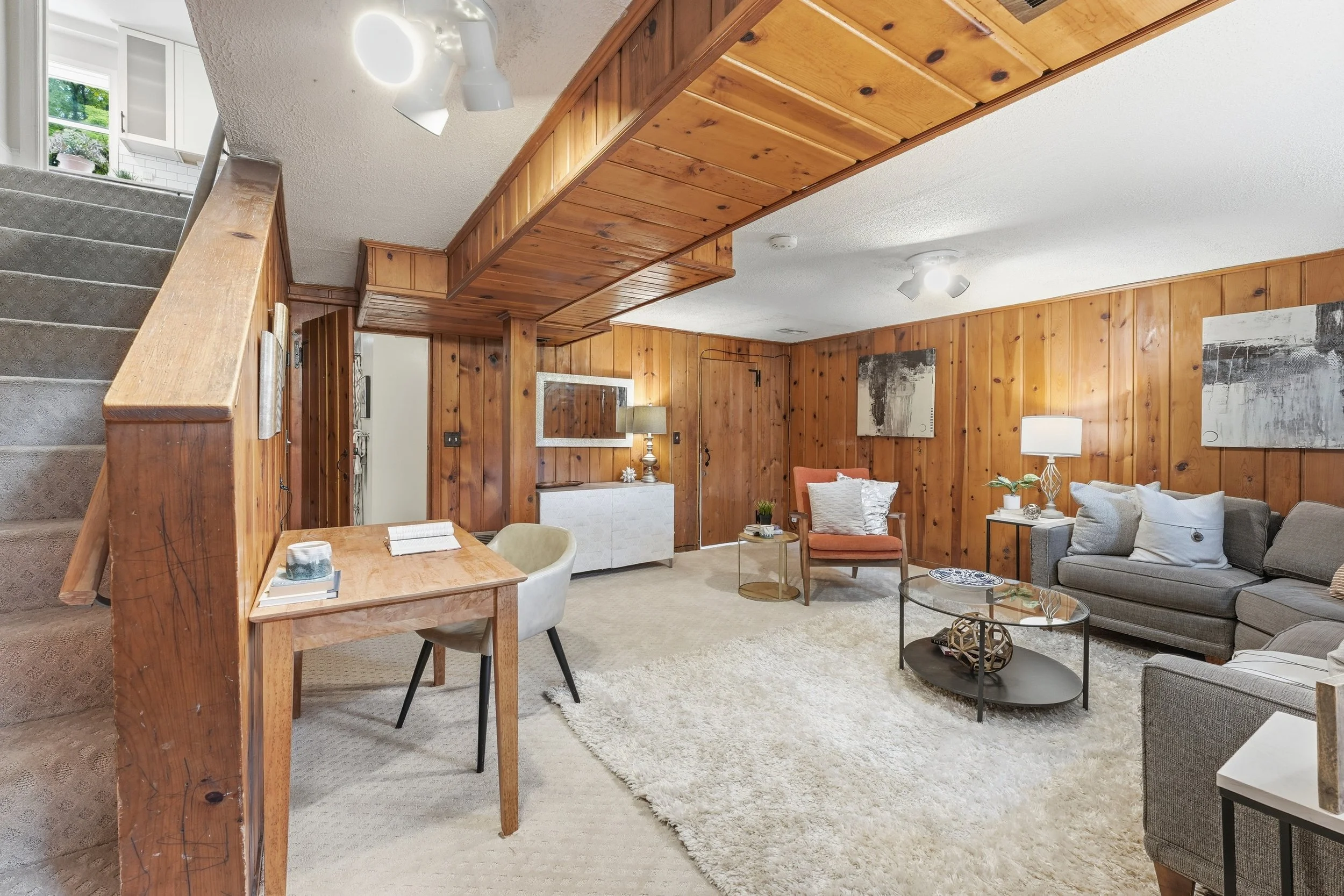
Knotty-pine paneling, a stair window, lamps and ceiling fixtures in one frame. Rooms like this are where blending and color correction do most of the work.
2. The Edits That Cost Extra
Beyond standard editing are the edits that change the scene itself: the time of day, the furniture, the clutter, the lawn. Each one is its own piece of work, so each is priced on its own. As listed on Cove Media's pricing page:
Virtual twilight: $85 for five photos. Turns a daytime exterior into a dusk scene with lit windows and a colored sky.
Virtual staging: $10 per image. Furnishes an empty room.
Room declutter: $10 per image. For a whole shoot, property declutter is $95, $195 or $295 for 20, 40 or 60 photos.
Season swap: $10 per image. Changes the season shown in an exterior photo.
Grass replacement: $10 per image. Fixes spotty or yellow grass.
Virtual twilight saves a second appointment. A real twilight shoot means coming back at sunset; the edit gets the dusk look from a daytime frame. It's also included in the Premium Photo Package, along with HDR photos and a basic floor plan, starting at $239 for 20 photos.
Virtual staging matters most on vacant listings, where an empty room gives buyers no sense of scale. Decluttering matters most on occupied homes, where the sellers are still living there through the listing. If your sellers will be home through the shoot, the guide to getting listing photos while you still live there covers what to clear by hand and what to leave for editing.
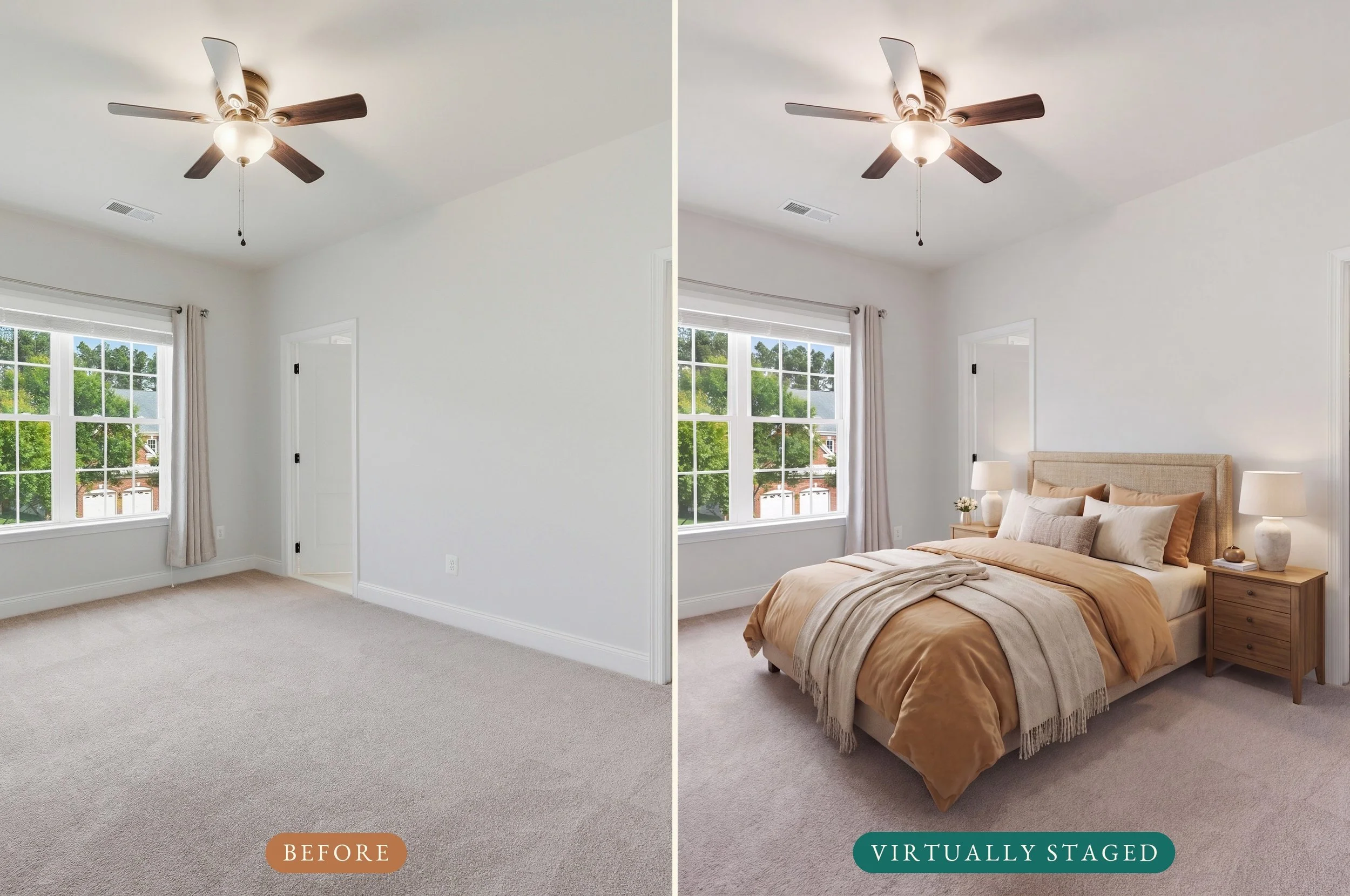
An empty bedroom in a Haymarket home as photographed, and the same frame virtually staged.
3. What Editing Can't Fix
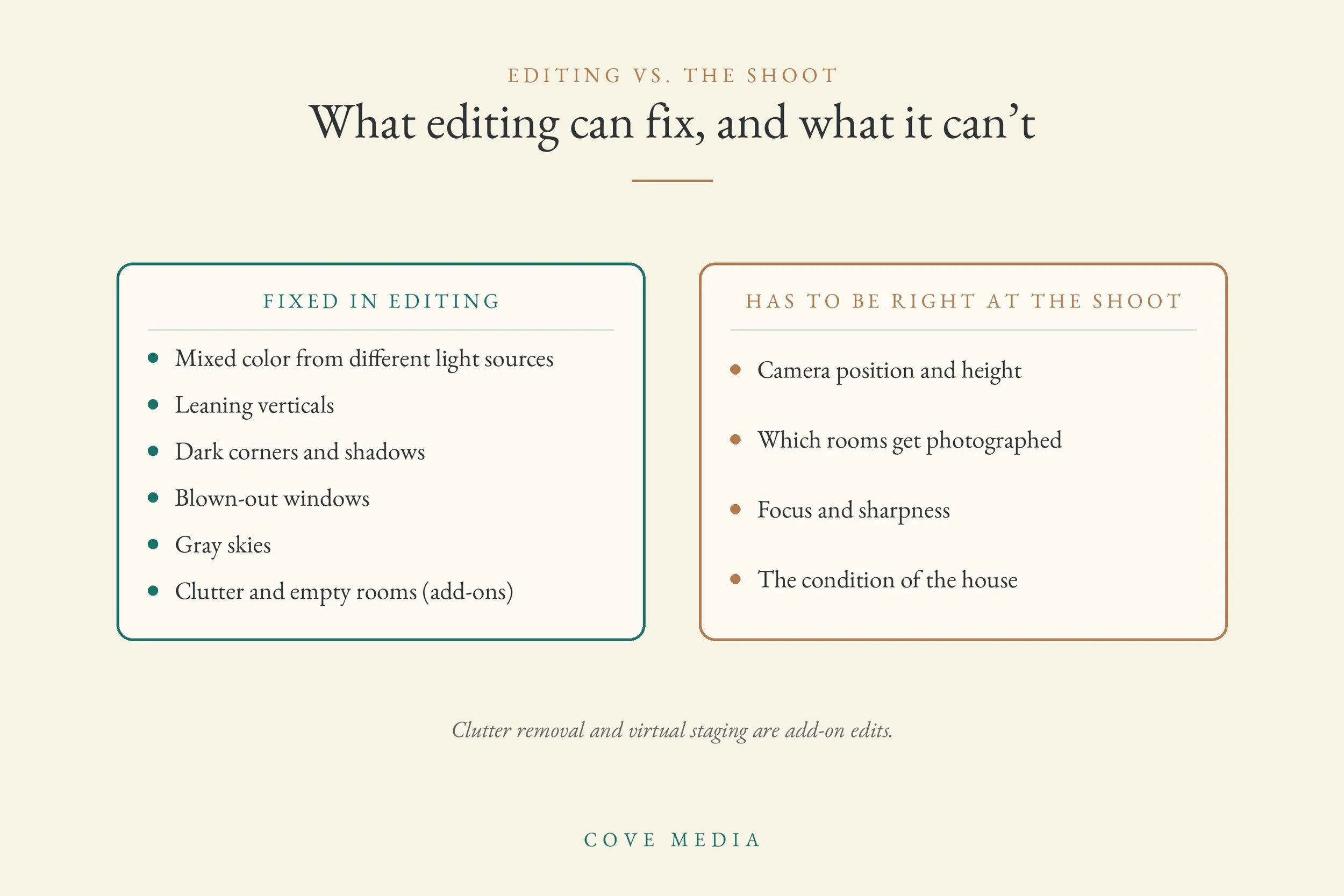
Editing works on the frame the photographer captured. It can't create a better one. These have to be right at the shoot:
Camera position and height. A room shot from the wrong corner stays shot from the wrong corner. Editing can straighten the lines, but it can't move the camera.
Rooms that weren't photographed. If the gallery skips the basement or the second bath, no edit adds it. The guide to what real estate photos should show has the room-by-room list.
Focus and sharpness. A soft frame stays soft.
The condition of the house. Editing can take a laundry basket out of a bedroom. It shouldn't take out a water stain, a cracked tile or a rotted deck board, and buyers will see those at the showing anyway.
Light falls somewhere in between. Overcast days are good for exteriors because the light is even, which leaves editing less to rescue. Hard sun on one face of a house can be balanced, but the best exterior frames start with good light.
4. Disclose the Edits That Change the Room
Color correction and straight walls show a room as it is. Staging and decluttering show it differently, and buyers deserve to know which is which. Bright MLS requires virtually staged photos to be disclosed in the MLS. Putting the unstaged version of each staged room in the gallery as well lets buyers see both.
A simple check works for any edit: would a buyer who walks in recognize the room from the photo? If the answer is yes, the edit did its job. The guide to listing photos for out-of-state buyers goes further into where flattering ends and misleading begins.
5. How Editing Fits Inside a 24-Hour Turnaround
All of that editing happens fast. Cove Media delivers standard galleries within 24 hours of the shoot. When a listing can't wait, same-day delivery is a $79 add-on that returns media about six hours after the shoot (edited video isn't included).
Add-on edits are easiest to order at booking, either one at a time or through a package that already includes them.
6. Asking for Changes After Delivery
When something in a delivered photo isn't right, be specific: name the photo and what's off. "Photo 14, the back bedroom window is too bright" gets fixed faster than "the bedroom looks off."
Some problems call for a reshoot rather than an edit. Cove Media reshoots at no charge when the problem was the weather or a photographer error. A reshoot isn't covered when the home wasn't ready: clutter or personal items left out, an unmowed lawn, or other contractors working on site during the shoot.
Get a Gallery That's Edited Before It Arrives
Every Cove Media gallery arrives edited, within 24 hours, with add-on edits priced per image or bundled into packages, anywhere across DC, Maryland and Northern Virginia. See pricing and book your shoot.