How to Get Real Estate Listing Photos When You Still Live There (2026 DMV Guide)
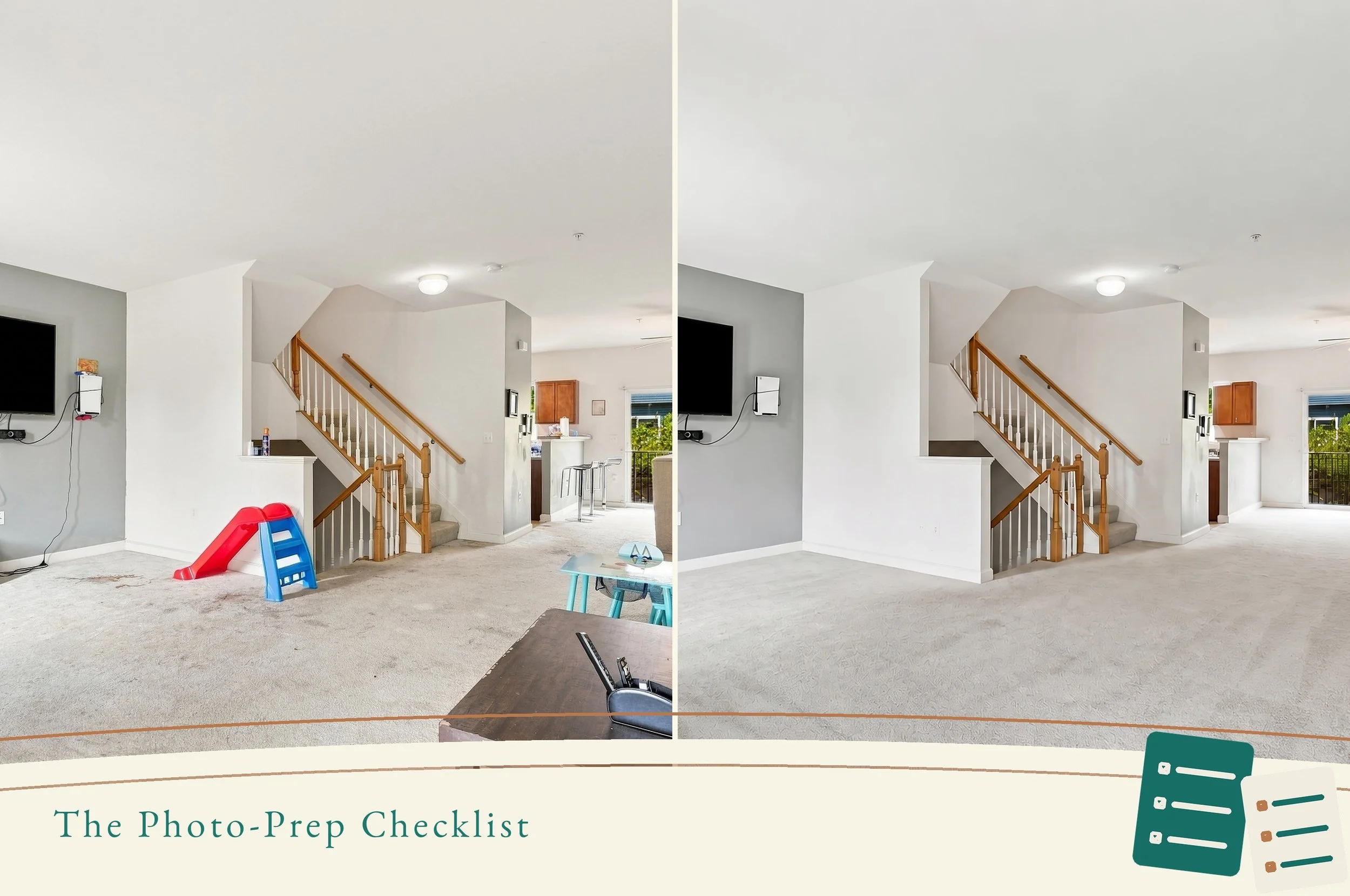
Here's the situation almost every DMV listing starts from: the sellers still live there. The beds are slept in, the toy bin is full, and the moving truck isn't coming until after closing — because the sale is what pays for the next house. NAR puts the typical seller's tenure at over a decade in the same home, and a decade of living doesn't photograph itself away.
The old answer was a miserable weekend: rent a storage unit, hire movers, empty half the house, live out of boxes while strangers tour your home — then pay to bring it all back. The 2026 answer is simpler: photograph the house as it actually is, and let digital decluttering do the moving. No boxes, no truck, no storage unit — and the photos above show exactly what that looks like. Here's how it works, what it costs against the alternatives, and the short list of things you still need to do before the camera shows up.
1. Why Lived-In Listings Are the Norm Here
The DC Metro Area runs on tight timelines: federal relocations, PCS orders, job starts that don't wait for a leisurely staging window. With more than 11,000 active listings across the region in Bright MLS this summer, the majority are occupied homes — and buyers are comparing your photos directly against every one of them. NAR's research year after year puts photos at the top of what buyers use online, ahead of every other listing feature. The photos are the showing before the showing — and "we still live here" stopped being a disadvantage the moment the clutter could leave digitally.
2. The Math: Movers vs. Digital Decluttering vs. Doing Nothing
Let's price the three ways sellers handle a lived-in house, using a typical DMV two-bedroom.
Option one: move half your life out. Local movers in 2026 average $40–$80 per hour per mover, which puts even a partial furniture-and-clutter move-out at several hundred to a couple thousand dollars in labor — plus a storage unit at $50–$300 a month for however long your listing takes, plus the same labor again to bring everything home. Priced as a full service, staging-style prep routinely lands in the $1,500–$4,000 range before your home ever hits the market; NAR pegs the median professional staging service at $1,500, consistent with what we see quoted around the DMV.
Option two: do nothing. It's free, and it's the most expensive option on this list. Buyers scroll past cluttered photos, and agents know it — 91% of agents recommend decluttering before a sale, more than any other prep step. A listing that photographs messy doesn't just lose clicks; it invites lower offers by making every room read smaller and every surface read like deferred maintenance.
Option three: digital decluttering. Professional item-removal editing runs roughly $8–$40 per image in 2026, and a typical listing only needs it on the rooms where daily life shows — call it 8 to 12 photos. That's somewhere between about $75 and $500 total, delivered in days, with nothing moved, nothing stored, and nothing hauled back. Against the mover-and-storage route, most sellers keep $1,000–$3,500 in their pocket and skip the disruption entirely.
3. The Two Levels of Digital Decluttering
"Digital decluttering" is really two different services, and knowing which one you're buying matters.
Standard decluttering removes the daily-life layer — countertop clutter, toys, laundry, cords, the mail pile — while leaving your actual furniture in place. The room stays recognizably yours, just photographed on its best day. It's the right call when the furniture shows well and the mess is the only problem.
Full room clear — the more common choice — removes everything from the frame except fixed features and the pieces genuinely worth keeping: mounted TVs, a premium rug, built-ins, high-end appliances, window treatments. What's left is a clean, empty canvas — which is exactly what makes it the gateway to virtual staging, where the empty room gets refurnished digitally with pieces chosen to sell. Every "after" in this post is a full room clear; in the primary bedroom below you can see the keep-list logic at work — the curtains stayed, the rest didn't.
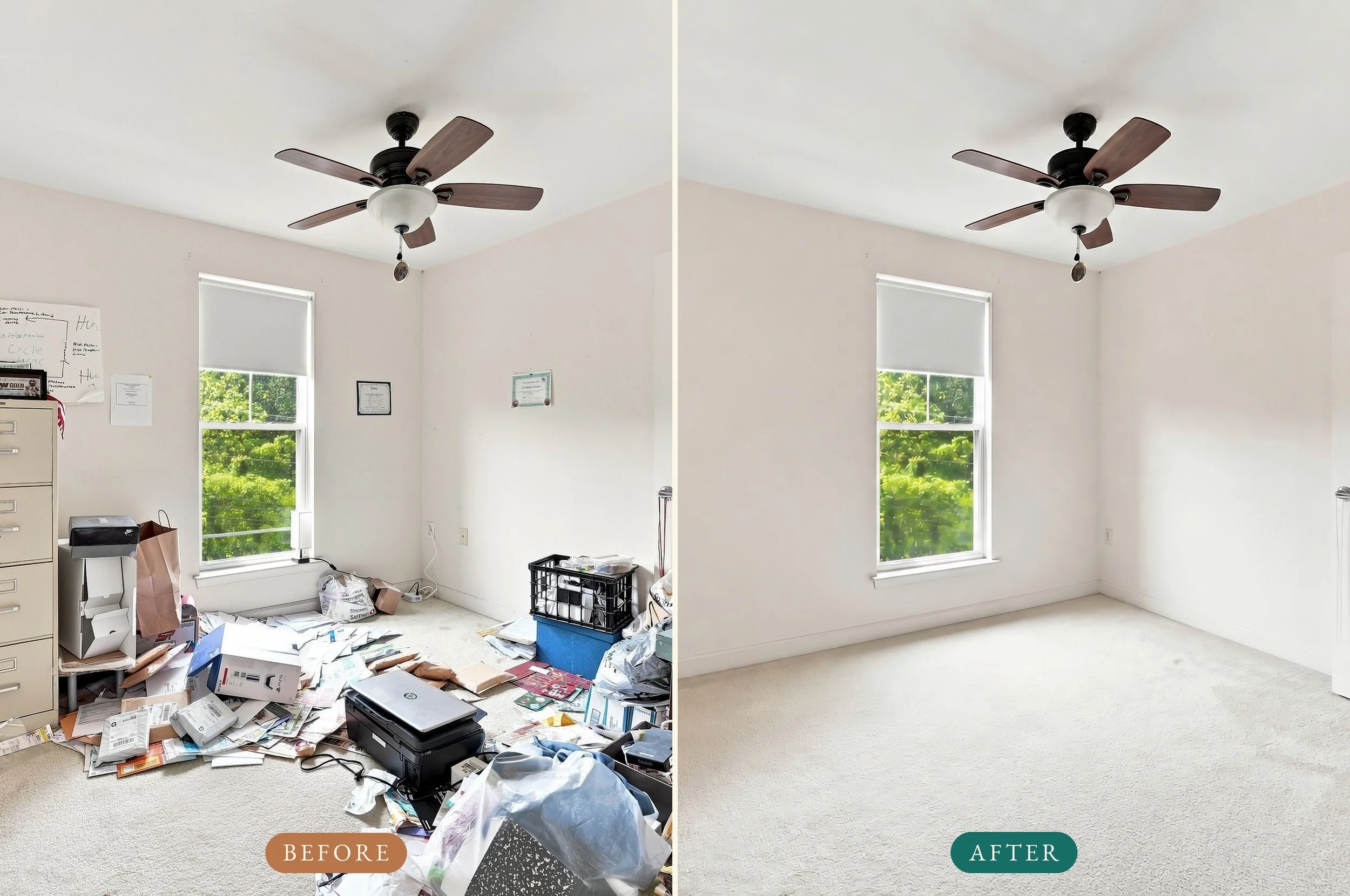
A full room clear: same bedroom, same morning — everything lifted out digitally, ready to list as-is or virtually stage.
4. What the AI Actually Needs From Your House
Here's the part that changes the old prep advice: if you're buying a digital declutter, most physical cleanup is wasted effort. The editing needs reference material, not tidiness. What matters is simple:
Enough visible floor. The software rebuilds the floor behind whatever it removes, so the camera needs real patches of carpet or hardwood to sample. If the floor genuinely can't be seen anywhere in the room, there's nothing to reference.
Enough visible wall. Same logic — paint color, trim, outlets, and texture get reconstructed from what's visible in the frame.
Light and windows working for you. Every light on, bulbs matching, blinds open and even, fans off. Blocked windows are the one thing the edit can't invent its way around — natural light defines the whole shot.
The honest threshold: unless it's a true hoarding-level situation — floors and walls nowhere visible, windows buried — don't spend your weekend cleaning for the camera. Photograph the house as it lives, and let the edit do the moving.
5. The Short Prep List That Still Matters
Whether or not you're buying a declutter, a lived-in home still benefits from ten minutes per room on the things editing shouldn't fix: turn on every light and match the bulbs, open blinds to the same height, stop the ceiling fans, close toilet lids, smooth the beds, and give pets (and their gear) one designated off-camera room. That's the whole list — it's about light and geometry, not about hiding your life.
6. Prioritize Where the Declutter Money Goes
If you're choosing which rooms get the edit, spend in the order buyers weight the rooms. NAR's staging data is unambiguous: the living room matters most to buyers (37%), the primary bedroom is next (34%), then the kitchen (23%). Guest rooms, offices, and basements get photographed — but they're not where the offer is decided.
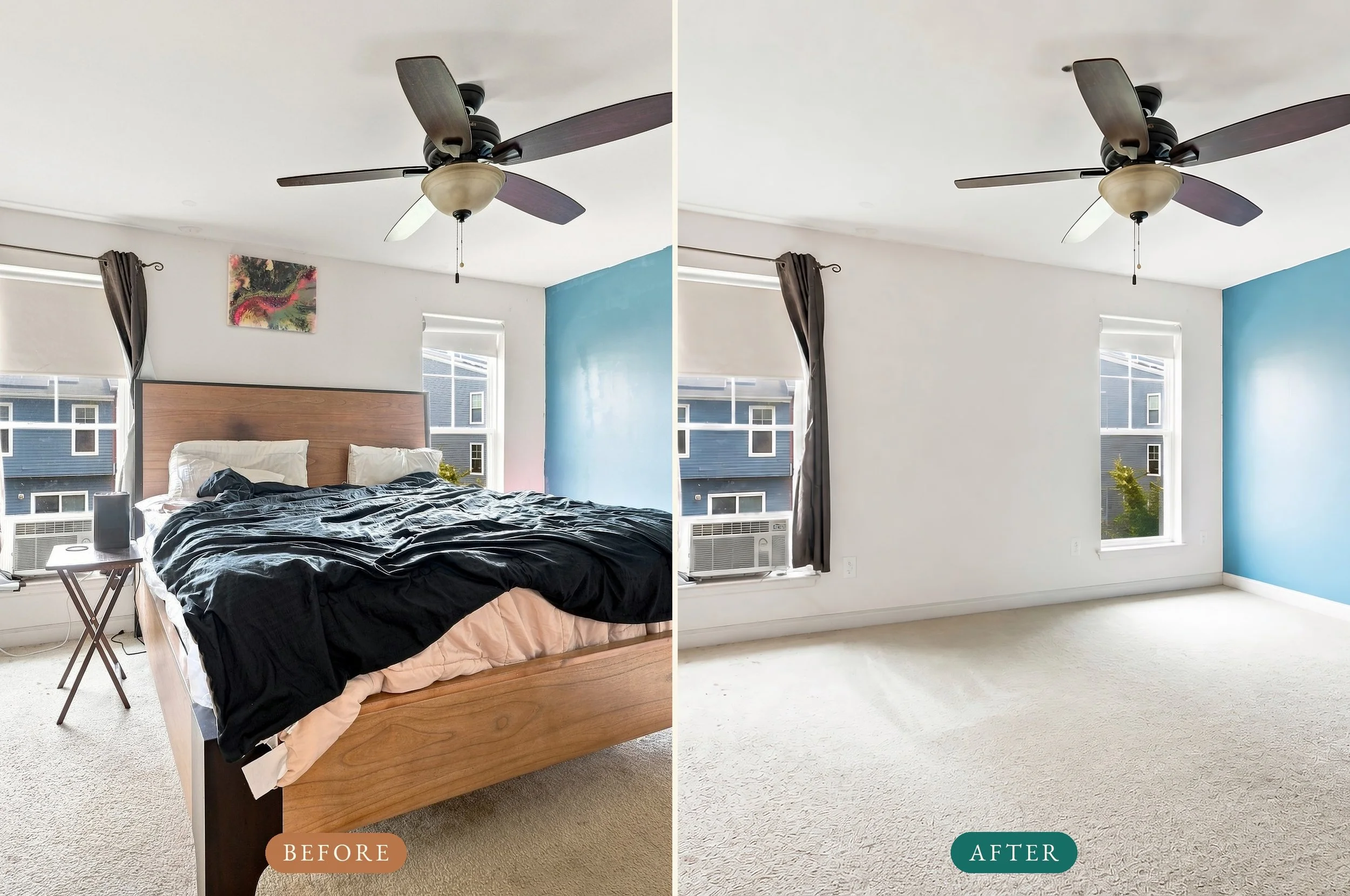
The primary bedroom carries a third of the buyer’s attention — a full clear here, with the curtains on the keep list.
7. The Digital Declutter Goes Outside Too
Exteriors are the part sellers forget — you can't exactly move the car off the street into storage. Digital handles what physical prep can't reach: vehicles removed from the driveway, bins and lawn gear lifted out of the frame, and the whole shot converted to a virtual twilight that makes a 2 PM photo read like golden hour. One honest rule we follow: digital edits remove the temporary, never misrepresent the permanent — and altered photos get disclosed per MLS rules. Buyers should fall in love with your house, not an invention of it.
While you're thinking about the shot itself: light and timing still do half the work — we covered when to schedule in the best time of day for real estate photography, and the prep-adjacent traps in the photo mistakes that cost DC Metro Area agents the sale.
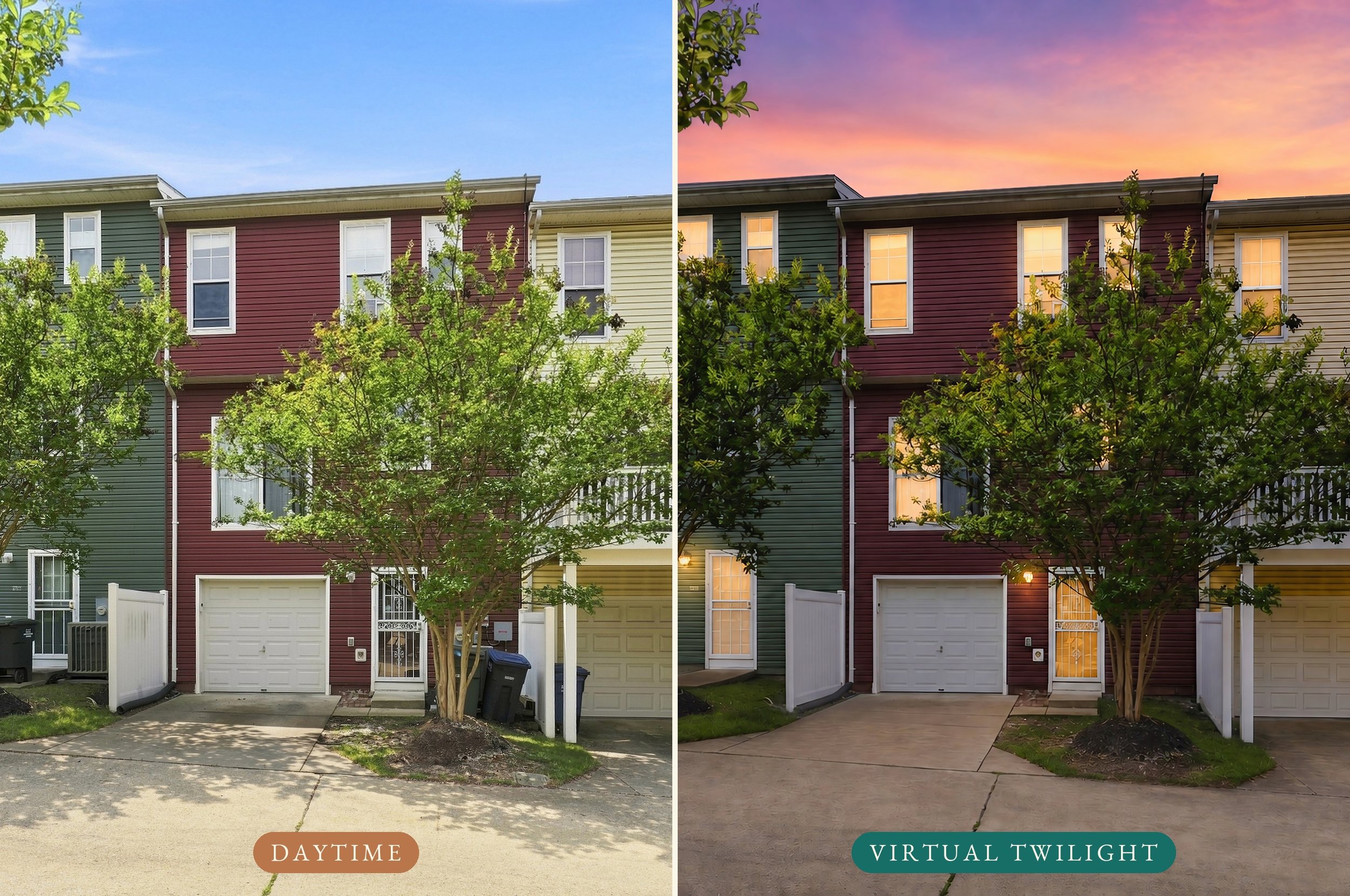
One edit pass outside — bins gone, windows lit, virtual twilight applied. The architecture is untouched.
8. The Bottom Line for DMV Sellers
You don't need movers, a storage unit, or an empty house to compete with model-home listings. You need working light, visible floors and walls, and a photographer whose workflow includes professional digital decluttering — standard or full clear. That combination costs a few hundred dollars, saves a few thousand, and gets your listing photographed this week instead of after the move-out that was never going to happen anyway.
Our pricing is flat and published for DC, Maryland, and Northern Virginia, digital decluttering included in the conversation from the start — and booking a shoot takes about two minutes.