How Much Does Real Estate Photography Cost in the DC Metro Area? (2026 Pricing Guide)
Every agent has run this math on a Sunday night. The listing goes live Thursday, the seller wants to know if your marketing includes "one of those photographers with the drone," and you're quietly googling what any of this should actually cost. The answers you'll find are national averages that don't reflect what photographers charge in Arlington or Bethesda — or they're vague enough to be useless.
So let's do this properly: real numbers, the pricing models behind them, and what actually moves a quote up or down in the DC Metro Area.
1. The Short Answer: What DC-Area Agents Actually Pay
Nationally, a standard listing shoot runs $200–$400 for a basic package of 10–20 photos, and $300–$600 for the 20–40 photo packages most listings need. Full media packages — photos plus twilight, aerial, or video — push into the $500–$1,200 range.
The DC Metro Area tracks toward the upper half of those ranges, for the same reason everything else here does: this is one of the most expensive, most competitive housing markets in the country, and the photographers serving it price accordingly. As a working benchmark, expect $250–$600 for a photo-only shoot on a typical DMV listing, and budget $600–$1,200+ when you start layering on aerial coverage, twilight, or video.
If that range feels wide, it should. The rest of this guide is about what determines where your listing falls in it.
2. How Photographers Price Their Services
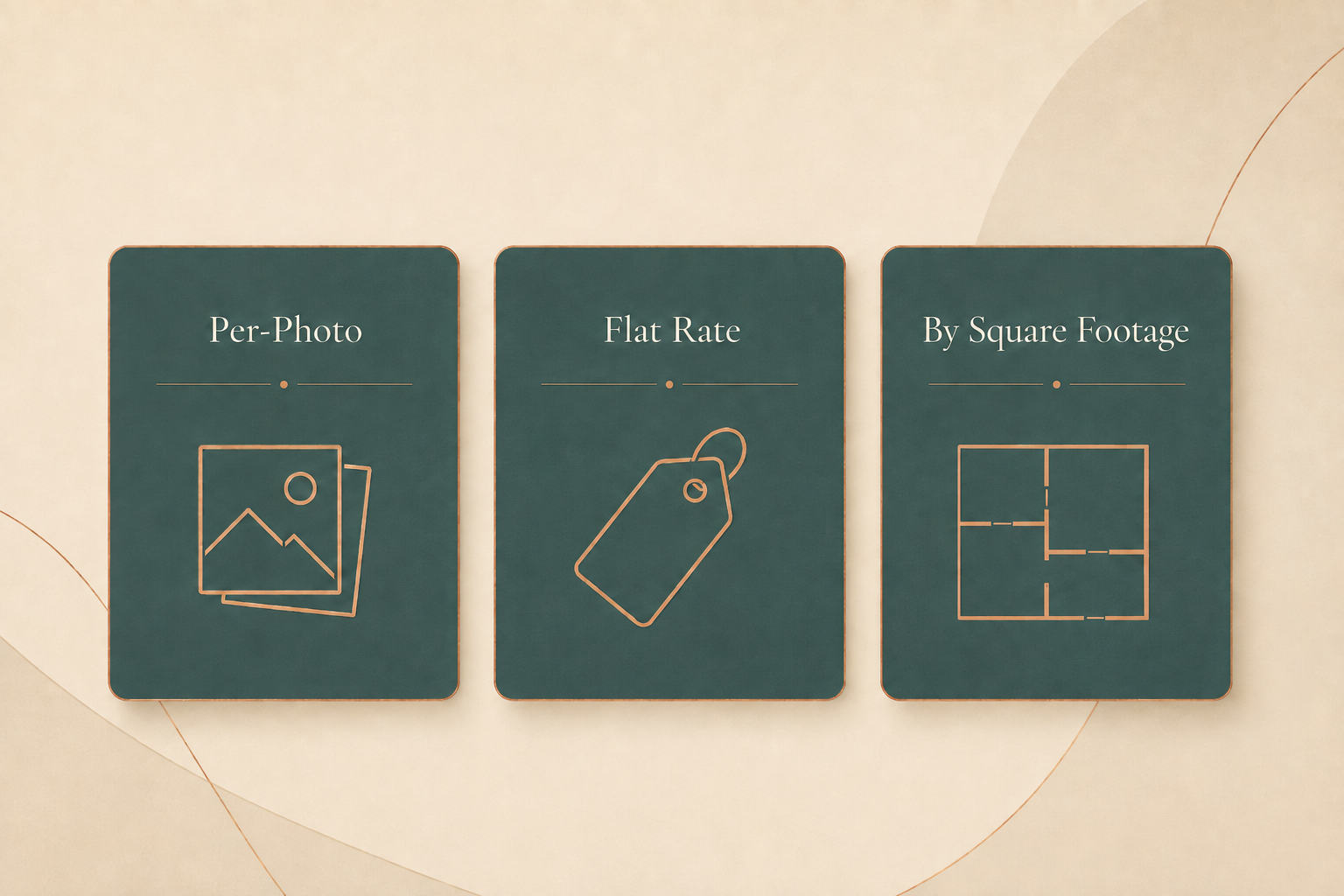
Almost every real estate photographer you'll talk to uses one of three models.
Per-photo pricing runs $10–$25 per image. It sounds economical for a small condo until you remember that a well-shot listing needs 25–35 photos to satisfy buyers browsing on Bright MLS — at which point you're paying flat-rate money without flat-rate predictability.
Flat-rate packages are the most common model in the DMV: one price for a defined shoot, photo count, and turnaround. You know your marketing cost before the shoot happens, which is exactly what you want when you're quoting a listing presentation.
Square-footage tiers are a variation on the flat rate — a 1,200-square-foot Arlington condo simply takes less time to shoot and edit than a 5,000-square-foot Great Falls colonial, and tiered pricing reflects that honestly.
When you're comparing quotes, make sure you're comparing the same scope. Our breakdown of what's included in real estate photography services covers what should come standard — editing, licensing, MLS-ready sizing — versus what's quietly an add-on.
3. What Moves the Price Up or Down
Five things drive nearly every quote in this market.
Square footage is the big one — more rooms means more compositions, more lighting work, more editing.
Location and travel. The DMV is not a small service area. A photographer based inside the Beltway who takes a listing in Leesburg or Frederick is committing to two-plus hours of windshield time, and many build travel fees past a certain radius. If your listings cluster in one county, a photographer based near it can be meaningfully cheaper.
Turnaround speed. Next-day delivery is the professional standard; same-day rush usually carries a premium. If photos are due before a Thursday MLS launch, book the shoot with margin instead of paying for the rush.
Twilight timing. Dusk shoots are a separate trip at a specific 20-minute window, which is why they're priced as an add-on rather than folded into a daytime shoot.
Occupied versus vacant. An occupied home that needs styling and patience shoots slower than a vacant, staged one. Some photographers price for it; all of them appreciate a prepared house.
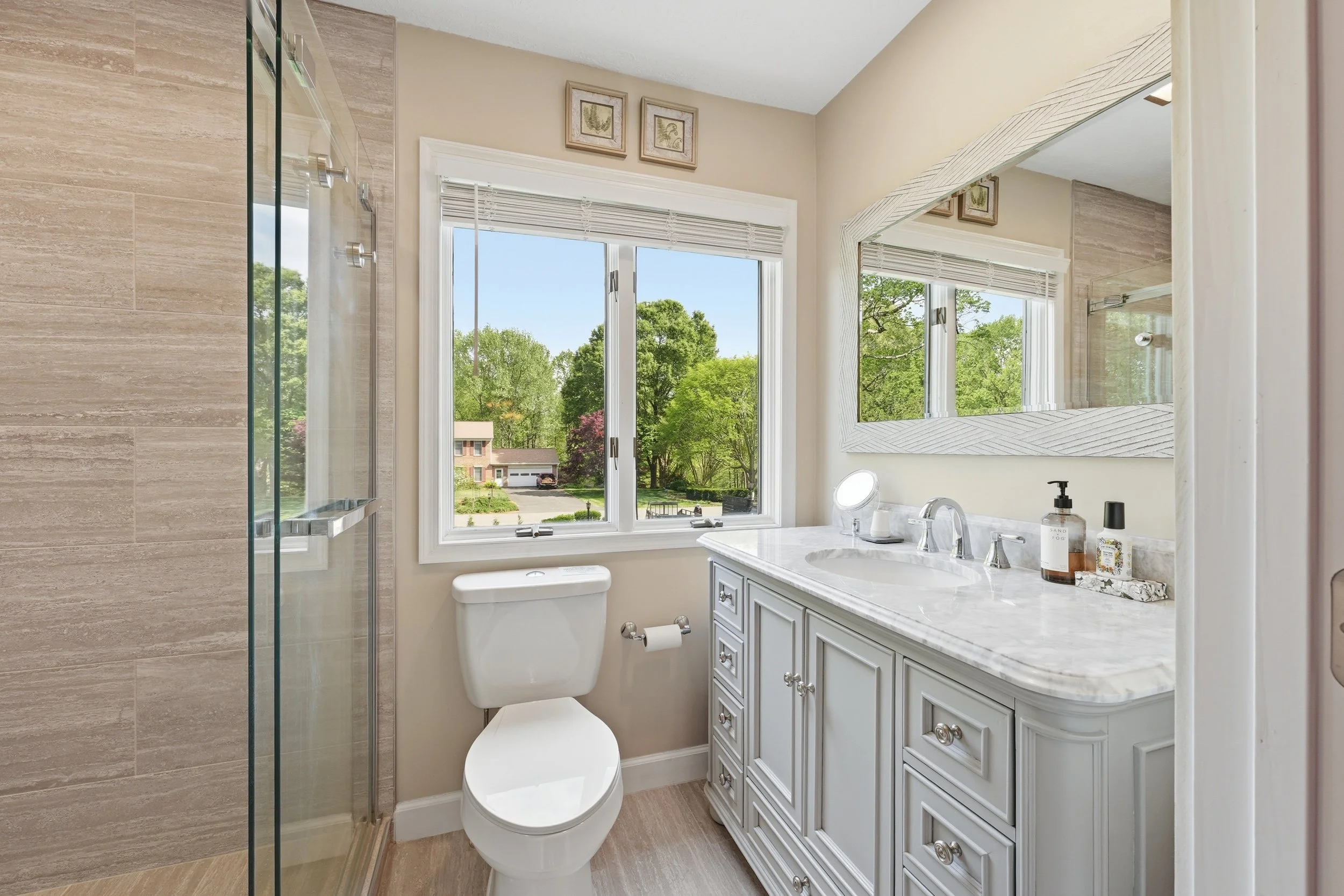
More rooms means more compositions — every bathroom, bedroom, and hallway adds shooting and editing time to the quote.
4. Add-Ons and What They Cost
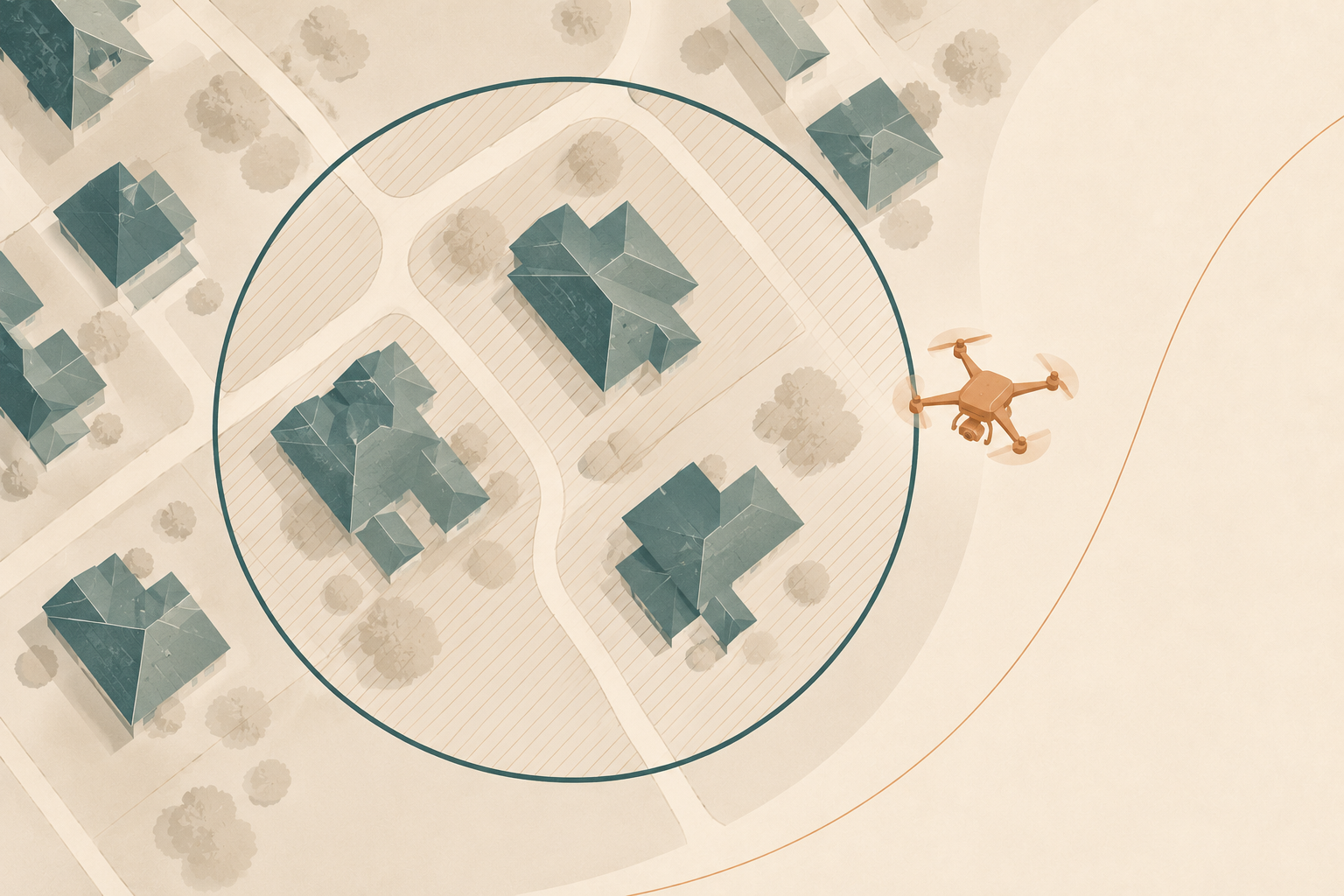
Drone/aerial photography: $150–$400 for stills, more with video. Here's the part that's unique to our market: much of the DC Metro Area sits inside the Flight Restricted Zone — a roughly 15-mile ring centered near Reagan National where drones are effectively grounded, with authorizations rarely granted for commercial work. DC proper, Arlington, Alexandria, Bethesda, and Silver Spring are all inside it. Farther out — Ashburn, Leesburg, Gaithersburg, most of Loudoun — licensed operators can fly under standard FAA rules. So whether your listing can have aerial coverage at all is a question of geography first and budget second, and a photographer who knows the DMV should be able to answer it from the address alone.
Video tours: $200–$1,500 depending on length and editing. Social-first vertical video sits at the low end; cinematic walkthroughs at the top.
3D tours (Matterport and similar): $200–$500. Worth it for out-of-area buyers, which this market — with its constant federal, military, and diplomatic relocation churn — has more of than almost anywhere.
Floor plans: usually $75–$200, often bundled with 3D capture.
Virtual staging: $50–$200 per room — dramatically cheaper than physical staging for vacant units, and increasingly good.
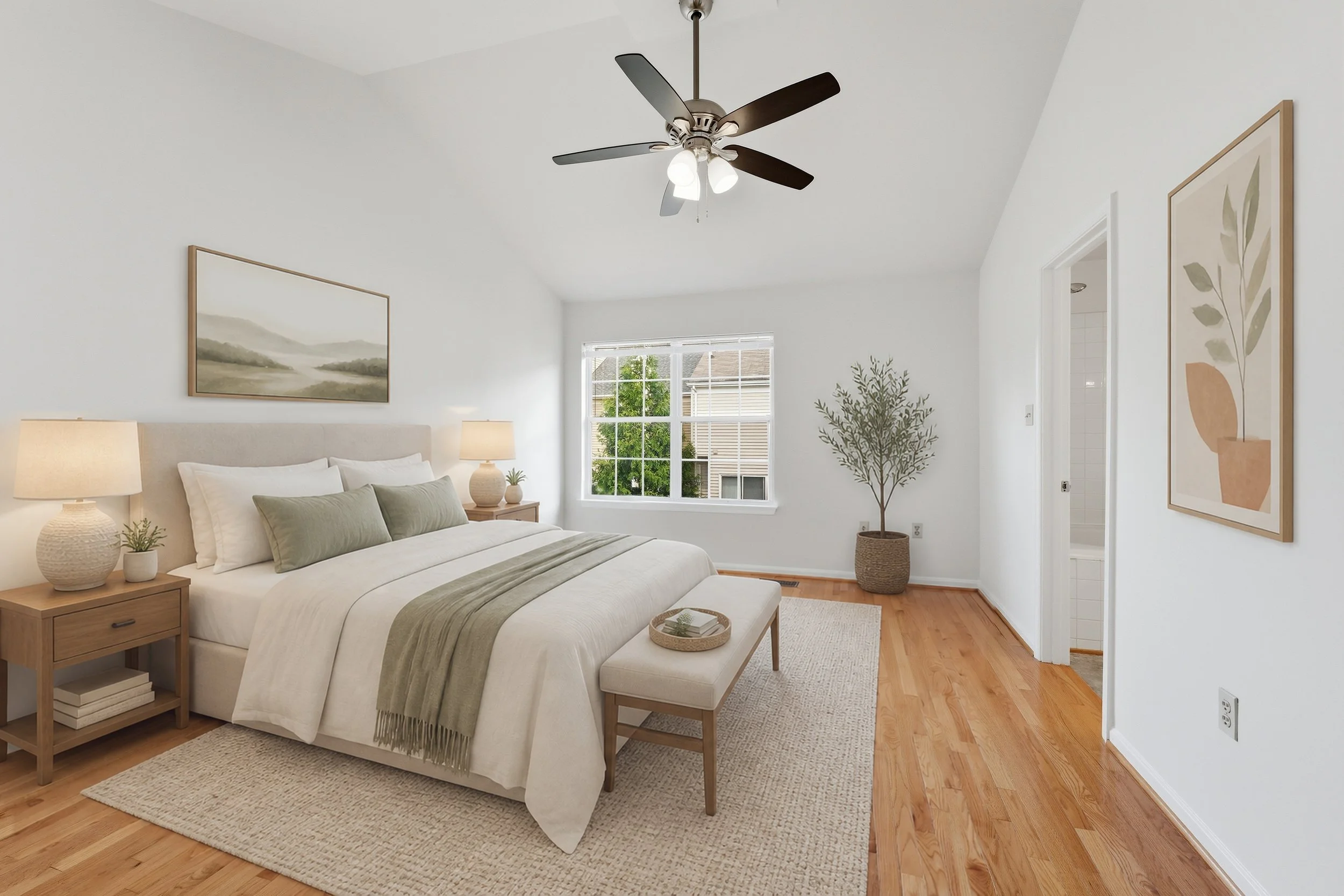
Virtual staging in action — this primary bedroom was photographed empty, and everything in it is digital.
5. Cheap vs. Professional: What Each Tier Actually Buys You
There is always someone who'll shoot a listing for $150. Sometimes that works out. But the gap between a budget shooter and a professional isn't the camera — it's everything around it: HDR exposure blending so windows aren't blown out, color-accurate editing, consistent verticals, MLS-compliant sizing, insurance, reliability on the reshoot when it rains, and image licensing that won't bite you later. You're not paying for 30 files. You're paying for 30 files you'd put your name next to in front of a seller who interviews three agents.
6. The ROI Math for Agents
This is the section to show a cost-conscious seller. The data on professional listing photography is unusually consistent:
Homes photographed professionally sell about 32% faster — 89 days on market versus 123 — per VHT Studios' analysis. Redfin's research found professionally photographed homes in the $200K–$1M range sold for $3,400–$11,200 more, with homes around $400K selling roughly three weeks faster. And NAR's data year after year puts photos at the top of what buyers actually use online — which is where essentially 100% of them now start.
Note the price bands: $200K–$1M is where the documented premium lives, and that's precisely where the bulk of DMV inventory sits. Against a $3,400–$11,200 premium, a $400–$700 media package isn't a marketing expense — it's the cheapest leverage in the transaction. We went deeper on this in do professional photos actually help homes sell faster.
7. Budgeting by Property Type
A practical cheat sheet for the listings you're actually taking in the DMV:
The Arlington or Ballston condo. Photo-only package, 20–25 images. Skip aerial — you're in the no-fly ring anyway. Budget $250–$400.
The Alexandria or Capitol Hill townhome. Photos plus a floor plan — multi-level layouts confuse buyers without one. Budget $350–$550.
The Bethesda or Vienna single-family. Full photo set plus twilight; check the address for drone eligibility. Budget $500–$800.
The McLean, Potomac, or Great Falls luxury listing. Full media day — photos, video, 3D tour, twilight, aerial where permitted. Budget $1,000+, and remember the Redfin caveat: above $1M the photo premium is harder to isolate, but at that tier professional media is table stakes, not edge.
8. Where Cove Media Lands
We keep our pricing flat, transparent, and published — no quote-request dance, no surprise travel math inside our DC, Maryland, and Northern Virginia service area. You can see exactly what every package includes on our pricing page, and when you're ready, booking a shoot takes about two minutes.
The honest summary: in this market, professional photography costs a few hundred dollars and is backed by some of the clearest ROI data in real estate marketing. Price the shoot against the premium, not against zero.