What Should Real Estate Photos Show? A DC Metro Agent's Guide
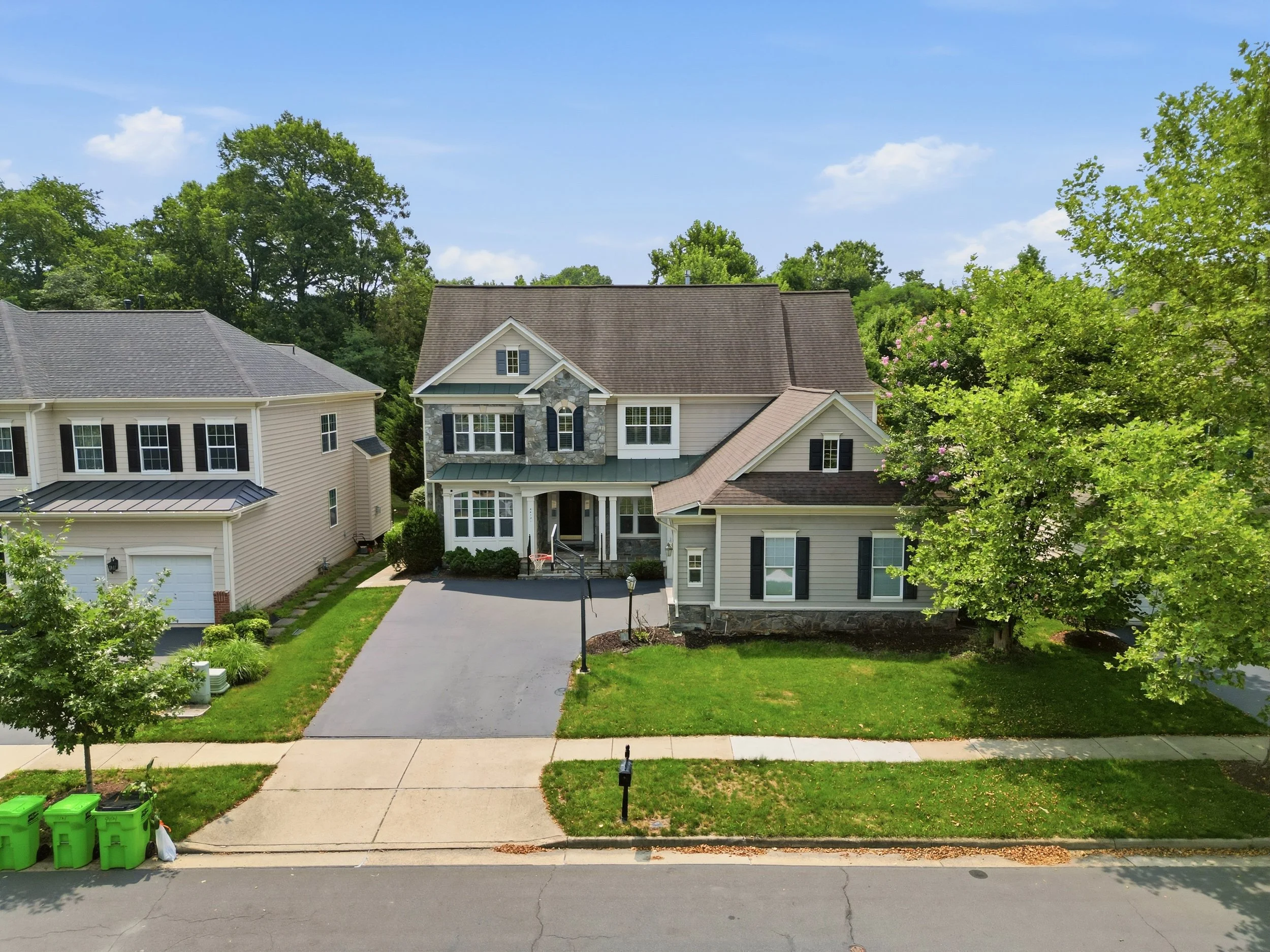
Every listing gets one first impression, and in the DC metro it almost always happens on a phone screen. Before a buyer ever schedules a showing in Arlington, Bethesda, or Leesburg, they've swiped through your photos — and decided in seconds whether to keep scrolling or keep looking.
So what should real estate photos actually show? It's a question we hear from newer agents and FSBO sellers alike, and the answer isn't "everything." A strong listing gallery is a curated shot list, not a camera roll. According to the National Association of Realtors' 2025 Profile of Home Staging, 73% of buyers say photos are highly important when browsing listings online — ahead of video, virtual tours, and even physical staging. Here's the shot list that earns those swipes, room by room.
1. The Front Exterior: Your Hero Shot
The first photo in your gallery does more work than the other 29 combined. It's the thumbnail on Bright MLS, Zillow, and every syndication site — and it should show the full front of the home, shot from an angle that gives the facade depth rather than a flat, head-on mugshot.
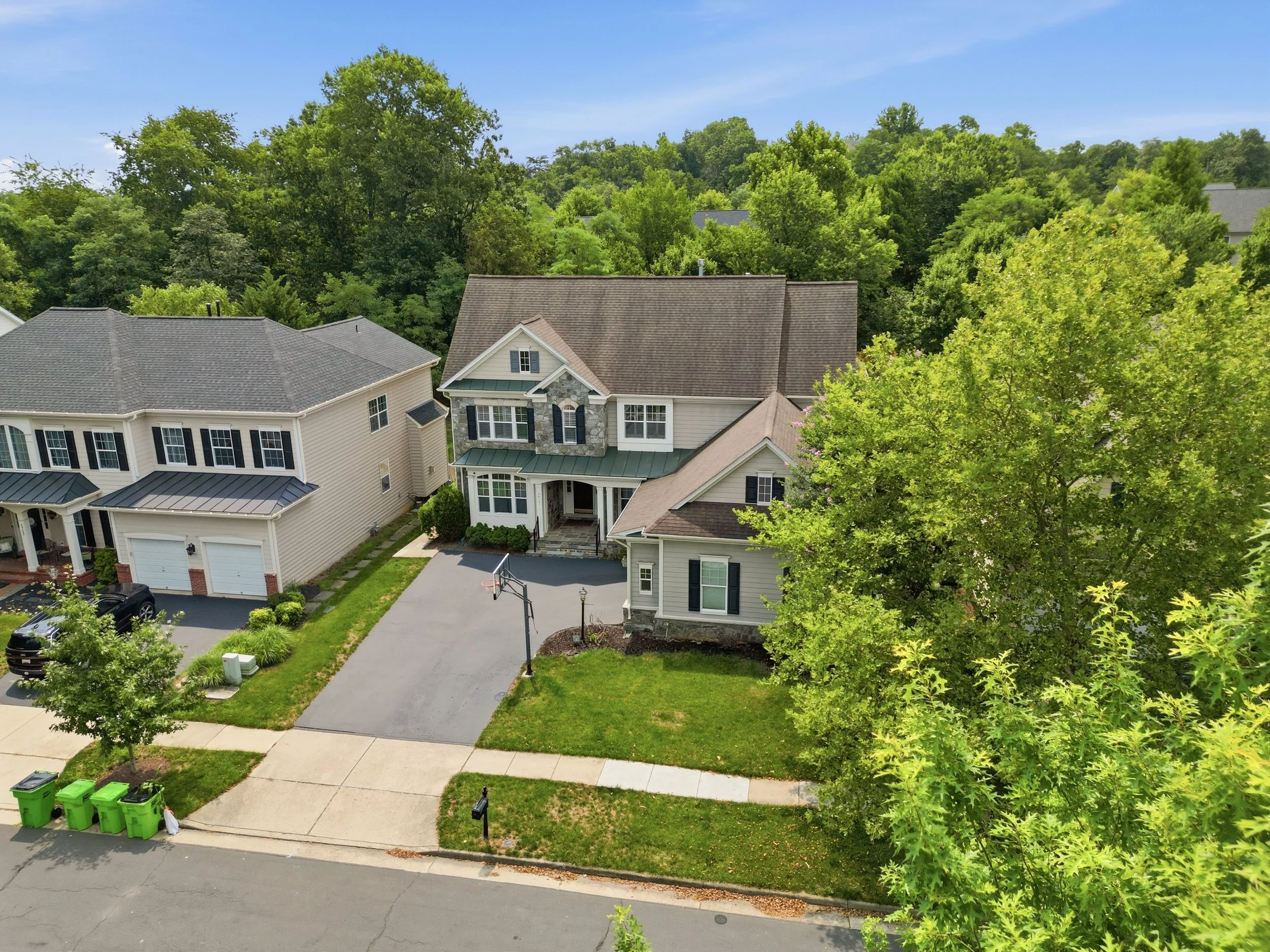
For single-family homes in Northern Virginia and Maryland suburbs, an elevated or drone-assisted front exterior is often the difference-maker. Lifting the camera even 10–15 feet clears parked cars and power lines, shows the roofline and lot, and situates the home on its street. (Inside DC's Flight Restricted Zone, drone work is limited — but pole aerials and elevated tripod shots accomplish much of the same effect legally.)
What it should show: the entire facade, the front yard and landscaping, and enough of the surroundings to convey the neighborhood feel — without the trash bins, cars in the driveway, or your own shadow.
2. The Living Room: The Space Buyers Rank First
When NAR asked buyers' agents which staged room matters most to buyers, the living room came out on top at 37% — ahead of the primary bedroom and the kitchen. Buyers picture their daily life here, so your photos should make the space feel both generous and livable.
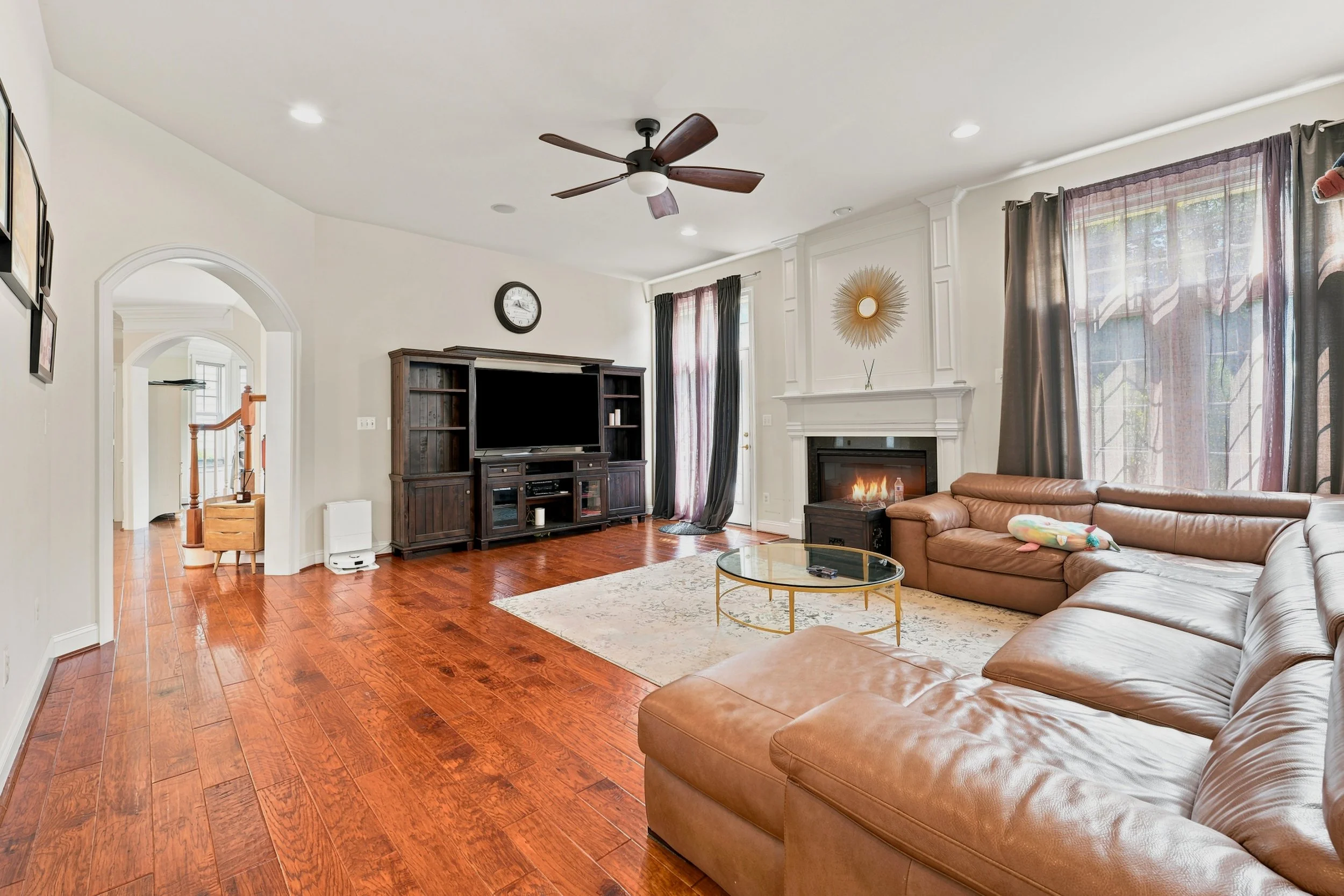
Shoot from corners to capture two walls and maximize perceived depth, keep the vertical lines straight, and make sure focal points — a fireplace, built-ins, big windows — anchor the composition. Two to three angles is usually right: one wide establishing shot, plus a reverse angle or a tighter frame on the room's best feature.
3. The Kitchen: Every Buyer Looks for It
The kitchen is the most scrutinized room in any DC metro listing, and buyers will zoom in. Photos should show the full layout (an island, if there is one, deserves its own angle), the condition of counters and cabinets, and the appliances — stainless or paneled, buyers want to know.
Clear the counters almost completely. A coffee maker and a bowl of produce read as styled; a drying rack and a paper towel roll read as clutter. If the kitchen opens to a family room or breakfast nook — the standard layout in most post-1990 NoVA builds — include a shot that shows the connection, because open flow is one of the top things relocating buyers ask about.
4. The Primary Suite: Bedroom and Bath Together
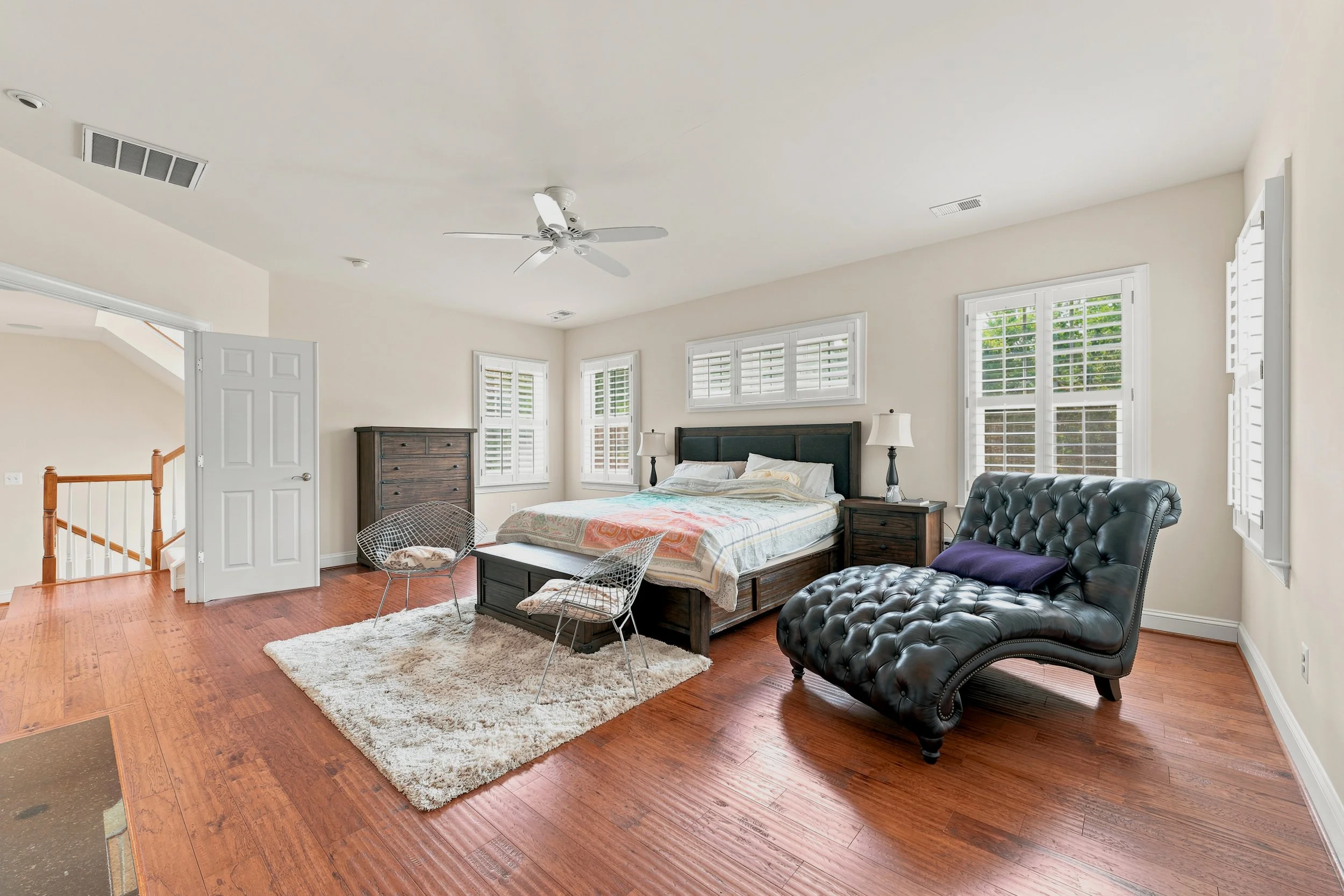
Primary bedrooms ranked second in NAR's staging survey at 34%, and in the DC metro's move-up market the suite often decides between two otherwise similar homes. Show the bedroom wide enough to convey scale — can it fit a king bed and a sitting area? — and include the details that signal comfort: plantation shutters, tray ceilings, a fireplace.
Then give the primary bath its own photos. A soaking tub, a walk-in shower, and a double vanity are exactly the features buyers filter for, so don't make them hunt. One wide shot plus one detail angle typically covers it. Staged towels and cleared counters matter more here than anywhere except the kitchen.
5. Flow Shots: Foyers, Staircases, and Hallways
This is the category most amateur galleries skip — and the one that makes a gallery feel like a home instead of a slideshow of disconnected boxes. A foyer or staircase photo tells buyers how the home connects: where you land when you walk in, how the levels relate, where the light comes from.
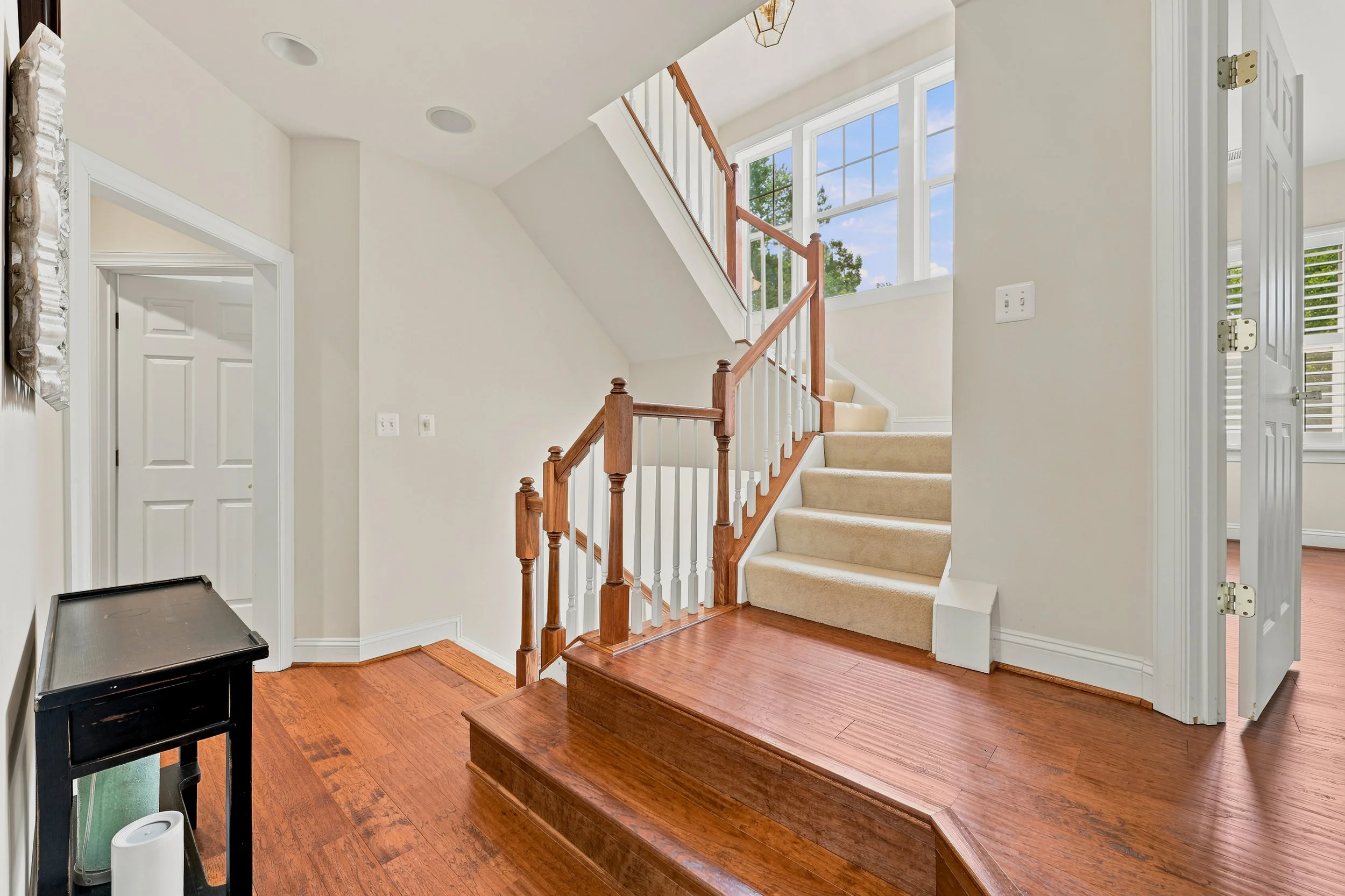
In a region full of three- and four-level townhomes and center-hall colonials, flow shots are essential. They're the visual answer to the question every out-of-state buyer relocating to the DMV asks from 2,000 miles away: "How does this house actually live?" (For multi-level listings, we covered this in depth in our townhome photography guide.)
6. The Backyard and Outdoor Living
Decks, patios, screened porches, and fenced yards sell hard in the DC metro, where outdoor space is at a premium inside the Beltway. Show the outdoor living areas from the house looking out (the view buyers will own) and from the yard looking back (the space itself). If the lot backs to trees, an HOA common area, or water, make sure at least one photo proves it.
7. What Your Photos Should NOT Show
A few things that cost agents showings every week: personal photos and name plates (privacy and fair-housing caution), pets and pet gear, visible clutter, toilet seats up, mirrors catching the photographer, and — the big one — misleading angles that make a showing feel like a bait-and-switch. Buyers forgive a small room; they don't forgive feeling tricked. We've broken down the full list in Real Estate Photo Mistakes That Cost DC Metro Agents the Sale.
Skip or minimize: garages (unless finished), unfinished storage areas, closets (unless it's a showpiece walk-in), and the fourth angle of the same bedroom. Every weak photo dilutes the strong ones.
How Many Photos Should the Final Gallery Have?
For most DC metro listings, 25–35 delivered photos cover the full shot list above without padding. Smaller condos can tell the story in 20; large single-family homes with outdoor living and finished lower levels may justify 40. The gallery order matters as much as the count: hero exterior first, then main living spaces, kitchen, primary suite, secondary rooms, outdoor spaces, and community amenities last.
Get a Gallery That Shows the Right Things
Every Cove Media shoot follows a complete shot list built for how DMV buyers actually search — HDR interiors, elevated exteriors, and the flow shots most galleries miss. See what's included in our services, check pricing, or book your next listing shoot today.
Source note for the post: room-ranking and photo-importance stats are from the NAR 2025 Profile of Home Staging (photos highly important to 73% of buyers browsing online; living room 37%, primary bedroom 34%, kitchen 23% per buyers' agents).