Virtual Staging for Empty Apartment Units: A DMV Agent's Guide
An empty apartment is the hardest listing to photograph well. Not because a vacant unit is difficult to light — a clean, empty room is easy to shoot — but because a bare room gives a buyer nothing to hold onto. Four walls, a floor, a window, and a lot of echo. In a market like the DMV, where condos and rentals make up a huge share of what agents list, that problem shows up almost every week.
Virtual staging is the most practical fix, and for small units it's arguably more useful than it is for a single-family home. Below are three rooms from a unit we photographed this week — each shown as we captured it and then virtually staged — to make the case room by room, along with what the data actually supports and how to stay on the right side of Bright MLS.
Start with the room buyers can't read
Here's the core problem in one frame. On the left, the living area exactly as it is: clean, bright, well-shot — and impossible to read. A buyer scrolling past can't tell how big it lives, where a sofa would go, or whether their sectional would swallow the room. On the right, the same frame with furniture: now the scale is obvious, the seating area has a center of gravity, and the eye has somewhere to land.
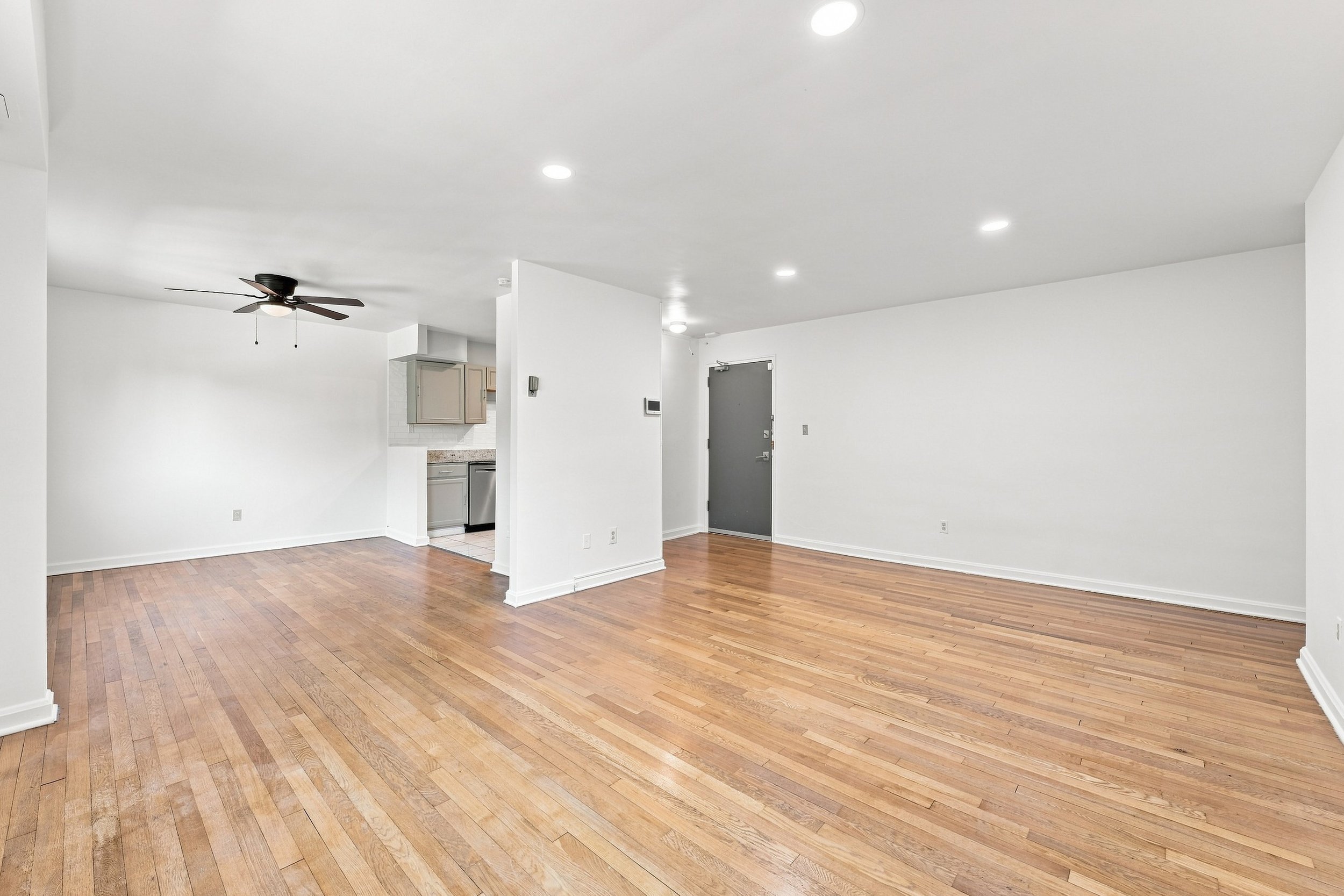
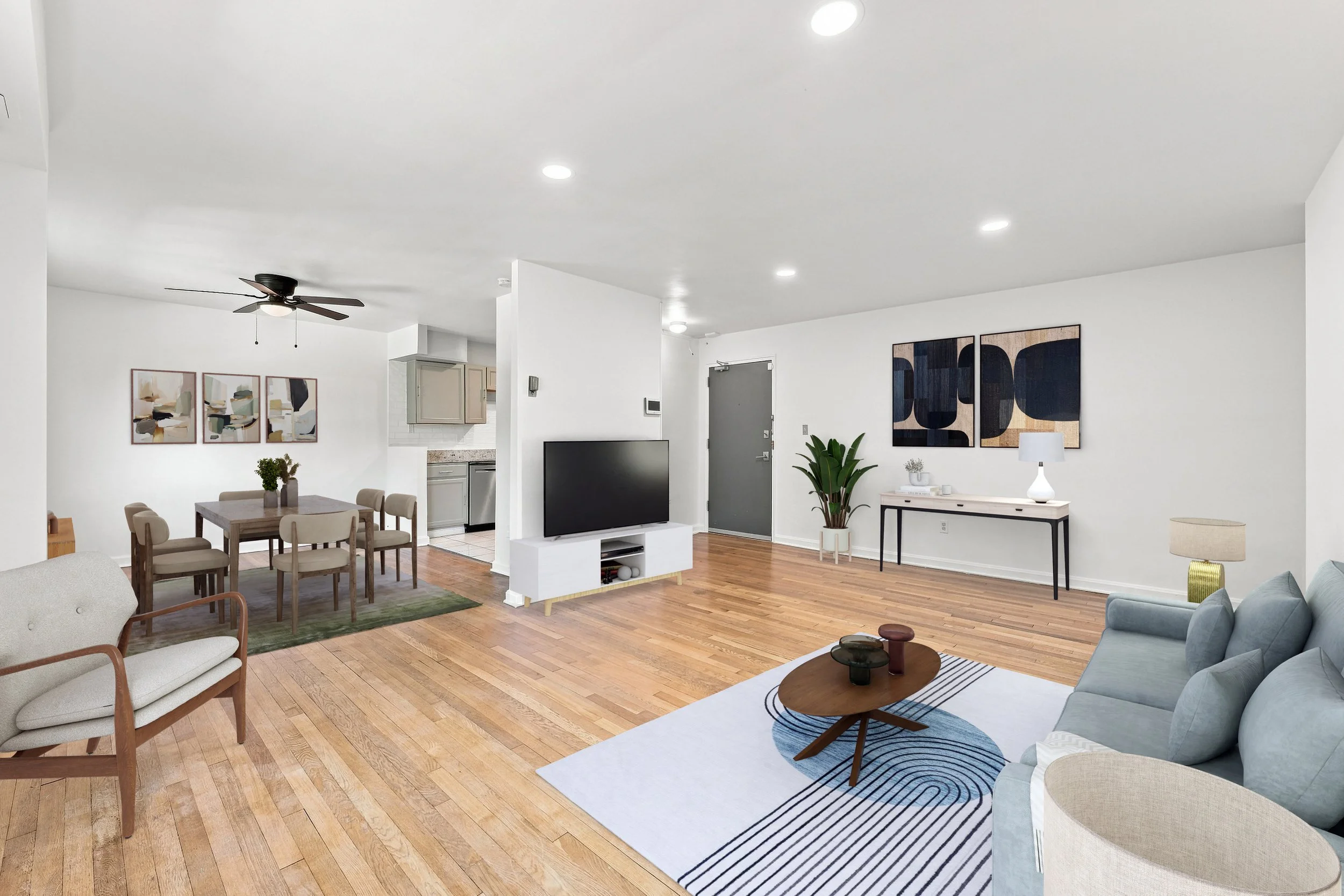
That's what virtual staging is: digitally adding furniture and decor to a photo of an empty room. The room itself doesn't change — same floor, same dimensions — you're only showing what it looks like lived in.
Give an open plan its zones
Open layouts are common in condos, and empty, they read as one confusing box. Where does the dining area stop and the living room begin? Buyers can't tell. Staging draws those lines for them — a table anchors the dining zone off the kitchen, a seating group defines the living area beyond — so the photo answers “how would I actually use this space?” before anyone books a tour.
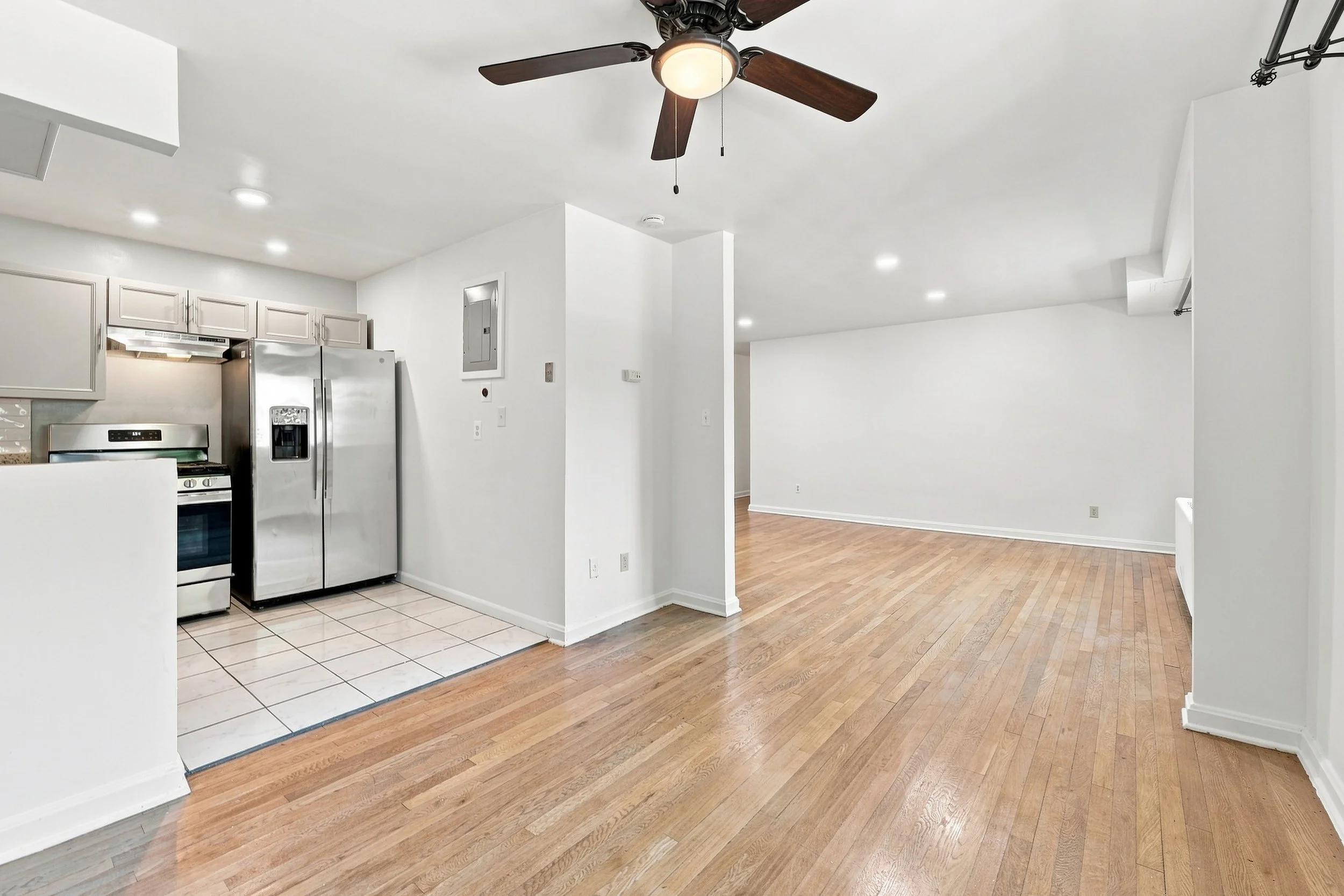
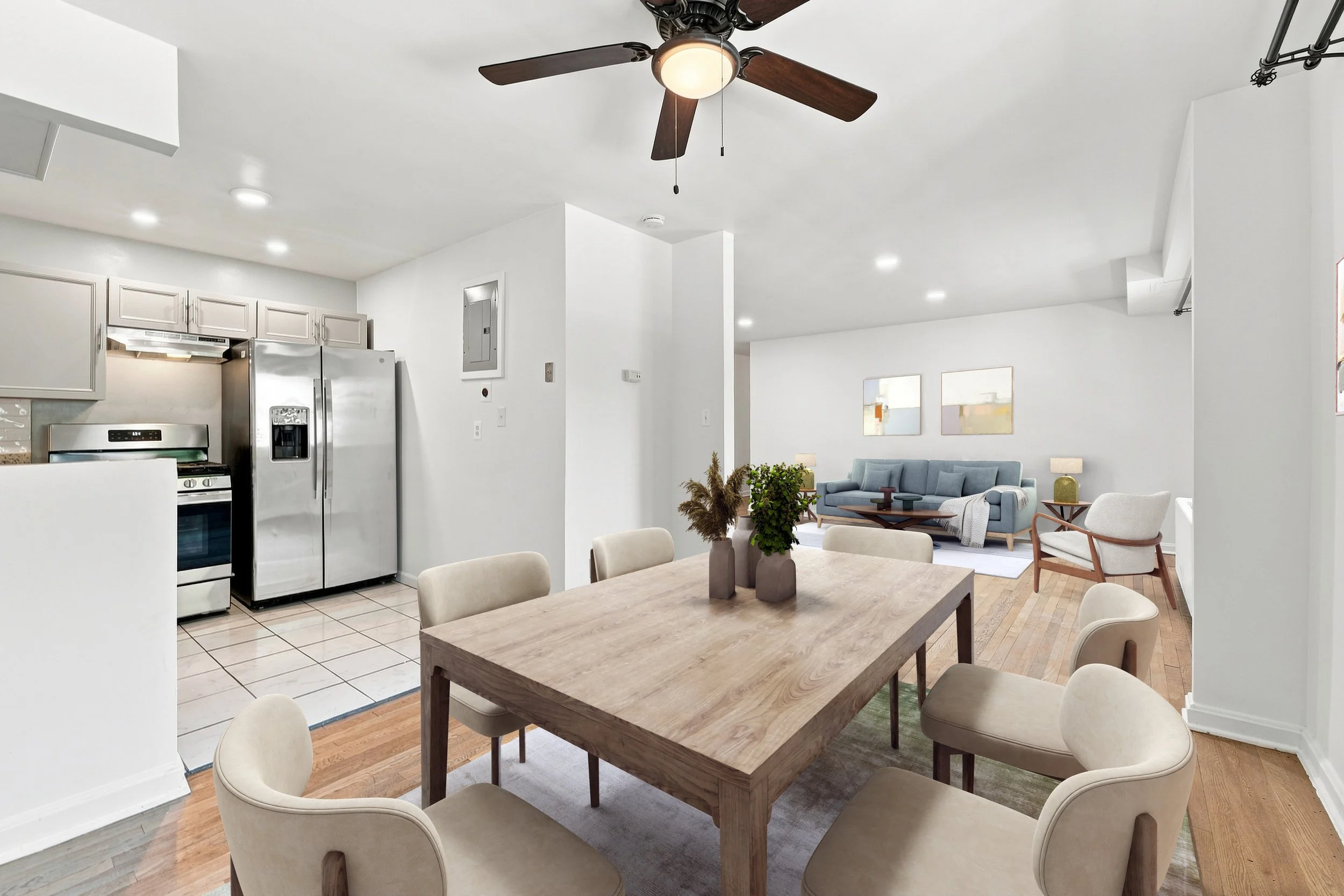
Make the bedroom feel like a bedroom
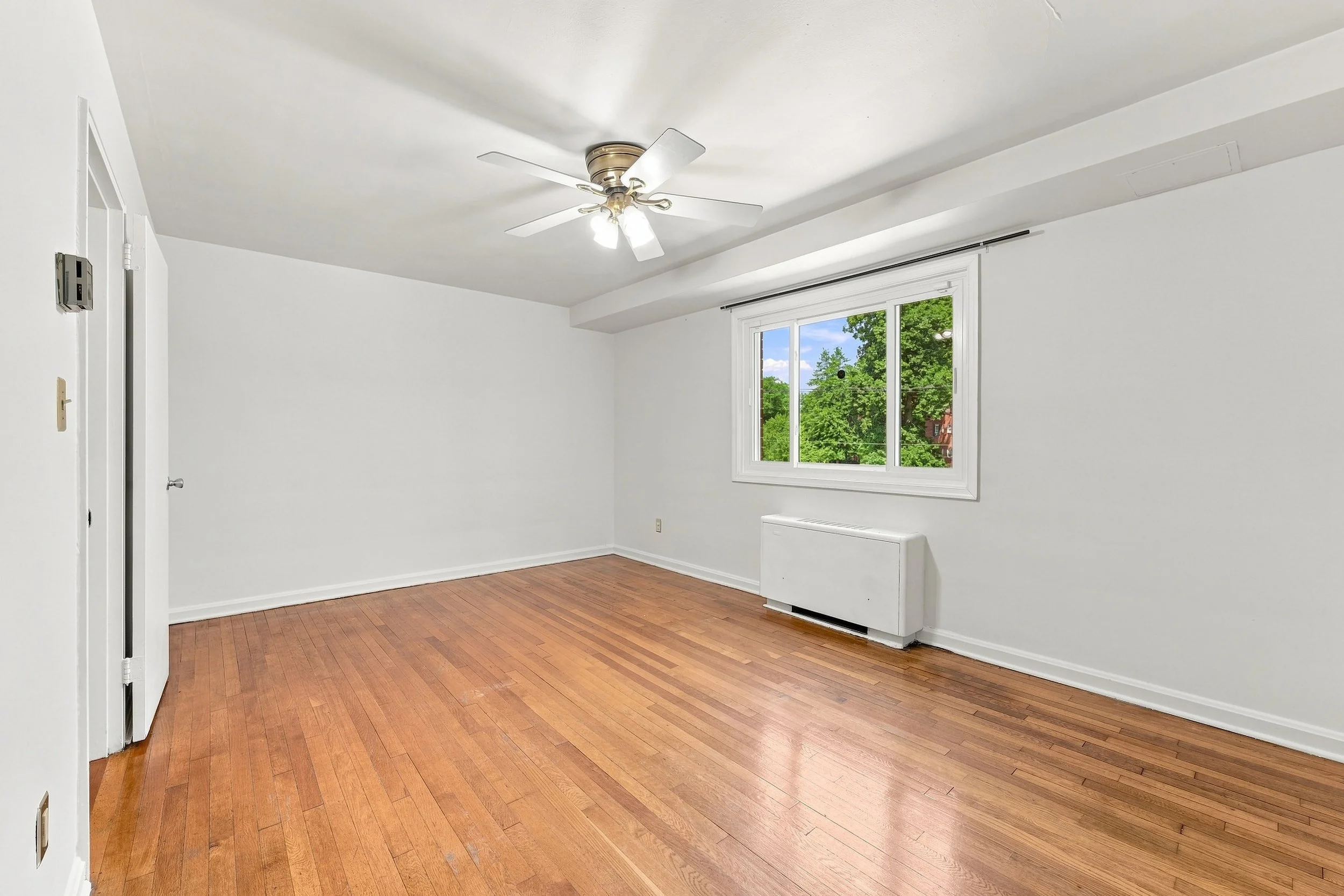
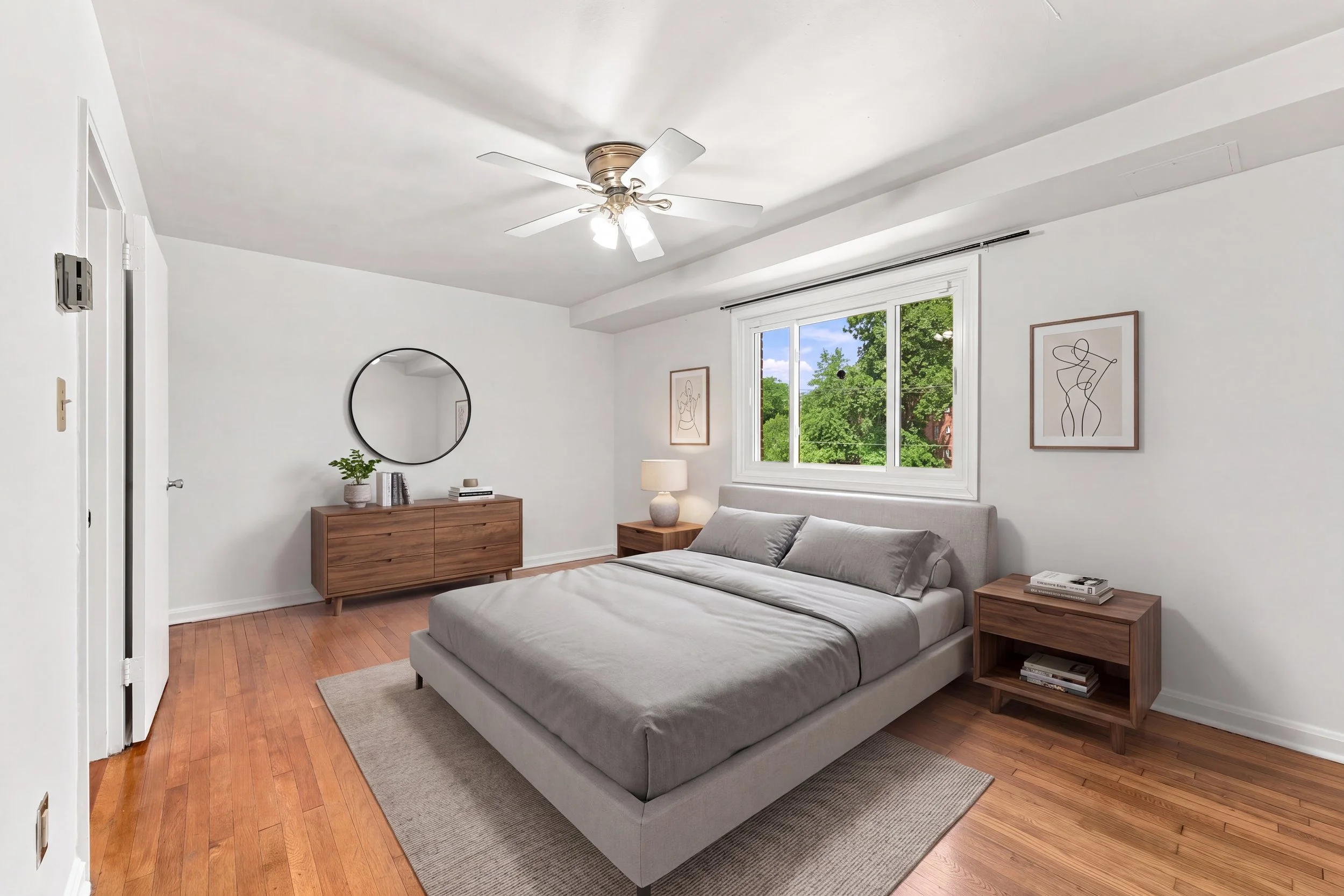
Empty bedrooms are the worst offenders — they photograph cold and read smaller than they are. Drop in a bed, nightstands, and a dresser and two things happen at once: the buyer sees that a queen fits with room to spare, and the space stops feeling institutional and starts feeling like somewhere you'd sleep.
What the numbers really say
You'll see a lot of impressive figures attached to virtual staging — “sells 73% faster,” “90% more clicks.” Be careful with those; most trace back to the companies selling the service and haven't been independently verified. The credible source is the National Association of Realtors' Profile of Home Staging, which found that 83% of buyers' agents said staging made it easier for their clients to picture a property as their future home, and that roughly half of sellers' agents reported staged homes sold faster. NAR also found staging nudged offer values up 1–10% for a meaningful share of listings. Those figures cover staging broadly — but the mechanism is exactly what the three rooms above show: furnished photos help people visualize, and people who can visualize are the ones who tour.
The cost math, which is where apartments win
This is what makes it obvious for units. Staging a vacant property physically runs roughly $1,500 to $5,000 or more upfront, plus monthly rental fees until it sells or leases. Virtual staging runs a fraction of that — generally $15 to $75 per photo, paid once. For a two-bedroom condo you might stage three or four key rooms and be done for the price of a nice dinner. The same logic makes it a no-brainer for rentals: the “phone photos are fine for a rental” myth just keeps units on the market longer, and a single vacant month costs far more than a shoot.
Doing it right in a small space
Small rooms are easy to over-furnish. Cramming a sectional, a coffee table, two chairs, and a rug into a 12-foot living room makes it look smaller, not larger. Good virtual staging uses appropriately scaled furniture and leaves breathing room, and keeps the style neutral and current so buyers project themselves into the space. And never use staging to paper over a problem — staging around a defect just sets up a disappointed buyer at the showing, and a disappointed buyer doesn't write an offer.
Staying compliant with Bright MLS
This is non-negotiable in the DMV. Bright MLS requires that virtually staged photos be disclosed in the listing, and it prohibits adding visual elements outside the owner's control — you can't, for instance, edit in a view that isn't physically possible from that window. NAR's Code of Ethics (Article 12) says the same in principle: your marketing has to present a true picture.
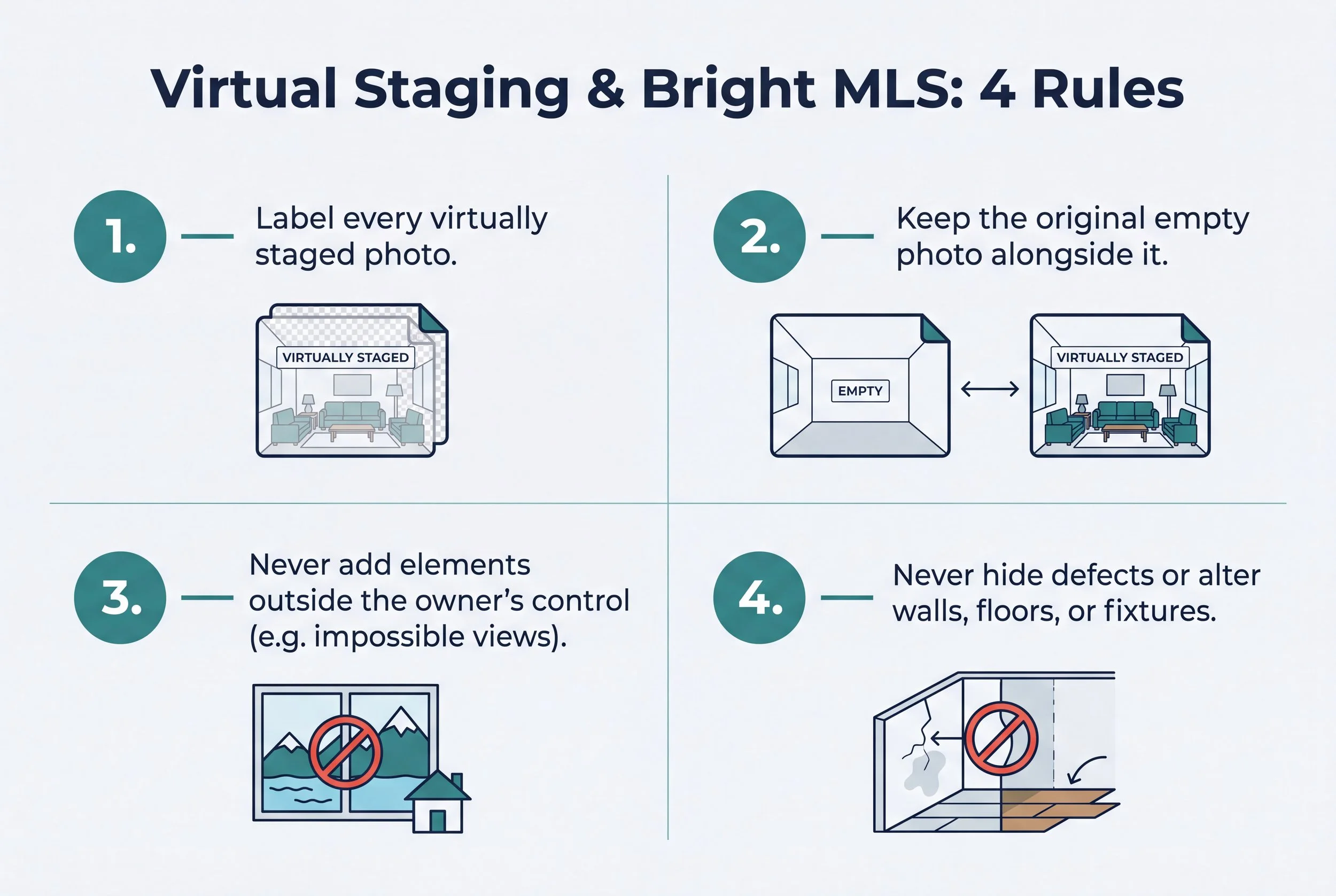
In practice, that means labeling every staged photo clearly, and the safest habit is to keep the original empty photo of the same room right alongside it — which is exactly what the before/after pairs above do. That one step satisfies almost every disclosure expectation and protects you from any “the photos were misleading” complaint. When we deliver virtually staged images at Cove Media, we keep the unstaged originals so you always have both on hand for the MLS.
The takeaway
Empty apartment units are the listings most likely to sit — and the ones virtual staging helps most. Done well, with honest disclosure and realistic, correctly scaled furniture, it turns your hardest-to-photograph listings into the ones buyers actually stop on. In a condo- and rental-heavy market like ours, that's a small investment with an outsized payoff. If you've got a vacant unit coming up, book the shoot at cove.media and we'll handle the photos and the staging together.