What’s the Most Important Real Estate Photo? Why the DC Metro Area’s Best Listings Win on One Frame
1. The one photo that decides whether the rest get seen
A listing does not get evaluated photo by photo. It gets evaluated once, as a thumbnail, in a grid of other thumbnails, by someone moving fast on a phone. The first frame is the only one guaranteed to be seen, and it is doing a job the other thirty-nine cannot help with: earning the click that lets them exist.
The research is consistent about how much weight that first frame carries. In NAR's 2026 Home Buyers and Sellers Generational Trends Report, 81% of buyers who used the internet rated photos “very useful” — the highest-ranked website feature in the survey, ahead of detailed property information at 77%. Eye-tracking research published in the Journal of Real Estate Research found the same ordering on the page itself: buyers look at the photo of the home first, then the quantitative description, with the agent remarks a distant third.
So the lead photo is not the best photo of the set. It is the photo that decides whether there is a set.
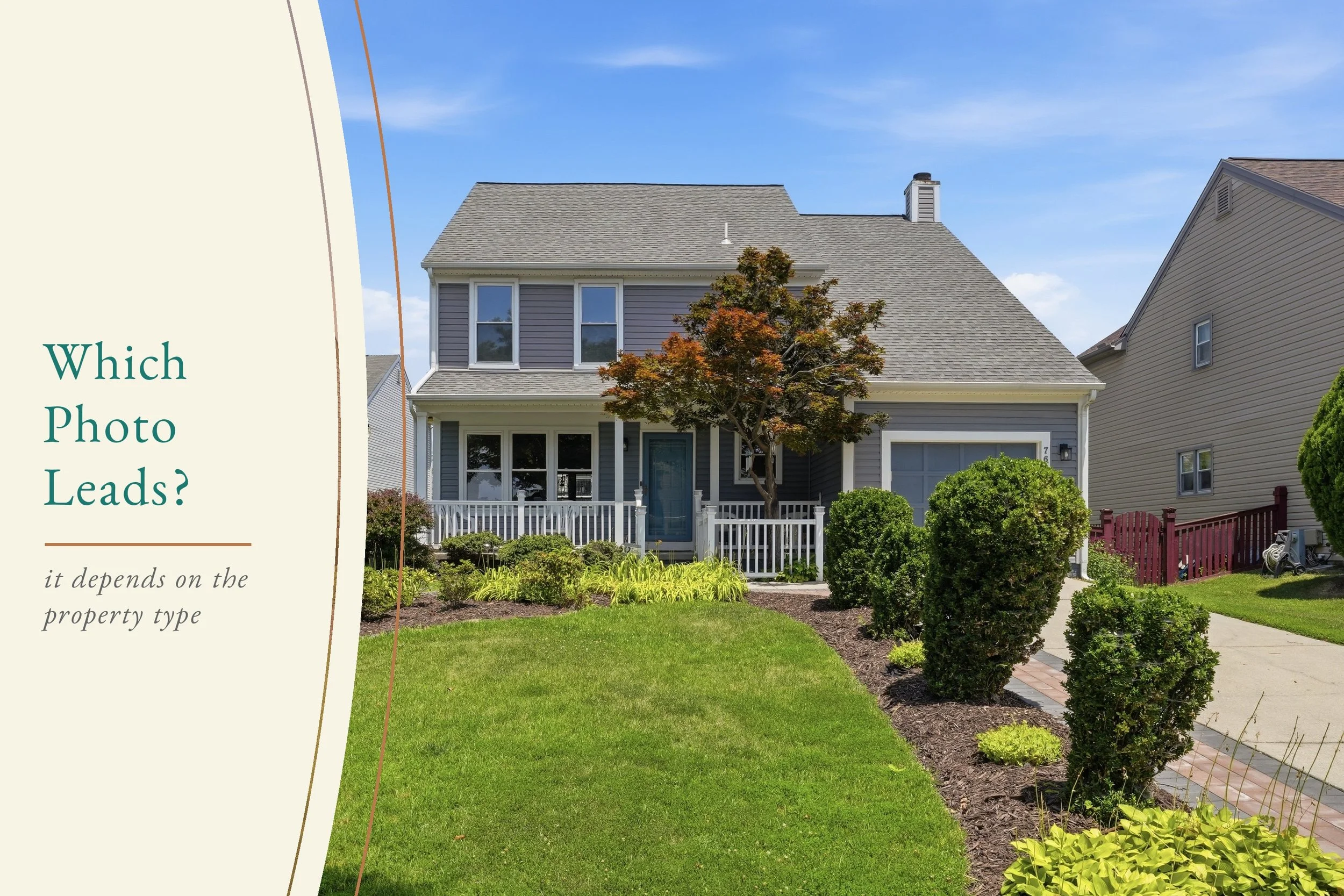
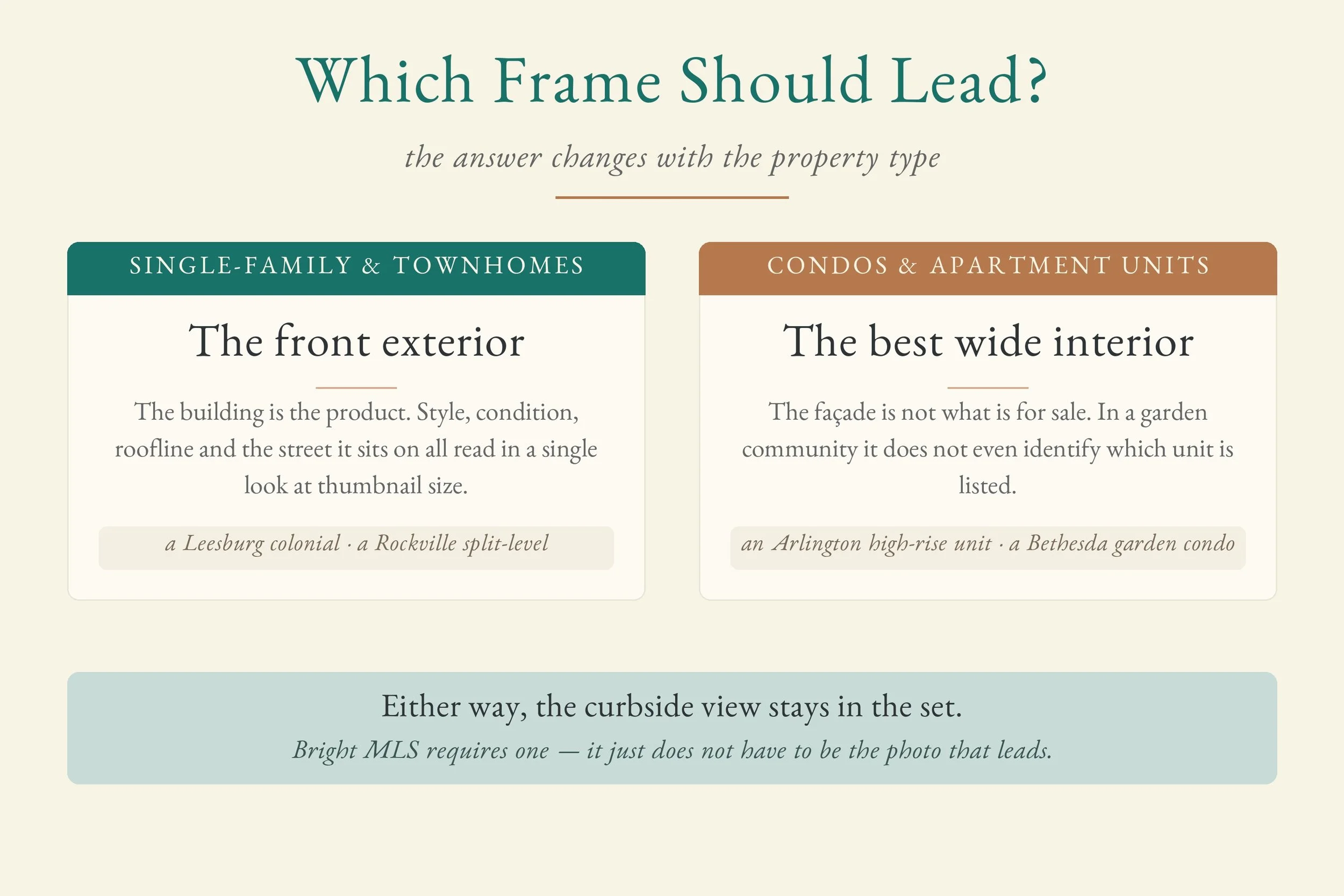
2. Which frame should lead depends on the property type
Here is where most listings go wrong, and it is not a quality problem. It is a selection problem.
For a single-family home or a townhome, the front exterior leads. The building is the product. The façade carries the style, the condition, the roofline, the landscaping and the street it sits on, and a buyer scrolling a results page is sorting on exactly those things. A brick colonial in Bethesda and a split-level in Rockville are telling a buyer what they are from thirty feet away, and the exterior is the only frame that does that work in one look.
For a condo or an apartment unit, the exterior stops doing that work. A buyer shopping a unit in an Arlington high-rise is not buying the façade — they are buying eleven hundred square feet on the ninth floor, and the picture of the building tells them nothing about it. Worse, in a garden-condo community the exterior frame is often actively unhelpful, because the unit for sale is indistinguishable from the others in the same elevation. The frame that should lead is the best wide interior: the main living space, shot wide enough to read as a room a person could live in.
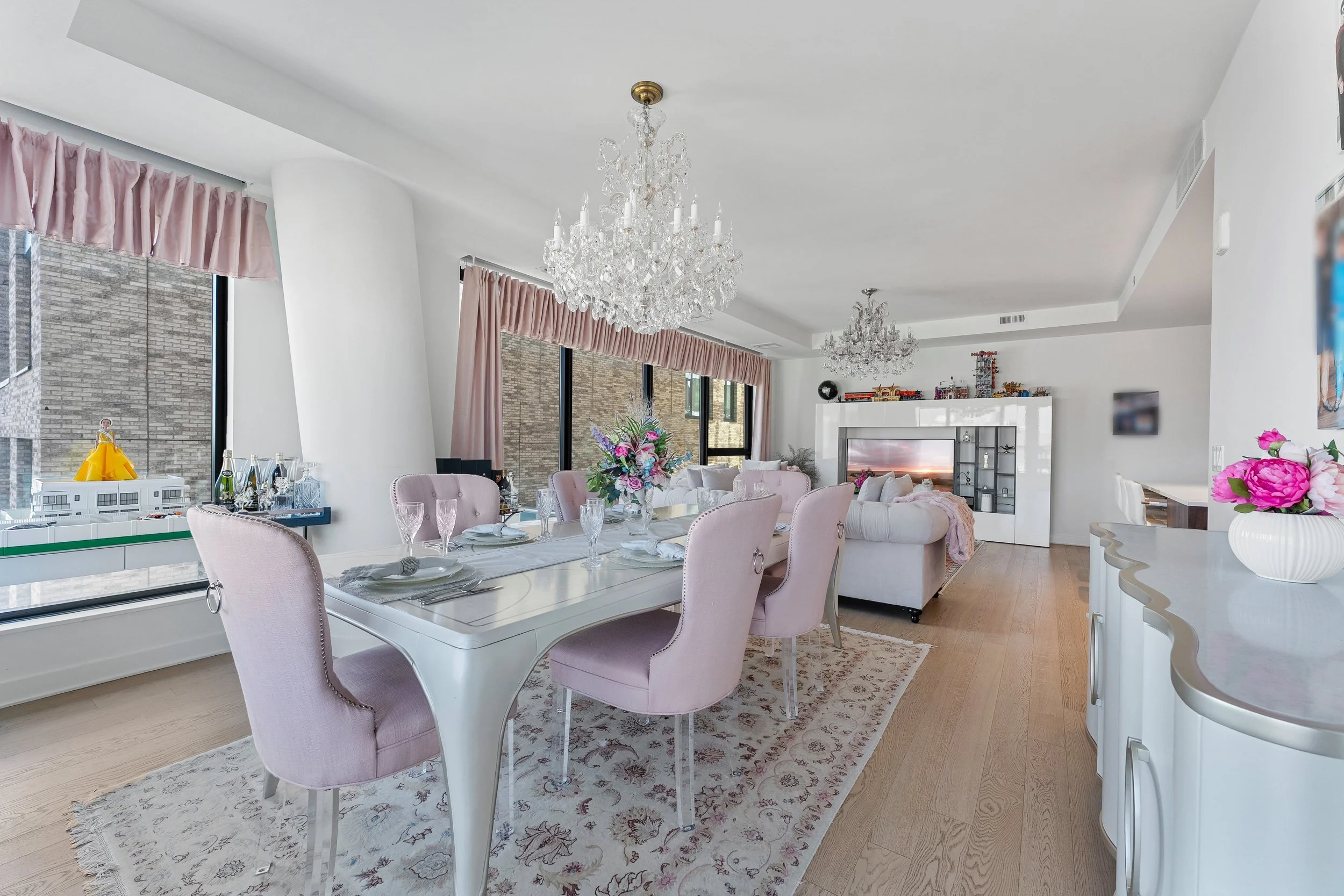
For a unit, the main living space is the lead frame — the building’s exterior tells a buyer nothing about what is for sale.
That distinction has a practical edge in this market, because Bright MLS is specific about the exterior without being specific about the lead. Its rules require that “one photo must be a ‘curbside’ view of the property that shows the property upon arrival,” and separately that “one photo is selected to be displayed as the primary photo.” Those are two different rules. The curbside view has to exist somewhere in the set; nothing says it has to be the one that leads. Choosing an interior as the primary photo on a condo is a marketing decision Bright allows, not a corner being cut.
3. What actually makes a lead frame work
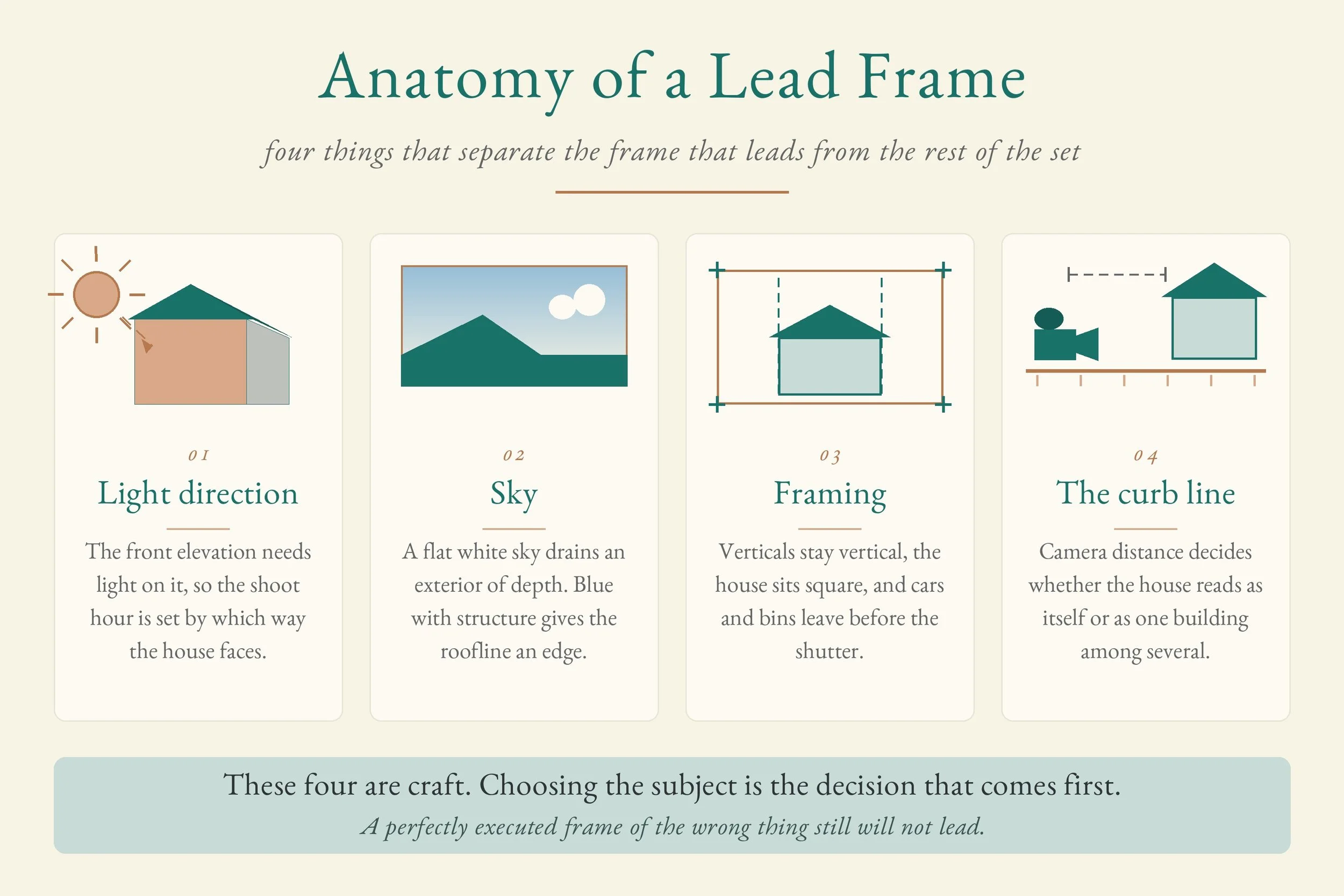
Once the right subject is chosen, four things separate a lead frame from an ordinary one.
Light direction. The front elevation needs light on it, which means the shoot time is set by which way the house faces, not by what is convenient. A west-facing façade in Falls Church is a late-afternoon photograph; the same house at nine in the morning is a photograph of a shadow.
Sky. A flat white sky drains an exterior of depth. Blue with some structure in it gives the roofline an edge to sit against, and it is the difference between a house that looks photographed and one that looks recorded.
Framing. Verticals stay vertical, the house sits square in the frame, and the composition leaves enough ground and enough sky that the building is not crowded against either edge. Cars, bins and hoses come out of the frame before the shutter, not after.
The curb line. Where the camera stands relative to the street sets how the property reads. Too close and the house distorts; too far and it becomes one building among several. The right distance shows the house, its setback and its approach in one frame.
Twilight is one strong option for a single-family lead, not a requirement. It earns its place on a house with good window geometry and mature trees around it, where the warm interior light has somewhere to sit. When it is worth booking, and how to plan around it, is covered in Cove Media’s guide to twilight shoots.
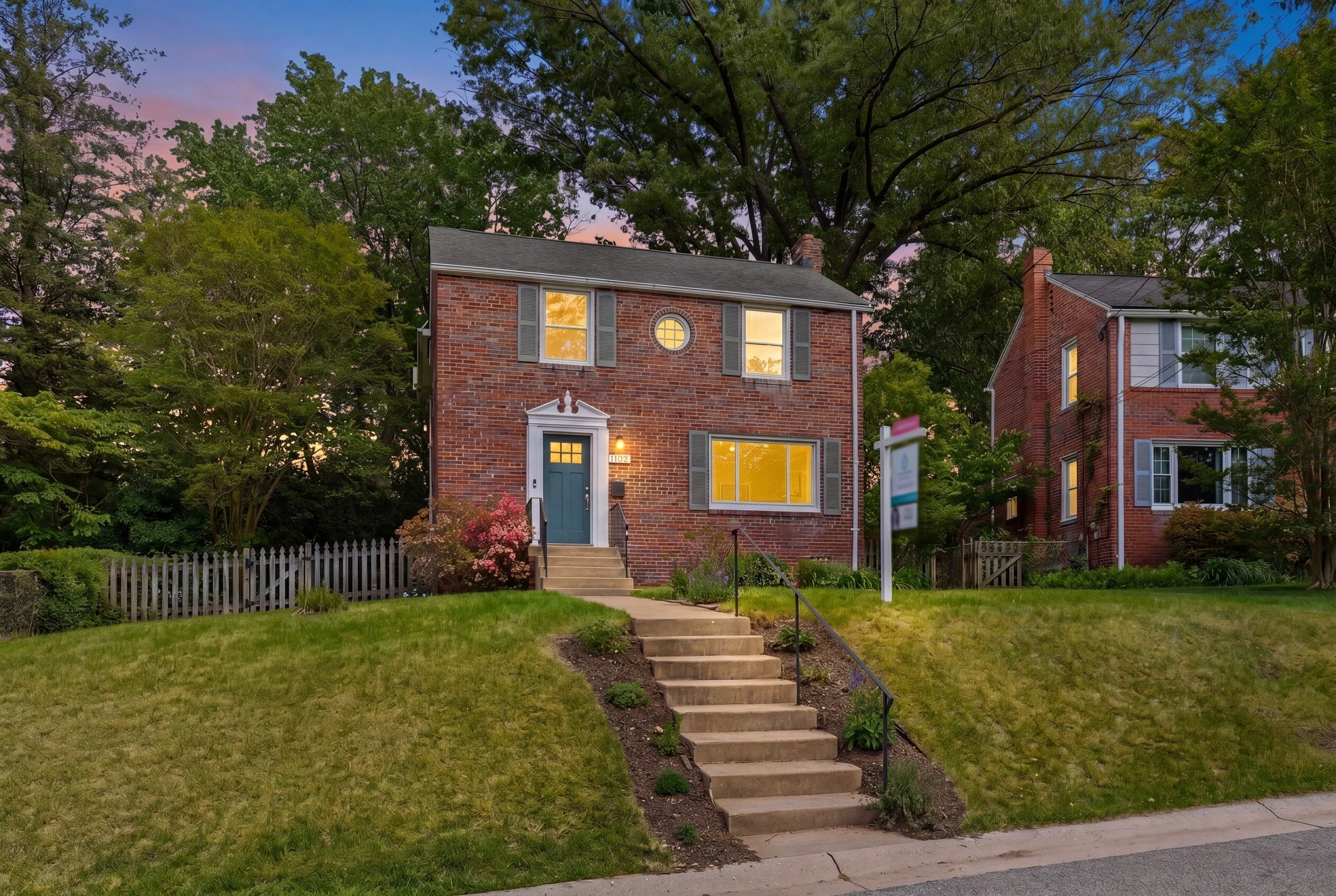
A twilight lead works when the house has the window geometry to carry it — the glow has to come from somewhere.
4. The lead-photo mistakes that kill a scroll before it starts
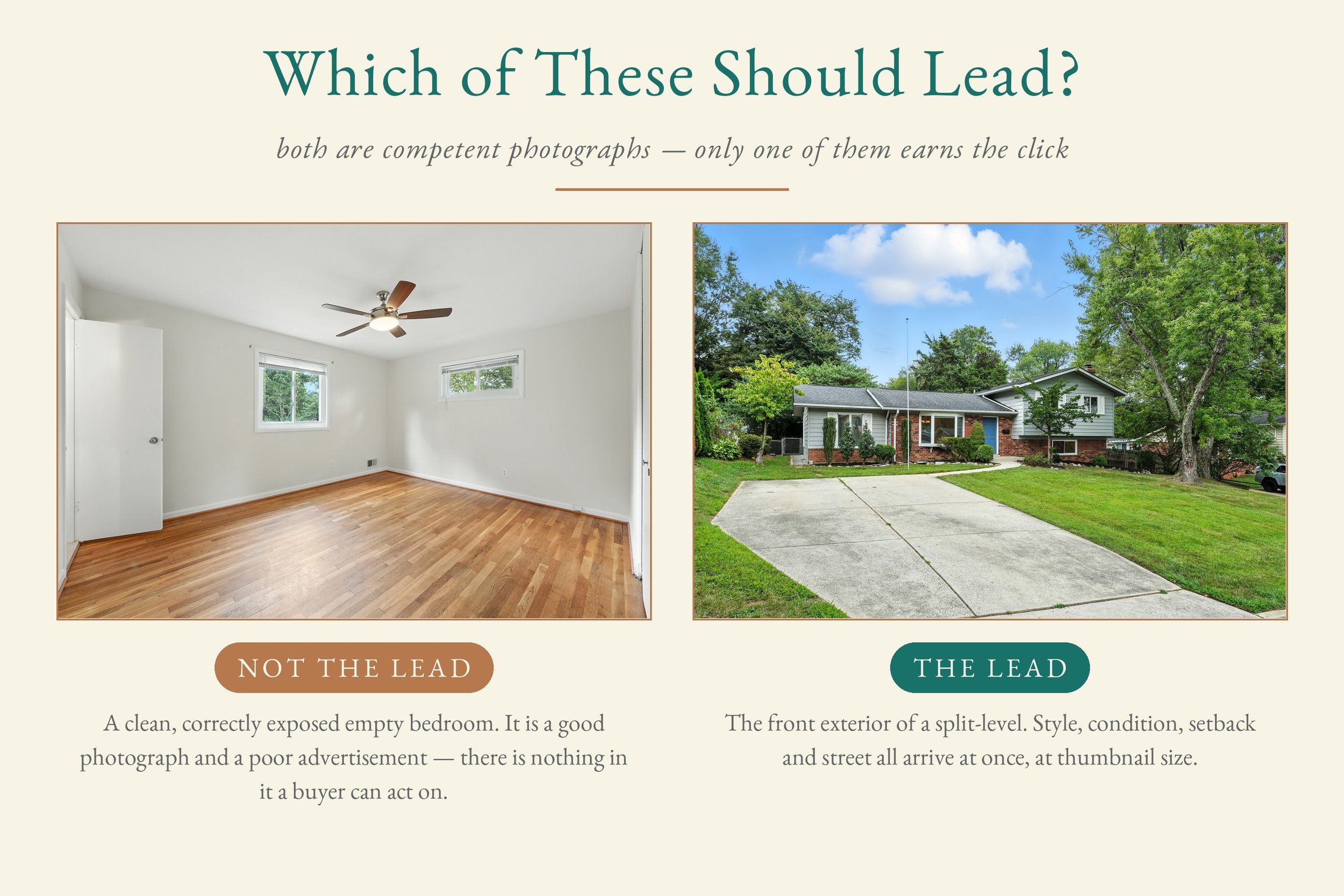
The most common one is leading with a frame that is a fine photograph and a poor advertisement. An empty bedroom, cleanly lit and correctly exposed, tells a buyer nothing they can act on. It is not a bad photo. It is a bad first photo, and the two get confused constantly.
The second is leading with a frame where the subject is ambiguous. A rear patio on an attached townhome, a shared elevation, a view down a row — the buyer cannot tell which part of the picture is for sale, and a picture that has to be explained has already lost the scroll.
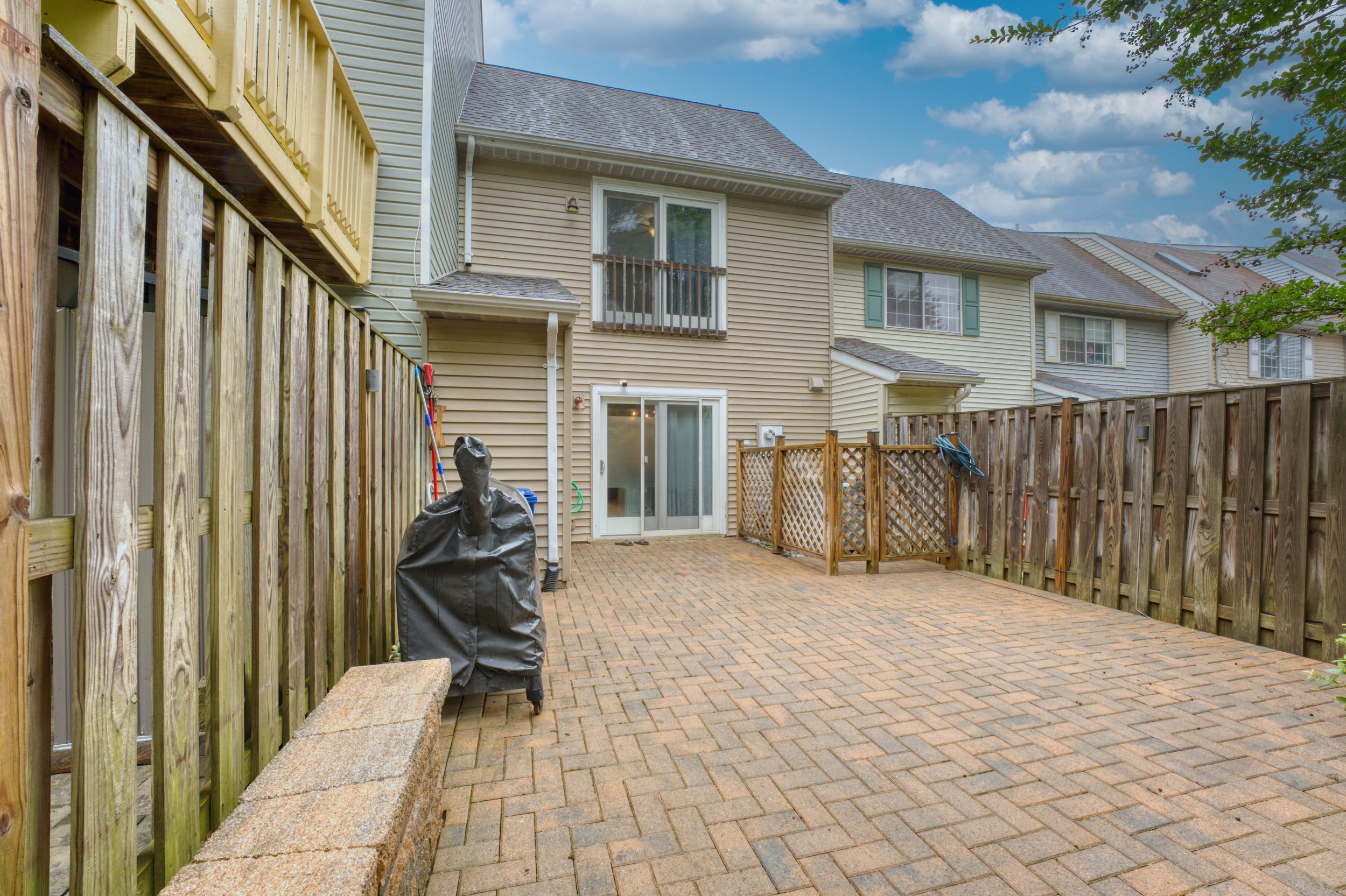
A rear patio on an attached home is worth shooting and worth including — it just cannot carry the listing, because nothing in it says which unit is for sale.
The third is a lead photo that oversells. This one carries more than a marketing cost in this market: NAR’s Code of Ethics obliges REALTORS® to “present a true picture” in their advertising, and Standard of Practice 12-10 names “misleading images” specifically. A lead frame that flatters a property into something a buyer does not recognise on arrival is a wasted showing at best. Cove Media covered the wider set of errors in a separate piece on real estate photo mistakes.
5. Ordering the rest of the set behind the lead
The lead earns the click; the second and third frames decide whether the buyer keeps going. The usual order runs from the frame that just earned the click into the largest and most-used spaces — the main living area, the kitchen, the primary bedroom — before the supporting rooms and the outdoor space. On a condo the exterior does not disappear from the set; it moves down it, and the curbside frame Bright requires sits comfortably in the back half.
What belongs in that set, room by room, is its own subject, and Cove Media has written about what listing photos should actually show.
6. How Cove Media picks the lead frame on a shoot
The lead frame is chosen on site, before the first exposure. The photographer works out which way the front elevation faces and where the light will be at the appointment time, walks the curb line to find the distance that shows the house and its setback in one frame, and shoots that frame properly — several exposures, blended, verticals corrected — rather than treating it as one more entry in the gallery.
For a unit, the same attention moves indoors: the widest, best-lit main living space becomes the frame that gets the extra passes, and the curbside view is still captured for the set.
Cove Media shoots listings across the DC metro area from a base in Rockville, in sets of 20, 40 or 60 images, with galleries delivered in 24 hours. Package details and add-ons are on the pricing page — or book the shoot and the lead frame gets decided on site, the way it should be.