How Real Estate Photographers Handle Difficult Lighting: Basements, Dark Rooms and Winter Shoots in the DC Metro Area
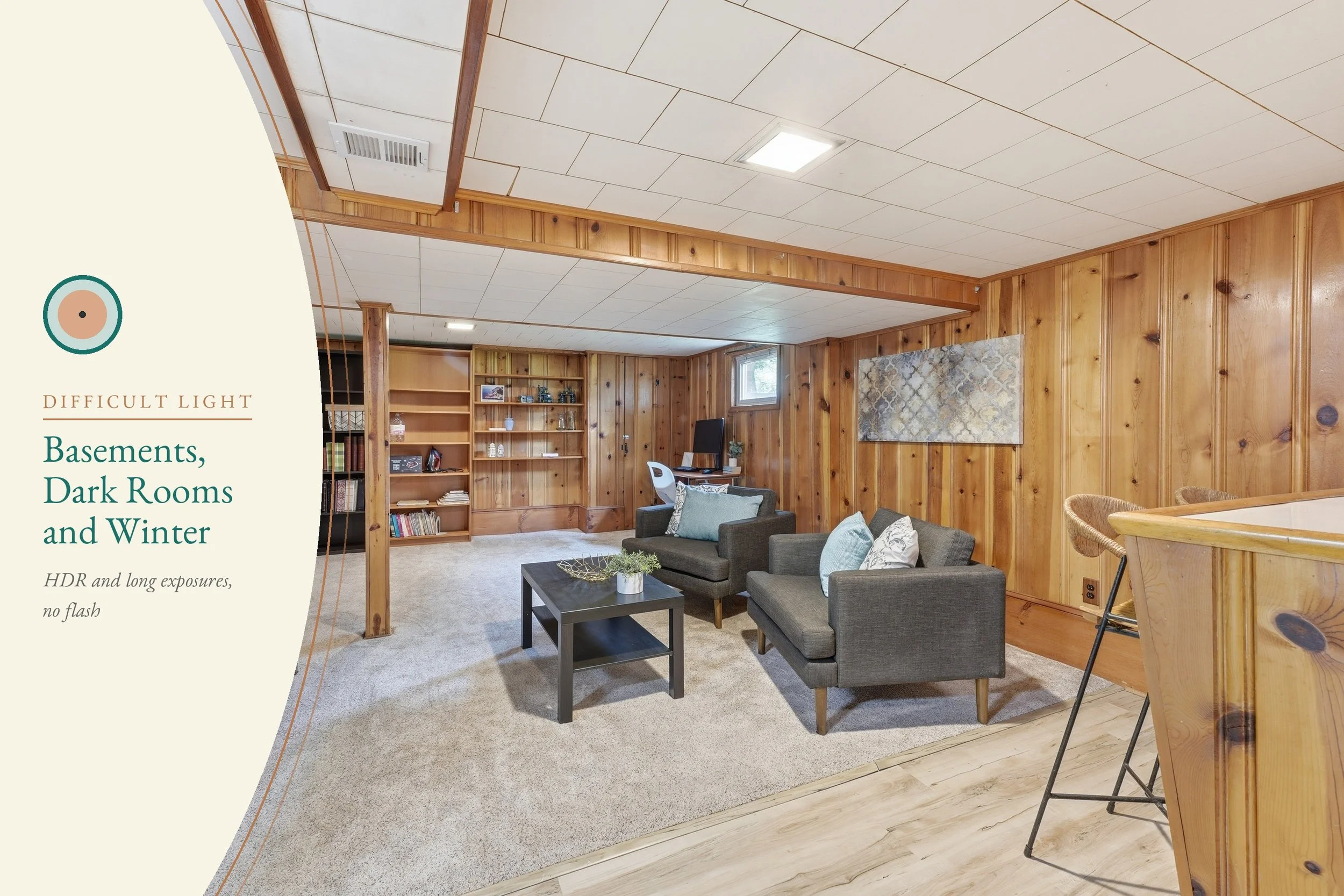
Most advice about listing photos assumes a bright house on a clear afternoon. A lot of listings across DC, Maryland and Northern Virginia don't look like that. Many DC rowhouse basements get their daylight through a couple of small windows at or below grade. Vacant homes usually come with the lamps already gone, and sometimes with the power shut off. And from November through February, the light every shoot depends on arrives late, sits low and leaves early.
None of that has to show in the gallery. Cove Media photographs these rooms without flash or strobes, using two camera techniques that do the work a lighting kit would: HDR (high dynamic range) bracketing and long exposures on a tripod. This guide covers how each one works, which rooms in the DC metro area cause the most trouble, and what an agent can do before the shoot so a dark house still photographs well.
1. The rooms that give a camera trouble
Four situations cause most of the trouble.
Basements. A rowhouse basement in DC often has a low ceiling over a long, narrow room, with a small window or two at one end. An unfinished basement in a Silver Spring colonial or a Fairfax split-level may have no windows at all, just a few bare-bulb fixtures between the joists and a concrete floor that soaks up whatever light there is.
Rooms without lamps. When a home is vacant, the furniture leaves and the lamps leave with it. What remains is the overhead fixture, if the room has one. Living rooms and bedrooms that were designed around lamp light end up with bright windows and dark corners.
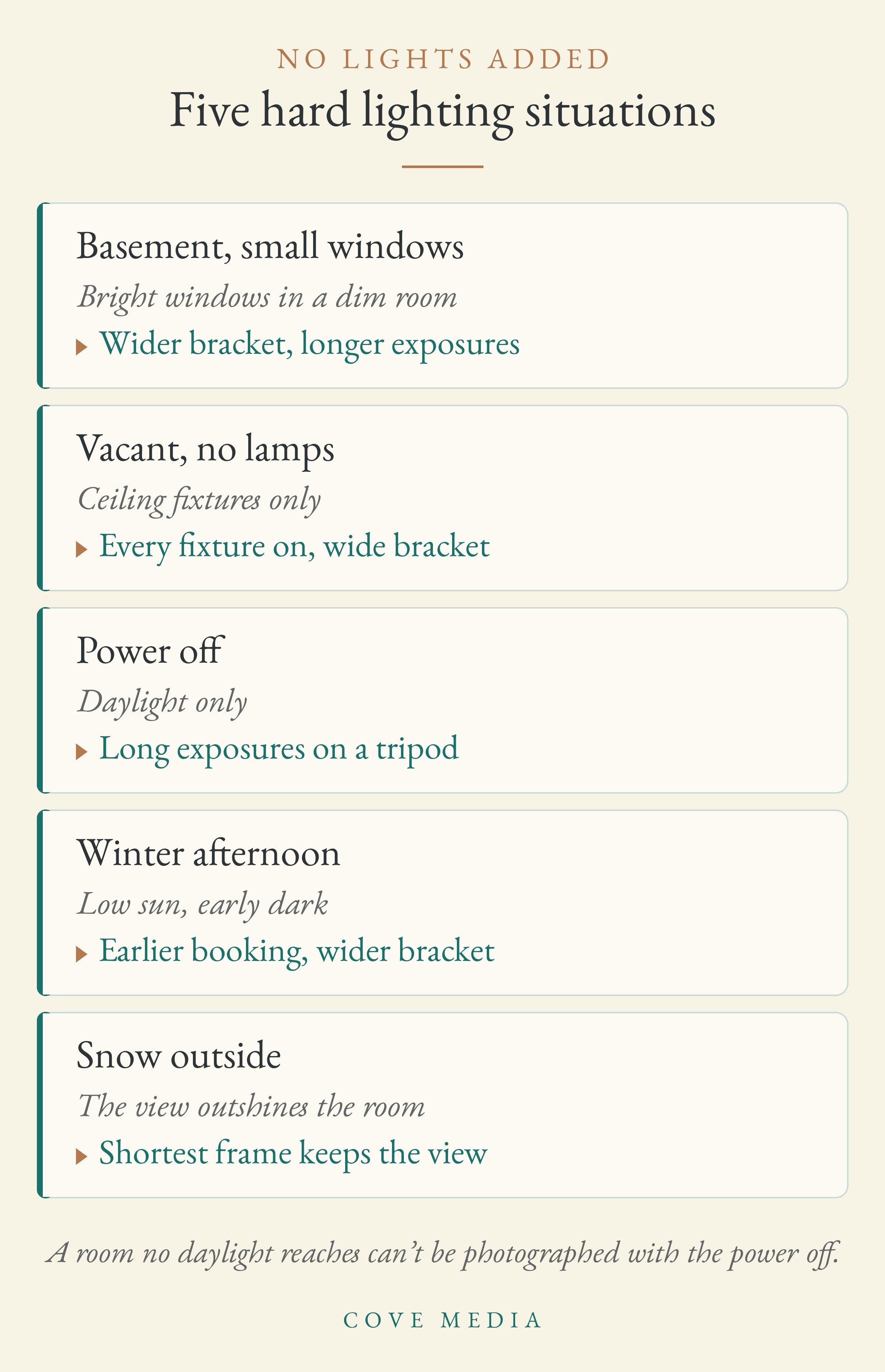
Homes with the power off. Estate sales, foreclosures and long-vacant investment properties sometimes come to the photographer with the utilities disconnected. Every fixture in the house is dark, and the windows are the only light source.
Winter. A December afternoon in the DMV gives a shoot less light, at a lower angle, for fewer hours. Snow on the ground outside changes the balance again.
What these share is a gap between the brightest thing in the frame and the darkest, and less light overall to fill it.
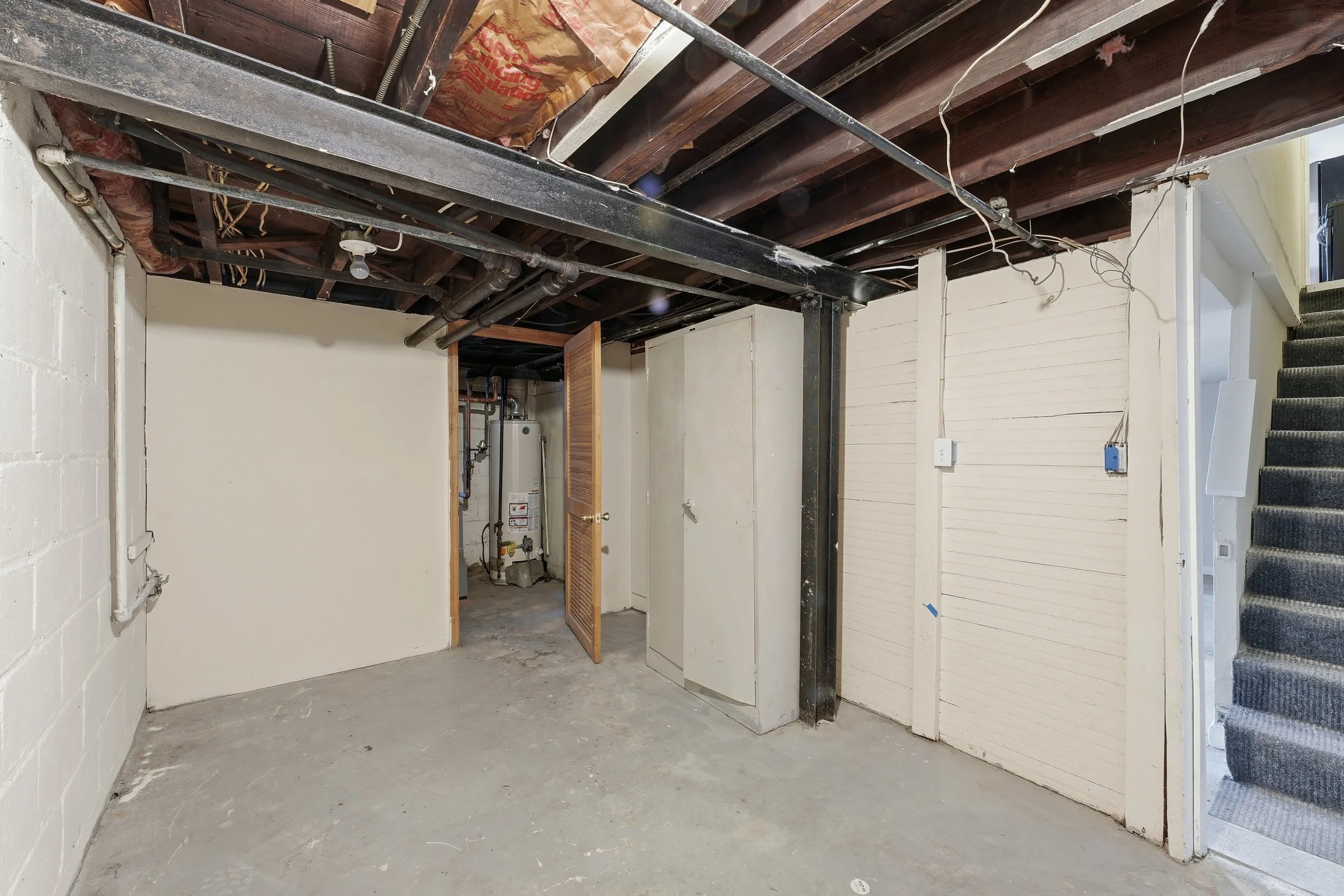
An unfinished basement in Northeast DC: exposed joists, one bare-bulb fixture and no windows in the frame, with detail kept from the pipes overhead down to the floor.
2. Why the camera sees less than you do
Standing in a dark basement, your eyes adjust as you look from the window to the far corner, and the whole room seems visible. A camera records one exposure at a time. Set it for the window and the room goes dark. Set it for the room and the window turns into a white rectangle.
The gap is wider than most single exposures can capture. HDR photography was built to solve exactly that, and the guide to HDR real estate photography covers the basics. The difficult rooms in this post are where it matters most.
3. HDR bracketing: several exposures, one photograph
With the camera locked on a tripod, the photographer takes the same frame several times at different shutter speeds. The short exposures capture the bright parts of the scene: the view through the window, the white trim next to it, the glow of a ceiling fixture. The long exposures pull detail out of the dark parts: the paneling, the floor, the far corner. The frames are then blended into one photograph that shows the room the way it looked in person.
Only the shutter changes between frames. The aperture and ISO stay put, because changing the aperture would shift depth of field from frame to frame and changing the ISO would shift the noise. Each frame is typically two stops brighter than the last, which means it takes in four times as much light.
The graphic below shows a real bracket from a Cove Media shoot in Silver Spring: a knotty-pine basement rec room, photographed at 12:52 p.m. on an April afternoon with the ceiling lights on. Five frames ran from 1/20 of a second to 13 seconds. The darkest is nearly black except for the ceiling light and the small window. The brightest washes out the ceiling. Blended, they make the final photo, with the grain of the paneling visible from one end of the room to the other.
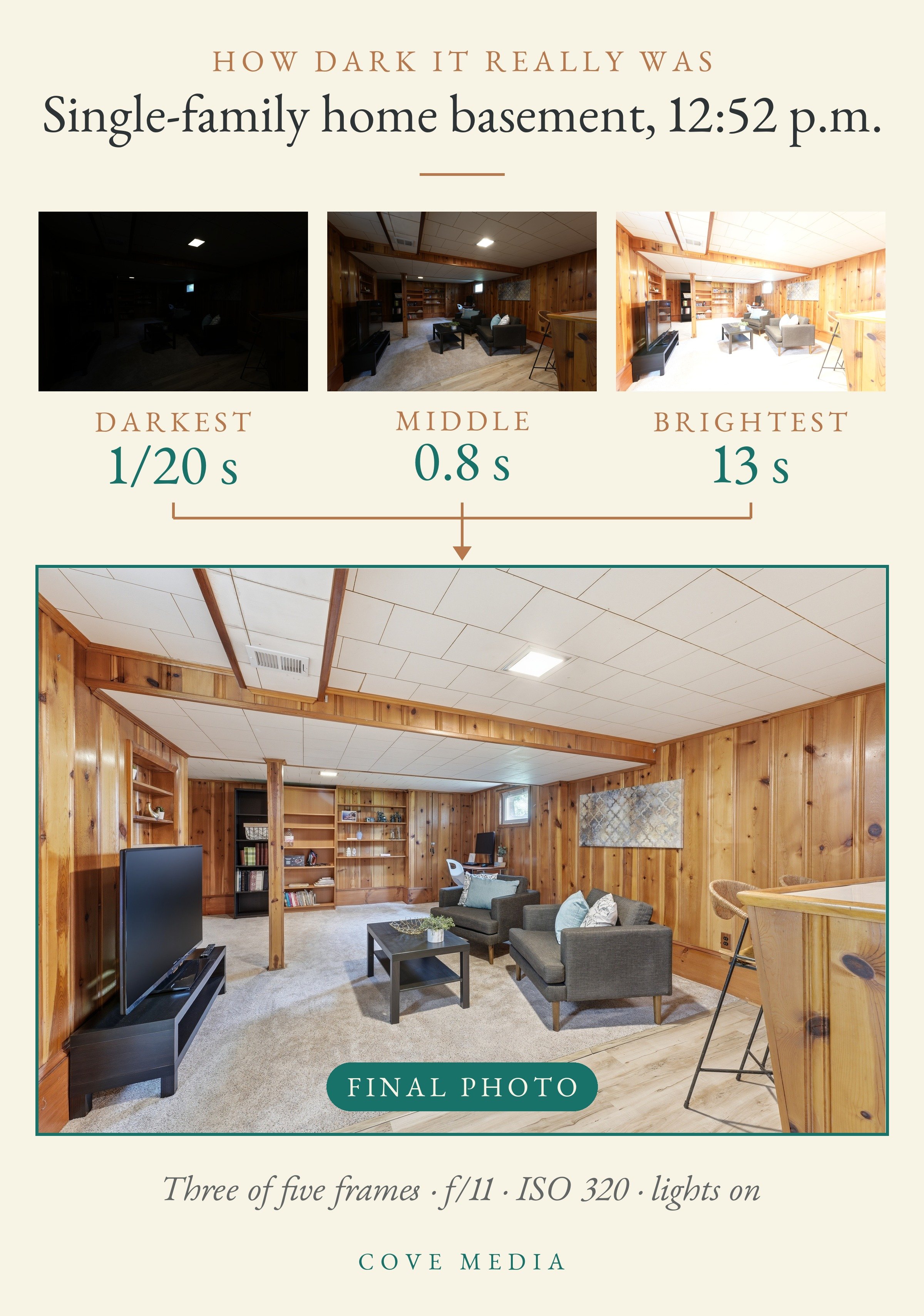
A bracket like this has to cover both ends of the room. The shortest frame protects the window, and the longest has to run long enough to record the corners. A darker room pushes that longest frame further, and the bigger the gap between the brightest and darkest parts of the room, the wider the bracket has to be. Most of the rooms in this post come down to those two adjustments.
4. Long exposures: letting the shutter do a light's job
A long exposure doesn't add light to a room. It collects more of the light that's already there. A tripod holds the camera steady, so the shutter can stay open for a second or more and everything that isn't moving stays sharp. That lets the camera stay at a modest ISO instead of raising its sensitivity, which is where grainy, muddy shadows come from.
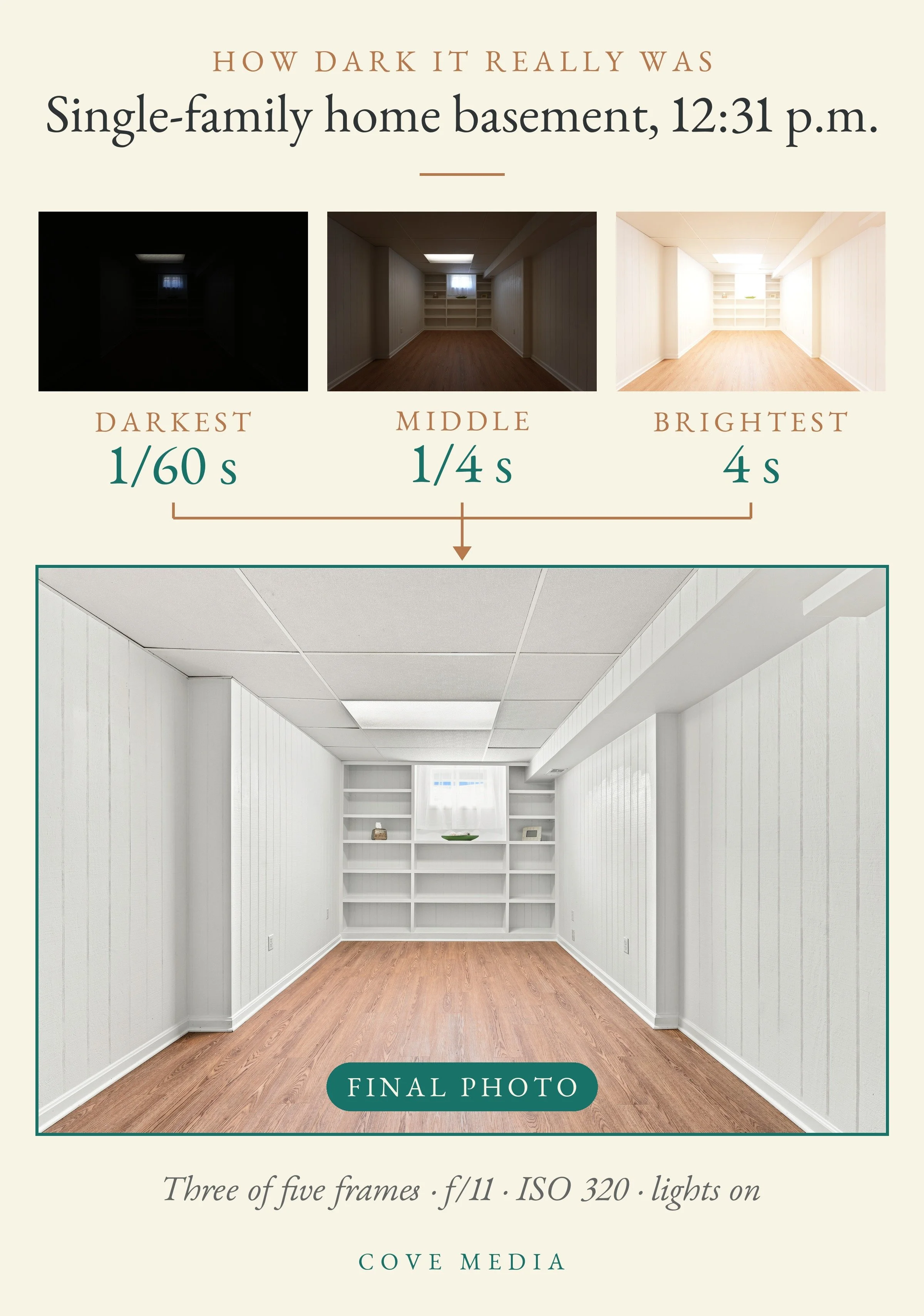
Astrophotography shows how far the idea goes. In the middle of the night, a camera on a tripod with its shutter open for many seconds records a sky full of stars far brighter and more detailed than what the eye sees standing in the same field. The starlight is faint, but the sensor keeps collecting it for as long as the shutter stays open. A basement is the same idea at a much smaller scale. In a paneled basement in Laurel, with one ceiling light and one small window in view at 12:31 p.m., the longest frame of the bracket ran four seconds.
Long exposures have their own requirements. Nothing in the frame can move, so ceiling fans are off and nobody walks through the room. Very long exposures can also add noise of their own, which is why cameras offer a long-exposure noise reduction setting for shutter speeds of a second or more.
5. Lights on, lights off, and no power at all
Cove Media never uses flash. There are no light stands or cords to work around in a furnished home, no flash glare on glossy cabinets or glass, and no hard shadows that weren't in the room to begin with. The room looks lit the way it actually is.
Some photographers shoot interiors with every light in the house switched off and rely on the windows alone. Cove Media turns every light on wherever there's power. Shooting with the lights off can cause color problems, make the windows harder to keep, and on occasion produce flare. Lights on also makes the shoot much faster: a brighter room needs shorter exposures, so every bracket finishes sooner. When there's no option for lighting, longer exposures make up the difference.
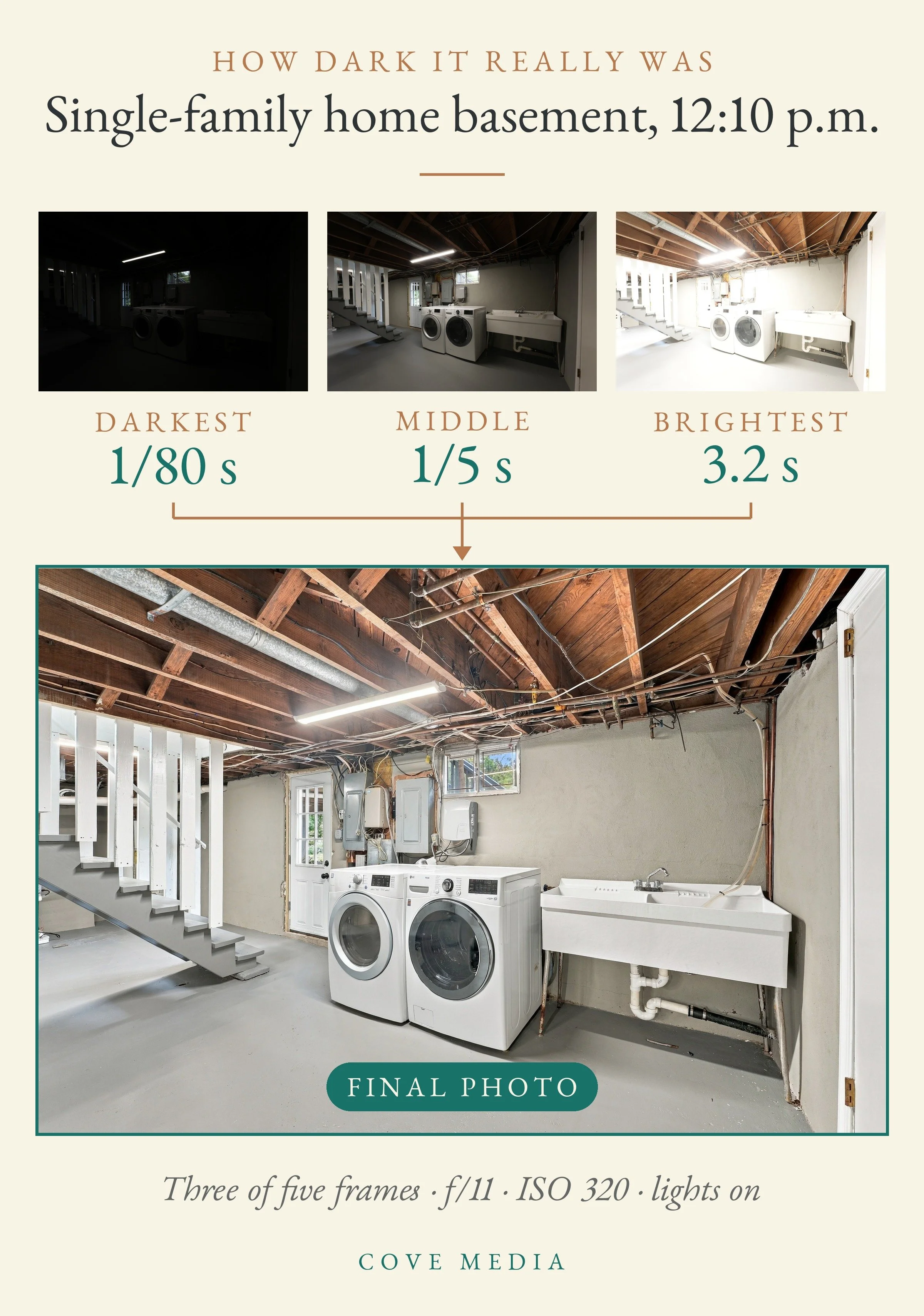
Even at midday with the lights on, the unfinished laundry area below, with a single fluorescent tube, a small window and a glass-paned door in view, needed a 3.2-second frame. All three brackets in this post were shot at f/11 and ISO 320 with every room light on.
Rooms without lamps are the common case in a vacant listing. The ceiling fixture lights the middle of the room, the windows light the wall they're on, and the corners fall off. A wide bracket lifts those corners without making the room look artificially bright.
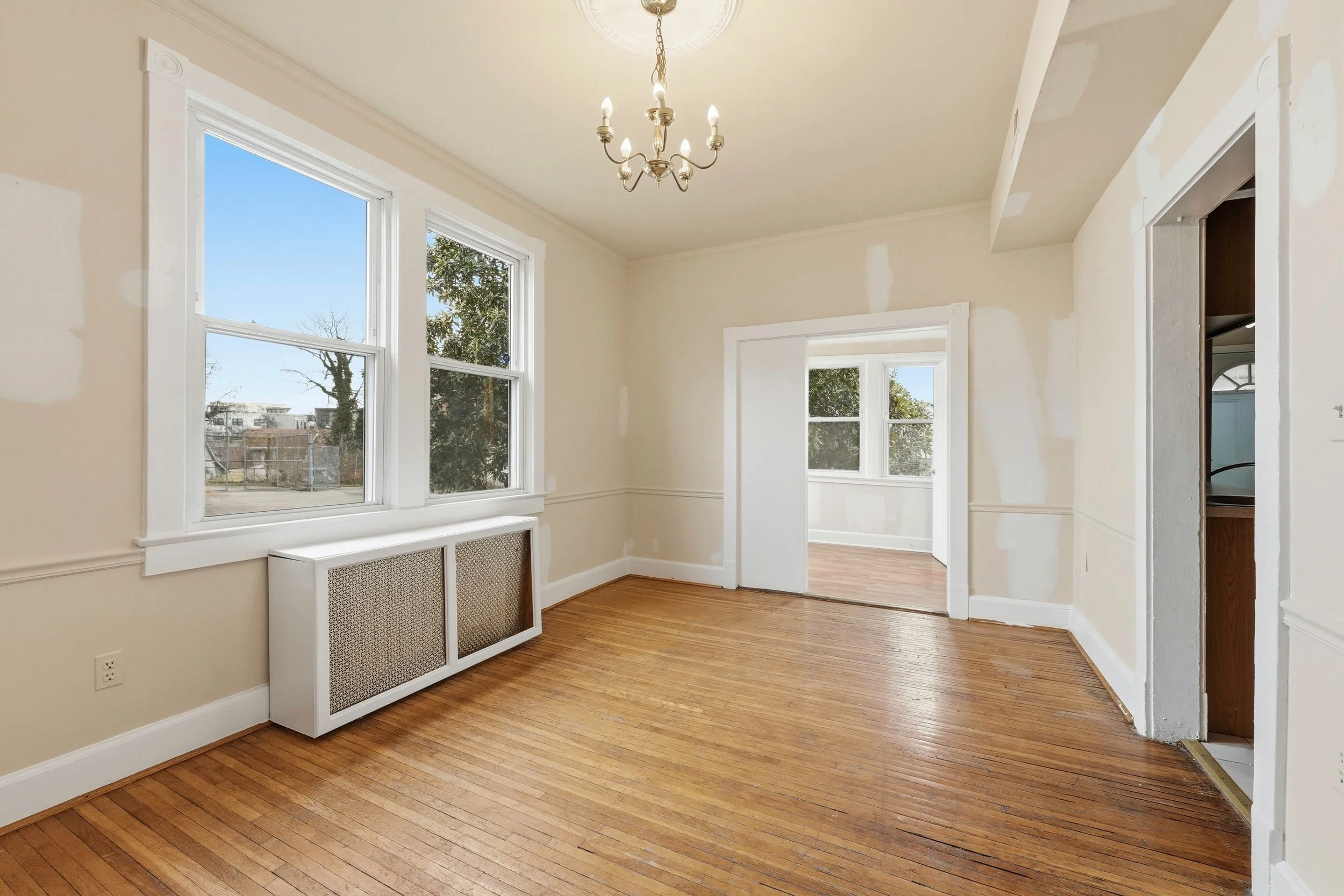
A vacant dining room with no lamps, one ceiling fixture and two bright windows. The trees outside and the far corners of the room both keep their detail.
When the power is off, the situation changes. The only light is daylight coming through the windows and open doorways, so the shoot leans on the long end of every bracket. Rooms that daylight reaches can still photograph well this way. A room it doesn't reach has no light to collect, and no shutter speed fixes that: an interior bathroom or a windowless storage room with no light spilling in will come out black. If those rooms matter to the listing, the power has to be on (see section 7).
6. Winter: less light, lower sun, snow at the windows
Clocks fall back on November 1 this year, and by early December the sun sets in Washington at about 4:46 p.m., the earliest of the year. On the winter solstice the District gets about nine and a half hours of daylight, compared with almost 15 in late June. A shoot that would run comfortably into the evening in July has to finish its daylight work well before 5 p.m. in December.
The sun also sits much lower. At midday on the winter solstice it reaches only about 28 degrees above the horizon in Washington, versus about 75 degrees in June. Low sun reaches deep into south-facing rooms and throws hard rectangles of light across the floor, while north-facing rooms stay dim all day. Both increase the contrast the bracket has to cover.
Snow pushes the window side of the problem further. Fresh snow reflects up to about 90 percent of the sunlight that hits it, according to the University Corporation for Atmospheric Research, so a snowy yard can make the view through the windows far brighter than the room. The shortest exposure in the bracket is what keeps that view from going white.
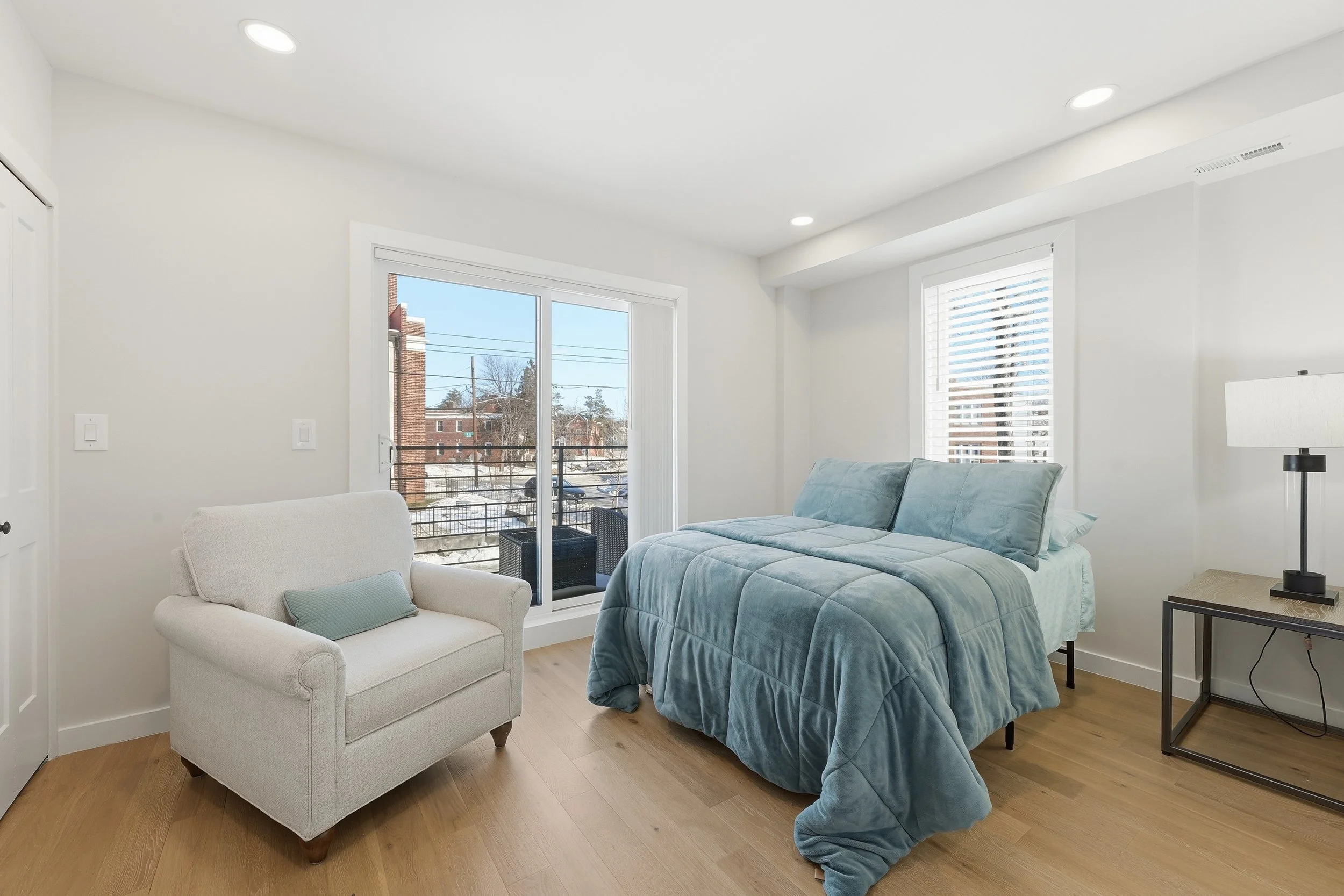
A February afternoon in Northeast DC, with snow on the ground beyond the sliding door. The view and the room both keep their detail.
For winter listings, book the shoot earlier in the day than you would in summer. Late morning through early afternoon gives the interiors the most light and leaves time for the exteriors before the sun drops. Gray days are fine for interiors; the bracket covers the difference.
7. What agents can do before a difficult-light shoot
Most of the work happens at the shoot, but a few steps beforehand help.
Get the power on. If a vacant property's utilities are disconnected, start service before the photo date. Pepco serves DC and most of Montgomery and Prince George's counties, BGE covers the Baltimore area and parts of Prince George's, Montgomery and Calvert, and Dominion Energy and NOVEC serve much of Northern Virginia. It's worth contacting the utility several business days ahead; BGE, for one, asks for at least three.
Replace dead bulbs, and match them. A burned-out recessed light leaves a dark spot in the ceiling, and a mix of warm and cool bulbs in one room gives the editor two colors to reconcile. The guide to preparing a home for listing photos covers the rest of the walkthrough.
Mention the hard rooms when booking. A finished basement, a windowless rec room or a house with the power off all change how long the interiors take. Knowing in advance means the right amount of time on the schedule.
Schedule winter shoots earlier. See section 6. In December, a 3 p.m. start leaves very little daylight for the exteriors.
Once the shoot is done, the bracketed frames go through Cove Media's standard editing before delivery, including color correction for mixed light. The guide to what happens after the shoot walks through it.
Book a Shoot for a Difficult Listing
A dark basement, a vacant house or a short December day doesn't have to mean a dark gallery. Cove Media shoots every interior with HDR bracketing and delivers within 24 hours. See packages and pricing at cove.media/pricing.