Do Professional Real Estate Photos Actually Help Homes Sell Faster? The 2026 Data for DC Agents
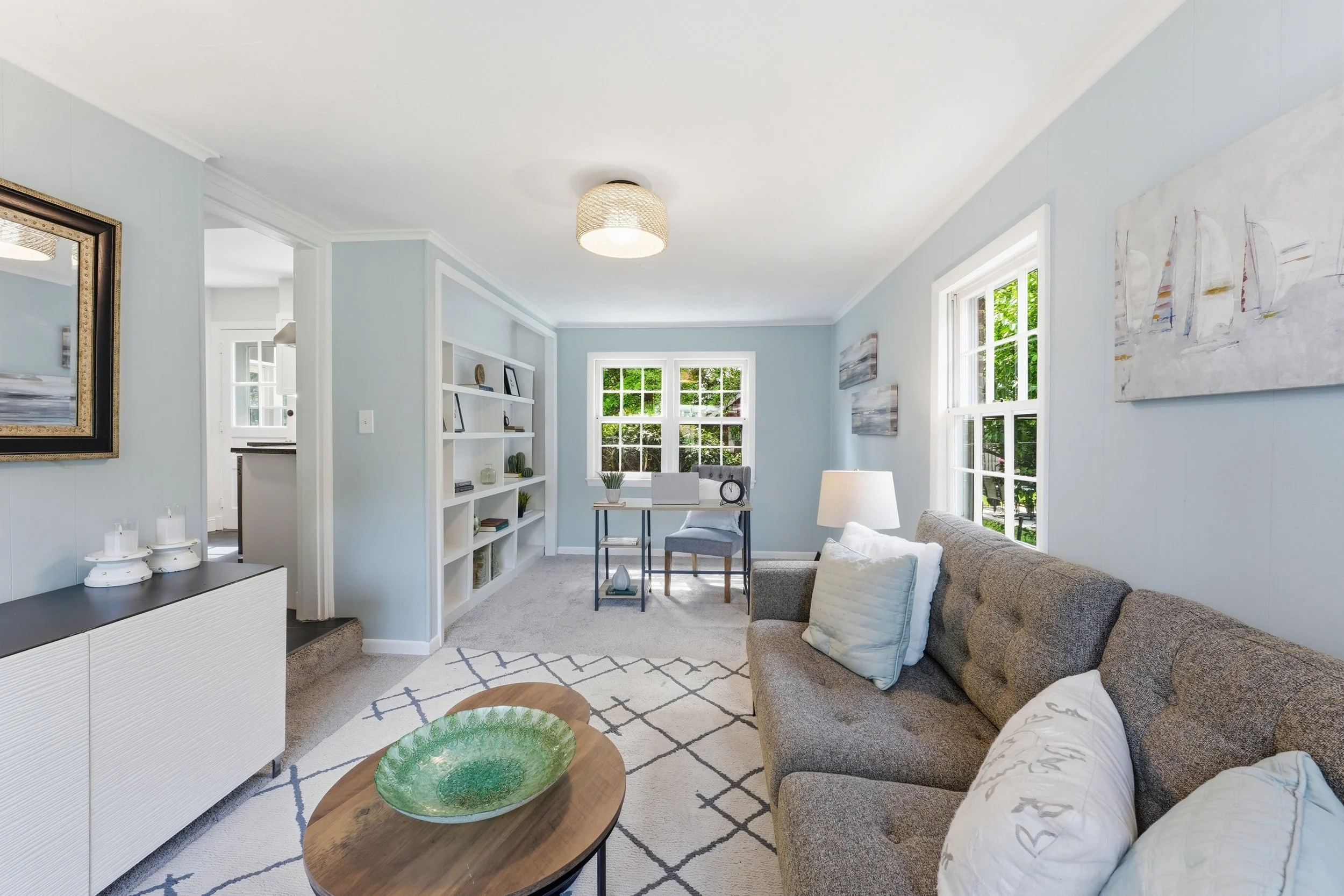
Sun room real estate photo taken in Maryland.
It's a fair question — and one agents quietly ask themselves more often than they let on. Listing photos are obviously visible to buyers, but the link between photo quality and an actual contract is harder to see. Does professional real estate photography really shorten the sales cycle, or does a competitive listing sell regardless of who shot it?
The data is clear, and the gap is larger than most agents expect. The case for professional listing photography has only strengthened as DC metro days on market have stretched, inventory has expanded, and buyers have moved toward slower, more deliberate decision-making.
Here's what the numbers actually show — and why they matter more in the 2026 DC metro market than in any year since 2019.
The headline numbers: what professional photography does to days on market
The most-cited stat in the industry comes from a VHT Studios analysis of Chicago-area listings: homes listed with professional real estate photography sold 32% faster than homes listed without it — 89 days on market vs. 123 days. The gap held across every price range, not just luxury.
Independent research from IMOTO Photo found a steeper gap — homes with professional photos were 84% more likely to sell within the listing period than homes with amateur images. An earlier Redfin analysis put the difference at roughly three weeks faster time on market.
The takeaway: across multiple independent studies, the directional finding is the same. Professional photography measurably reduces days on market. The exact number varies by methodology, but the floor across every credible study is 21 days.
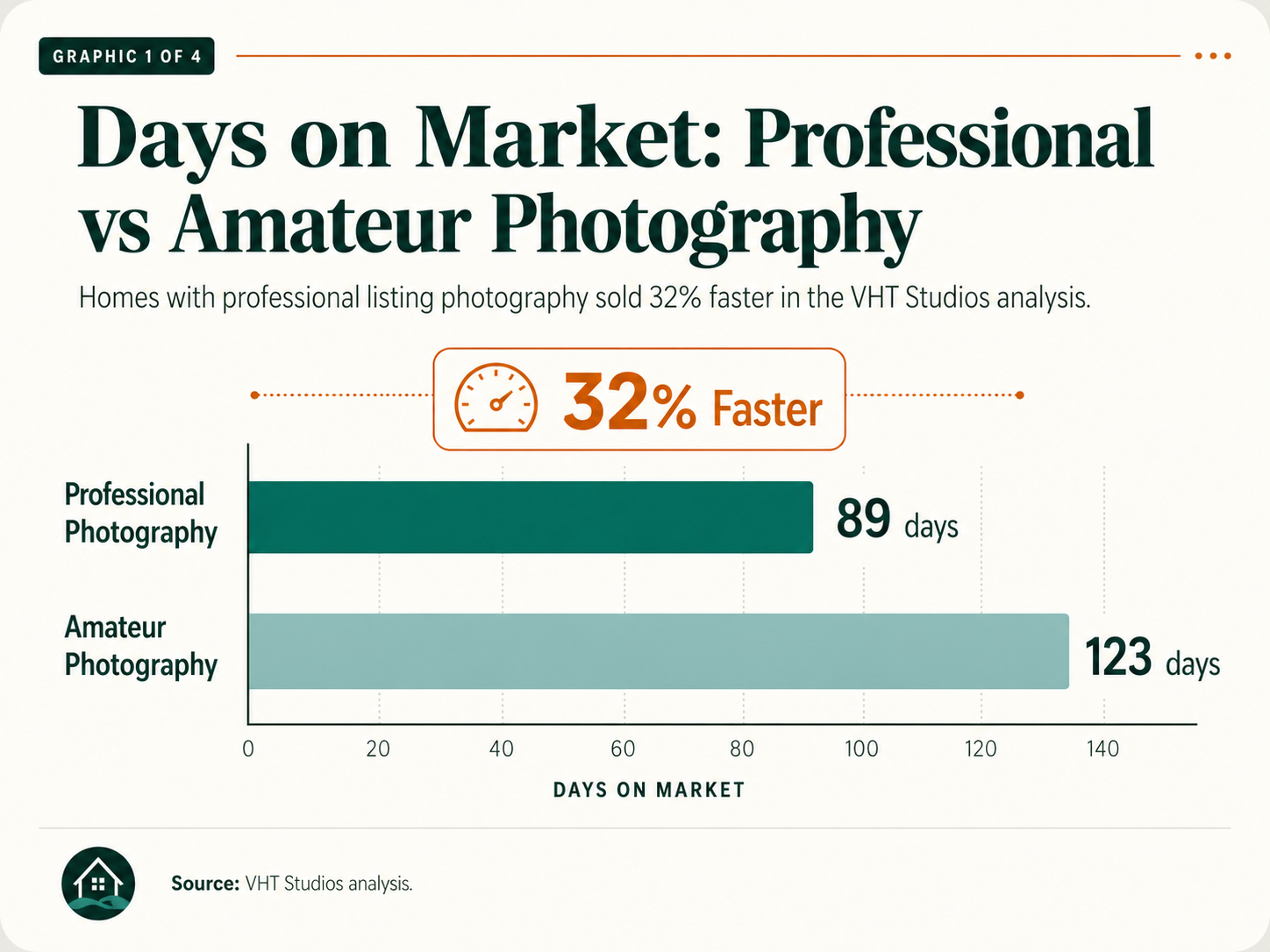
Figure 1: Days on Market — Professional vs. Amateur Photography. Source: VHT Studios analysis.
Why faster matters more in 2026 than it did two years ago
In 2022 and early 2023, DC metro homes sold so fast that photo quality almost didn't matter on a contract timeline — most listings went under contract in under a week regardless of presentation. That's no longer the case.
Bright MLS data for early 2026 tells a very different story:
Washington D.C. median DOM (Q1 2026): 55 days — the highest reading in the Bright MLS dataset going back to 2019, and roughly triple D.C.'s pre-pandemic norm of 19 days.
Northern Virginia jurisdictions: 9–12 days median DOM — Fairfax, Arlington, and Alexandria are running at or below pre-pandemic pace, while the broader NVAR regional average sits higher at 30 days.
NVAR February 2026 average DOM: 30 days — up 36.4% year-over-year across the Northern Virginia region.
DC metro listing failures (Q1 2026): 4,671 — withdrawn, canceled, or expired listings are up 42% in two years.
Translation: in 2026, the gap between a fast-selling listing and a stale one is real, measurable, and expensive. The 2022-era assumption that "any listing will sell" no longer applies. That makes presentation — including listing photography — meaningfully more important than it was.
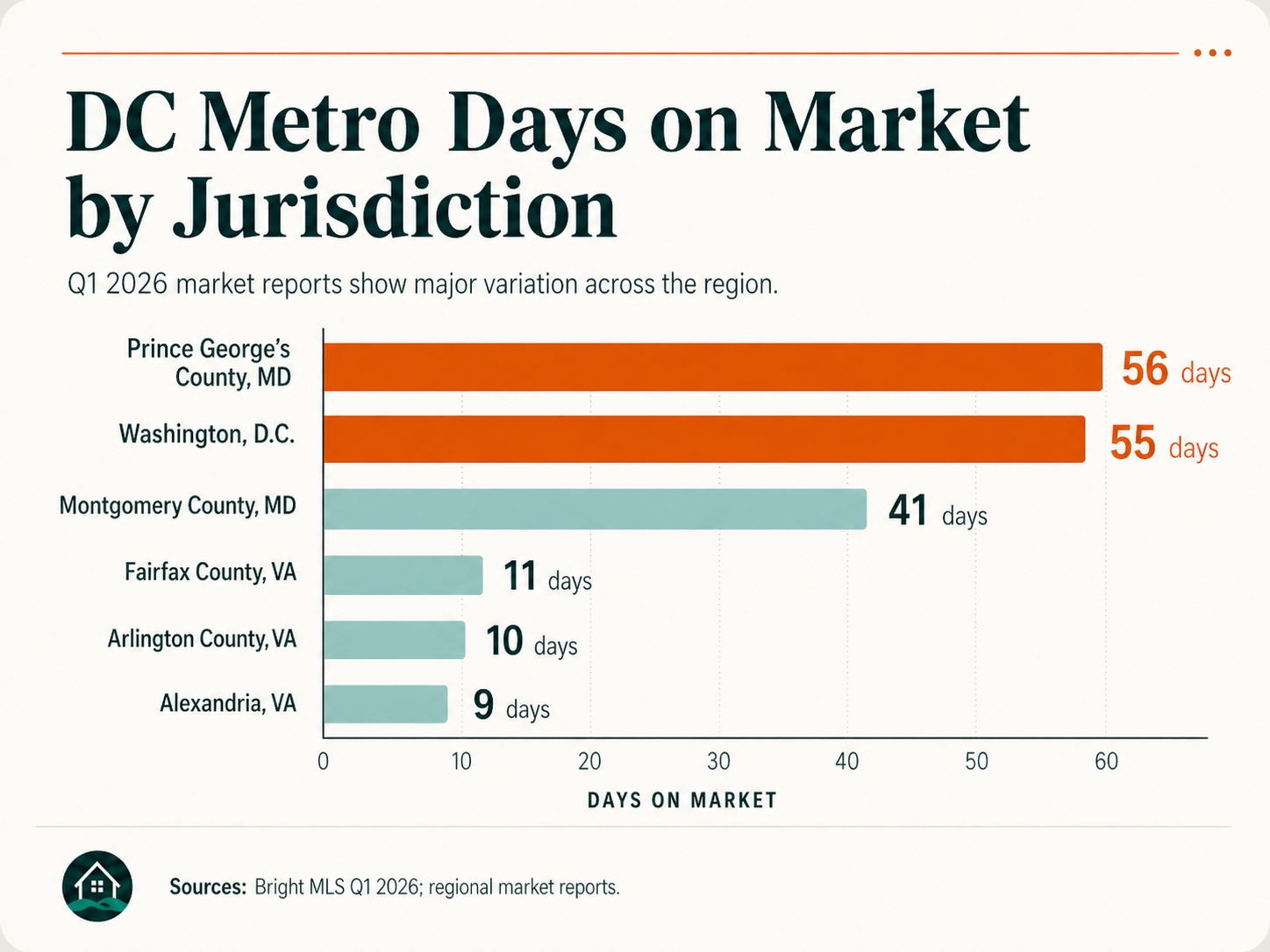
Figure 2: DC Metro Median Days on Market by Jurisdiction. Sources: Bright MLS Q1 2026; regional market reports.
What's actually driving the gap
Faster sales aren't magic. They come from a chain of buyer behavior that starts with the photos:
More clicks. Listings with professional photography get 61% more online views than listings without (Wall Street Journal). HDR-processed listings see up to 118% more views than standard images.
More showings booked. Buyers triage online before driving anywhere. A listing that looks dim, tilted, or low-contrast in the search grid gets skipped — even if the property itself is excellent.
Stronger buyer impressions. When a buyer arrives in person, professional photos prime expectation. The home meets or exceeds the photos. Amateur photos either undersell the property or, worse, look better than reality and create disappointment on arrival.
Faster offers. Studies consistently show buyers are more likely to make above-asking offers on listings that photographed well. Perceived value rises with image quality.
The buyer behavior reality: photos are the first cut
According to the National Association of Realtors, 97% of homebuyers used the internet during their home search, and photos are the single most important feature of online listings — cited by 83% of buyers as their most useful research tool, ahead of property description, virtual tours, and even price estimates.
What that means in practice: a buyer scrolling 30 listings on Bright MLS or Zillow gives each one roughly two seconds of attention before deciding to keep moving or click in. The lead photo decides whether they click. The next four to six photos decide whether they request a showing.
A listing with smartphone photos, vertical orientation, blown-out windows, or yellow indoor lighting loses the click — and once a buyer scrolls past, they almost never come back.
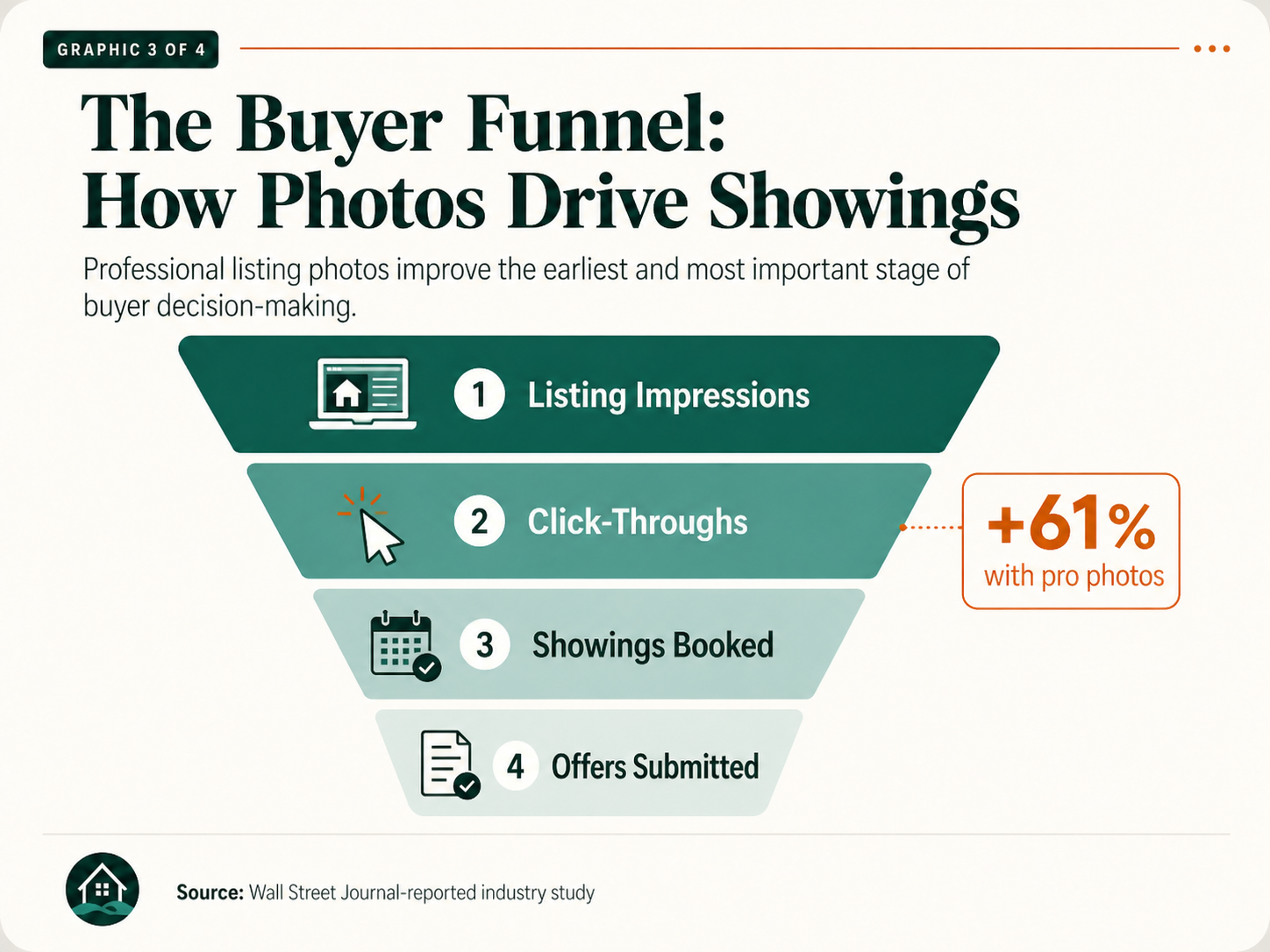
Figure 3: The Buyer Funnel — How Photos Drive Showings. Source: Wall Street Journal-reported industry study.
What "professional photography" actually means in 2026
The phrase gets used loosely. Not all listing photography qualifies. A photographer with a DSLR isn't automatically professional, and the gap between an amateur with a nice camera and a real estate specialist is wider than most agents realize.
In 2026, professional real estate photography means:
HDR (High Dynamic Range) processing, where multiple exposures are blended so windows aren't blown out and rooms aren't dark. This is the baseline now — not a premium add-on.
Wide-angle interior coverage that shows full rooms accurately without distorting proportions.
Color and white-balance correction for mixed lighting (window light, lamp light, recessed light).
Vertical line correction so walls don't lean.
Sky replacement on overcast days when appropriate.
24-hour turnaround, with delivery in MLS-ready resolution and aspect ratio.
Bracketed exterior exposures for evening, dusk, and complex lighting situations.
A listing photographed with HDR, properly composed, and edited within a day clears every gate the buyer triage process throws at it. A listing shot on a phone with a single exposure usually doesn't.
The math from the agent's side
Here's the practical version. With Bright MLS reporting median DC metro DOM at 30 days for March 2026, and the Washington D.C. median sitting at 55 days:
A 32% reduction in days on market on a 30-day NoVA listing saves roughly 10 days of carrying cost, mortgage interest, utilities, HOA fees, and seller anxiety.
Faster sales mean fewer price drops. A listing that sits past 21 days in NoVA almost always sees a price reduction. Selling before that threshold protects the original list price.
Professional photography typically costs $300–$700 for a standard DC metro home, which is a fraction of even one week of holding cost on a $700K property.
The ROI math is rarely close. Even a single saved week pays for the shoot many times over.
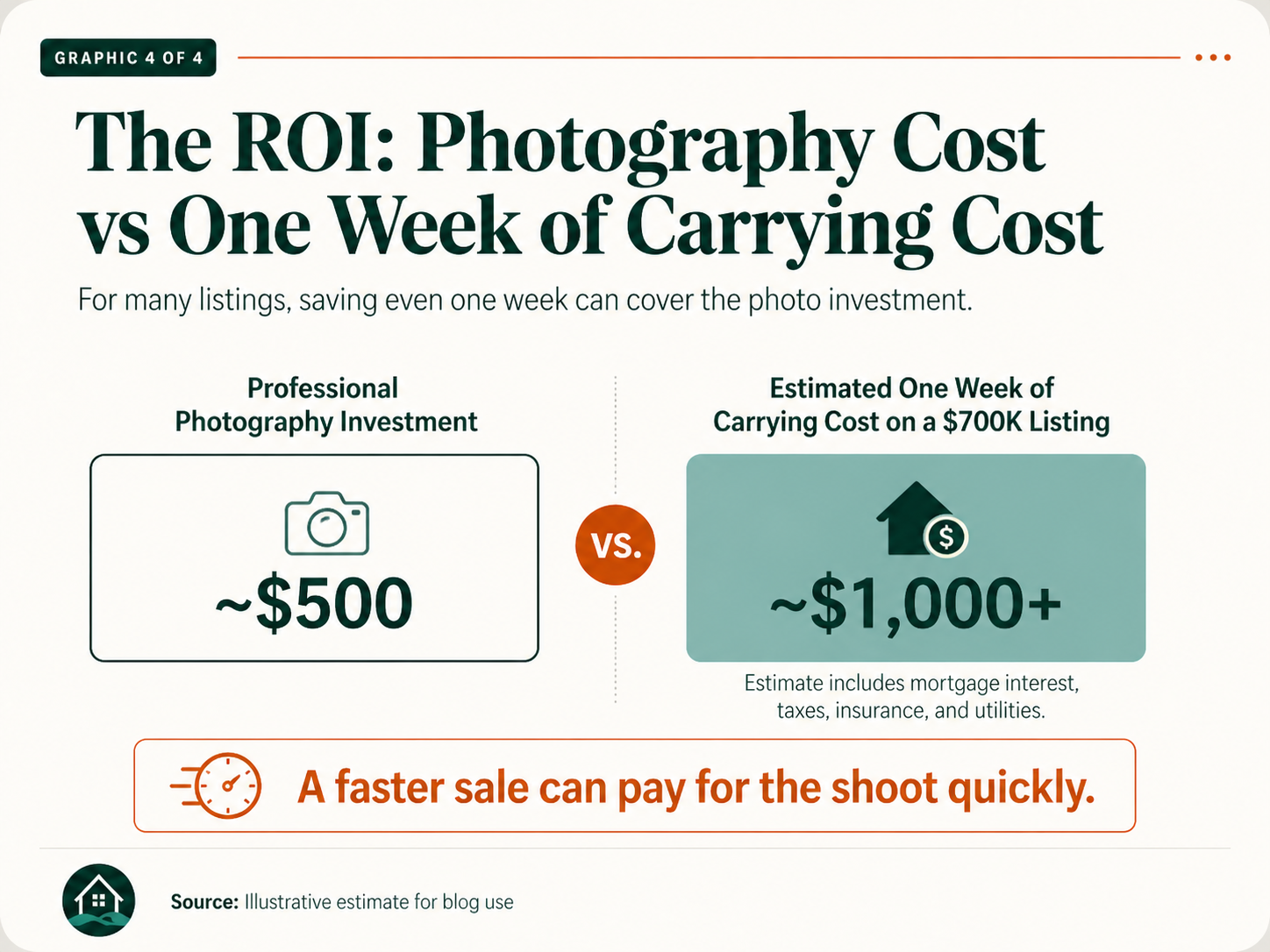
Figure 4: The ROI — Photography Cost vs. One Week of Carrying Cost. Illustrative estimate based on a $700K listing.
Where photography stops mattering — and where it matters most
Photography doesn't fix every listing. A home that's overpriced won't sell faster because it photographs well. A property in poor condition will photograph as a property in poor condition.
But the data shows clear leverage points where professional photography drives outsized impact:
Mid-market homes ($500K–$1.2M in the DC metro) — heavy buyer competition online, decisions made in seconds.
Luxury listings ($1.5M+) — buyer expectations for production quality are highest here, and the perceived-value gap is widest.
Condos and townhomes — interior layout and natural light have to be conveyed through photos because square footage is limited and outdoor space often isn't a selling feature.
Properties with strong but specific selling features — a renovated kitchen, a finished basement, water views, a custom backyard. Amateur photos routinely flatten or miss these features entirely.
Listings sitting in slower micro-markets — particularly in Washington D.C. proper, where 55-day medians make every advantage matter.
Cove's approach to faster-selling listings
HDR baseline on every shoot. Bracketed exposures, blended in post — no blown windows, no dark interiors.
24-hour photo delivery. Listings can go live the day after the shoot. No multi-day wait that pushes the listing past peak weekend traffic.
Bright MLS-ready output. Correct resolution, aspect ratio, and file size for direct upload.
FAA Part 107 drone coverage with LAANC authorization across Maryland and Northern Virginia for properties where aerial supports the listing.
Free weather rescheduling. A bad-light shoot doesn't help anyone.
Local market knowledge. Cove shoots DC metro homes every week and knows what photographs well in this specific market.
Book your listing shoot
In a market where days on market matter again, listing photography is a leverage point. Book at cove.media. Full pricing — including HDR, drone, twilight, Matterport, and video add-ons — is at cove.media/pricing.
Service area
Cove Media provides real estate photography across the Washington DC metropolitan area, including the District of Columbia, Northern Virginia (Arlington, Alexandria, Fairfax, Loudoun, Prince William) and Maryland (Montgomery, Prince George's, Howard, Anne Arundel, Frederick). All drone work is performed under FAA Part 107 certification with LAANC authorization where applicable.